


To people who did not grow up in the United States, stepping into an American living room or kitchen can feel a bit like walking onto a TV set. The furniture looks familiar, but the little details, from the fridge door to the bathroom door, can be quietly baffling. Non-Americans have been trading notes on those details, and their collective side-eye says a lot about how U.S. homes are built, sold, and lived in.
What Americans see as basic conveniences, safety features, or just “how houses work” often read as overkill, wasteful, or oddly insecure to visitors. The result is a running list of household quirks that are totally standard in the U.S. and deeply strange almost everywhere else.


Kitchen gadgets that feel like movie props
For many visitors, the American kitchen is where the culture shock really kicks in. People from abroad are fascinated that so many U.S. refrigerators come with an ice cube maker built right into the door, something that shows up again and again when non-Americans list the household items they find odd in the United States, from the ice dispenser to the sheer size of the fridge itself, as highlighted in one roundup of Things In American visitors notice. To Americans, pressing a lever for crushed ice is barely worth mentioning, but to guests used to tiny under-counter fridges and ice trays, it feels like living inside a soda commercial.
Then there is the appliance that inspires equal parts awe and horror: the garbage disposal. Non-Americans often assume every U.S. sink hides a whirring metal maw, and many say the idea of dropping food scraps into a grinding unit feels unsafe or even dystopian. Some commenters have admitted they are “fascinated” by the device but half convinced they will maim themselves if they use it, a reaction echoed in a collection of Recently shared reactions. Environmental critics have also pointed out that sending food waste into the plumbing system can strain local infrastructure and harm waterways, a concern raised in a list of Here norms that puzzle outsiders.
Living rooms built for comfort and control


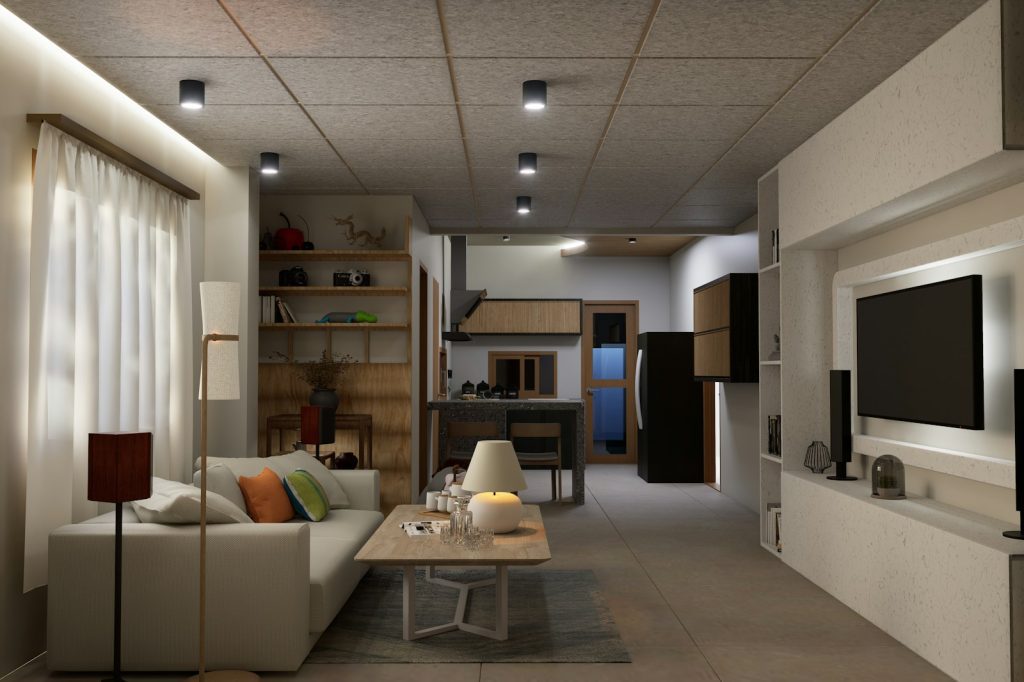
Move out of the kitchen and the American love of climate control and soft seating takes over. Non-Americans often joke that every U.S. home must contain at least one giant, overstuffed recliner facing a television that dominates the room, a stereotype that lines up with lists of Non Americans’ expectations about U.S. interiors. Add in the ceiling fan, the scented candle collection, and the throw blanket that never seems to move from the couch, and the space starts to look like a showroom for staying indoors.
Heating and cooling habits are another recurring surprise. Visitors are struck by how many homes rely on central air conditioning and programmable thermostats, and some assume every American has a switch that can blast cold air through every room on demand, an image that shows up in lists of Very Specific Things residents abroad imagine. To people from countries where radiators, open windows, or a single space heater are the norm, the idea of fine-tuning the temperature of a whole house with one wall panel feels both luxurious and a bit excessive.
Bathrooms that confuse the rest of the world
American bathrooms are a category of weird all their own. One of the most talked about features is not inside the home at all but in public spaces, where visitors are stunned by the gaps around toilet stall doors and the high clearances at the bottom, details that have been singled out as particularly odd in discussions of American habits. That sense of exposure follows people back to private homes, where interior bathroom doors often have simple push locks that can be opened with a paperclip, something that can feel surprisingly insecure to guests used to sturdier hardware.
Inside the bathroom, the fixtures and routines can be just as surprising. A survey on Bathroom Habits and respondents in the United States and the United Kingdom found notable differences in what each side considers appropriate behavior, including how comfortable people feel discussing or even sharing bathroom mishaps. Non-Americans also point to the prevalence of shower-tub combos with clingy curtains, the lack of bidets, and the habit of storing medications in a mirrored cabinet over the sink as markers of a distinctly American approach to the most private room in the house.
Safety gear, rules, and the HOA effect
One of the biggest shocks for many visitors is how much of the American home is built around safety concerns that are less visible elsewhere. Non-Americans are often convinced that every U.S. house contains multiple smoke detectors, carbon monoxide alarms, and a fire extinguisher, and they are not far off, since building codes in many regions require them. In one widely shared discussion, an American commenter explained that this is “fire safety” in a country where houses are framed in wood and finished with materials like Drywall, which can burn quickly, so alarms and escape plans are treated as basic necessities rather than optional extras.
Beyond hardware, the rules that shape American neighborhoods can feel almost surreal to outsiders. Homeowners associations, or HOAs, are a frequent target of confusion, with non-Americans describing them as clubs that owners must pay to join just to be allowed to live in their own houses, and noting that these groups can dictate everything from paint colors to lawn length, a dynamic captured in a list of Homeowners quirks. To people from countries where local councils or building managers set broad rules but rarely micromanage flower beds, the idea of neighbors fining each other over mailbox styles feels like satire.
Everyday “American things” that quietly stand out
Some of the most telling differences are not flashy gadgets but small, everyday details that Americans barely register. Non-U.S. shoppers are often thrown by the way prices on household goods do not include sales tax, so the total at the register is higher than the sticker, a pattern that has been flagged in a list of Jan observations about U.S. habits. The same outsiders note that milk sold in gallon jugs, giant packs of toilet paper, and bulk cleaning supplies all point to a culture built around driving to big-box stores and stocking up, rather than walking to a corner shop for a single bottle.
Even the media that filters into American homes can feel uniquely domestic. Commercials for prescription drugs, complete with long lists of side effects read over footage of smiling families, are a staple of U.S. television but rare or banned in many other countries, a contrast highlighted in a rundown of Medical and cultural quirks. Visitors also notice the way American culture shows up in decor, from inspirational wall signs to seasonal yard inflatables, and they compare it with their own home features that confuse Americans, such as separate hot and cold taps or the lack of built-in closets, details that have been noted in a look at how Despite the United States and the United Kingdom sharing plenty of culture, their houses still diverge.
Underneath the jokes and the disbelief, these reactions sketch a clear picture of how American homes are shaped by the country around them. The gadgets and layouts that non-Americans find odd are tied to car-centric suburbs, wood-framed construction, a sprawling advertising industry, and a national obsession with comfort and control. When people abroad trade stories about ice makers, garbage disposals, or public bathroom gaps, they are really mapping the everyday choices that make the United States feel, unmistakably, like its own world, a point that comes through in collections of Non Americans reacting to U.S. customs, in lists of Here cultural habits, and in roundups of Americans and Can Confirm They stereotypes that, more often than not, turn out to be true.
More from Decluttering Mom: