



She posted it almost as a confession: most mornings, she lets her baby stay in the crib alone for close to an hour after waking up. Not crying, just babbling, grabbing at toes, staring at the ceiling. The responses in the parenting forum split fast. Some called it genius. Others called it risky. Almost everyone wanted to know the same thing: is that actually OK?
It is a question that lands differently depending on the baby’s age, the setup and how “alone” we really mean. Pediatric sleep experts, child development researchers and safety organizations do not all draw the line in the same place, but their guidance, taken together, points toward a clear and practical middle ground.

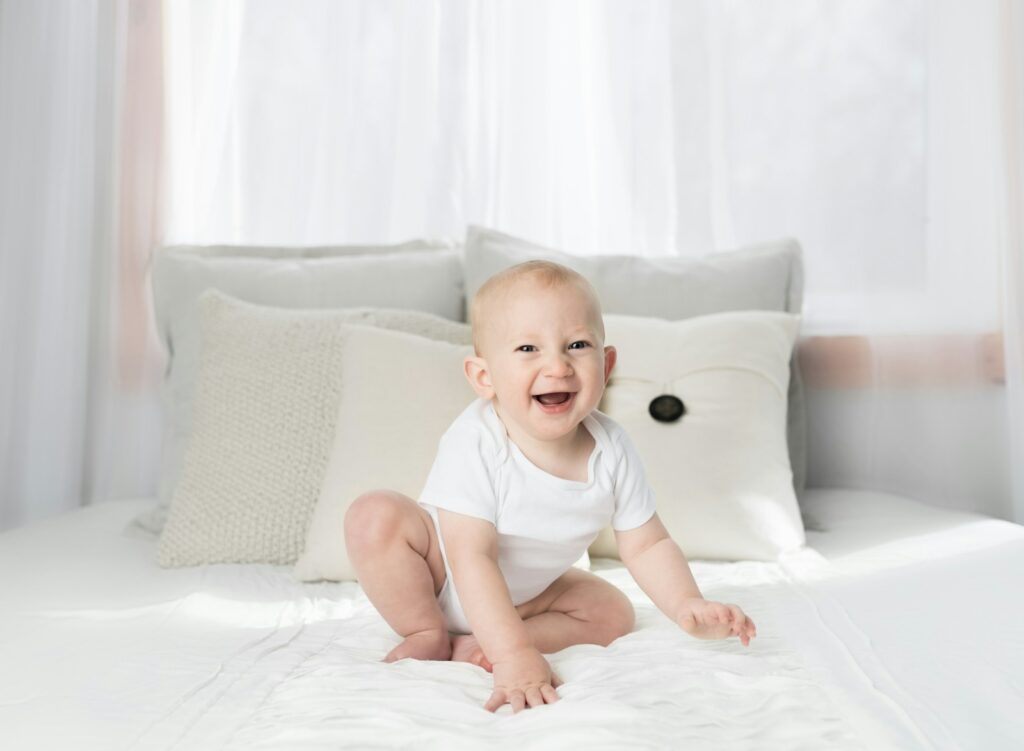
Independent play is healthy, but the clock matters
The American Academy of Pediatrics has long encouraged unstructured play as essential to healthy brain development, noting in its 2018 clinical report on play that free play supports executive function, language and self-regulation even in infancy. That report helped shift the conversation away from the idea that babies need constant stimulation and toward a model where caregivers sometimes step back.
But stepping back and walking away are not the same thing. Janet Lansbury, the early-childhood educator whose work popularized the Resources for Infant Educarers (RIE) approach in the United States, has written extensively about letting babies explore independently. Her practical guidance, drawn from the work of pediatrician Emmi Pikler, suggests starting with just a few minutes of solo play for young infants and building gradually. For a baby under six months, that might mean two to five minutes on a safe floor mat while a parent sits nearby. By 12 months, some children can manage 15 to 20 minutes. An uninterrupted hour is well beyond what most infant-development specialists describe as age-appropriate, particularly right after waking, when a baby is likely hungry and in need of a diaper change.
Pathways.org, a nonprofit that provides milestone-tracking resources reviewed by pediatric therapists, frames independent play as a confidence builder: children learn to test ideas, tolerate mild frustration and entertain themselves without adult direction. UNICEF’s parenting portal echoes that view, noting that free play can begin around six months as long as a caregiver stays close and responsive.
The consensus is not that solo play is dangerous. It is that duration and supervision make all the difference.
Where safety guidance draws a hard line
The distinction between “playing independently” and “left unattended” matters more than many parents realize. The AAP’s safe-sleep guidelines are specific: cribs should be free of loose blankets, pillows and toys, and babies should be moved out of the crib once they are awake and active. A baby who is pulling up, rolling or climbing faces real fall and entrapment risks in a crib, especially one that still contains a sleep sack or nearby furniture.
Pediatric safety resources, including those from the U.S. Consumer Product Safety Commission, stress that crib-related injuries spike when babies begin standing and attempting to climb out, a milestone that can arrive as early as eight or nine months. Leaving a mobile baby in a crib for an extended stretch without visual check-ins introduces a risk that most safety experts would flag.
That does not mean a parent must sprint to the crib the instant a baby stirs. Many certified pediatric sleep consultants, including those affiliated with the American Academy of Sleep Medicine, note that giving a baby a few minutes to resettle or babble contentedly after waking is perfectly reasonable and can even support healthy sleep habits. The key distinction is between a baby who is calm and a baby who is escalating, and between a parent who is monitoring from the next room and one who is fully disengaged.
The parental burnout piece no one wants to talk about
Behind the safety debate is a harder conversation about exhaustion. A 2023 study published in JAMA Pediatrics found that nearly two-thirds of parents of children under five reported moderate to severe burnout symptoms, with sleep deprivation and lack of personal time cited as primary drivers. For a parent running on four hours of broken sleep, that quiet hour after the baby wakes can feel less like a parenting choice and more like a survival mechanism.
Therapists who specialize in postpartum mental health say the instinct to protect that window is not selfish. Dr. Alexandra Sacks, a reproductive psychiatrist and co-author of What No One Tells You: A Guide to Your Emotions from Pregnancy to Motherhood, has written that the cultural expectation of constant maternal availability is itself a risk factor for depression and anxiety. Needing time to collect yourself before the day begins is not neglect. It is self-preservation.
The problem arises when the strategy outgrows the baby’s needs. A three-month-old who coos quietly for 10 minutes is in a very different situation than a nine-month-old who has been awake, hungry and alone in a crib for 45 minutes. Parents who find themselves relying on extended crib time every morning may benefit from adjusting the baby’s wake time, asking a partner or family member to take the first shift, or speaking with a pediatrician about whether the morning routine is working for everyone in the household.
A realistic framework for morning solo time
Pulling the research and expert guidance together, a workable approach looks something like this:
- Under 6 months: A few minutes of quiet crib time after waking is fine if the baby is content and the parent is nearby and listening. Respond promptly to hunger or distress cues.
- 6 to 12 months: Independent play can stretch to 10 or 15 minutes in a safe, baby-proofed space (not necessarily the crib). A parent should be within earshot and checking in visually.
- 12 months and older: Some toddlers will happily entertain themselves for 20 minutes or more. The space should be fully childproofed, and the child should not be confined to a crib they can climb out of.
At every stage, the non-negotiables are the same: the environment must be safe, the baby must not be in distress, and the caregiver must be close enough to respond quickly.
The mother in that forum thread was not describing something unusual. She was describing something millions of parents do and few talk about openly. The answer is not guilt or permission. It is information: how long is reasonable, what makes it safe, and when it is time to rethink the routine.
More from Decluttering Mom: