

Every January, millions of us promise to finally get the house under control. We pick a Saturday, clear the calendar and plan to purge everything in a single heroic weekend. A creator who posts as @organizedchaos4_audrey says that plan is exactly why so many of us give up. Her advice in a short reel is to stop treating decluttering as a chore and start treating it as a hobby, one you work at for the next twelve months.

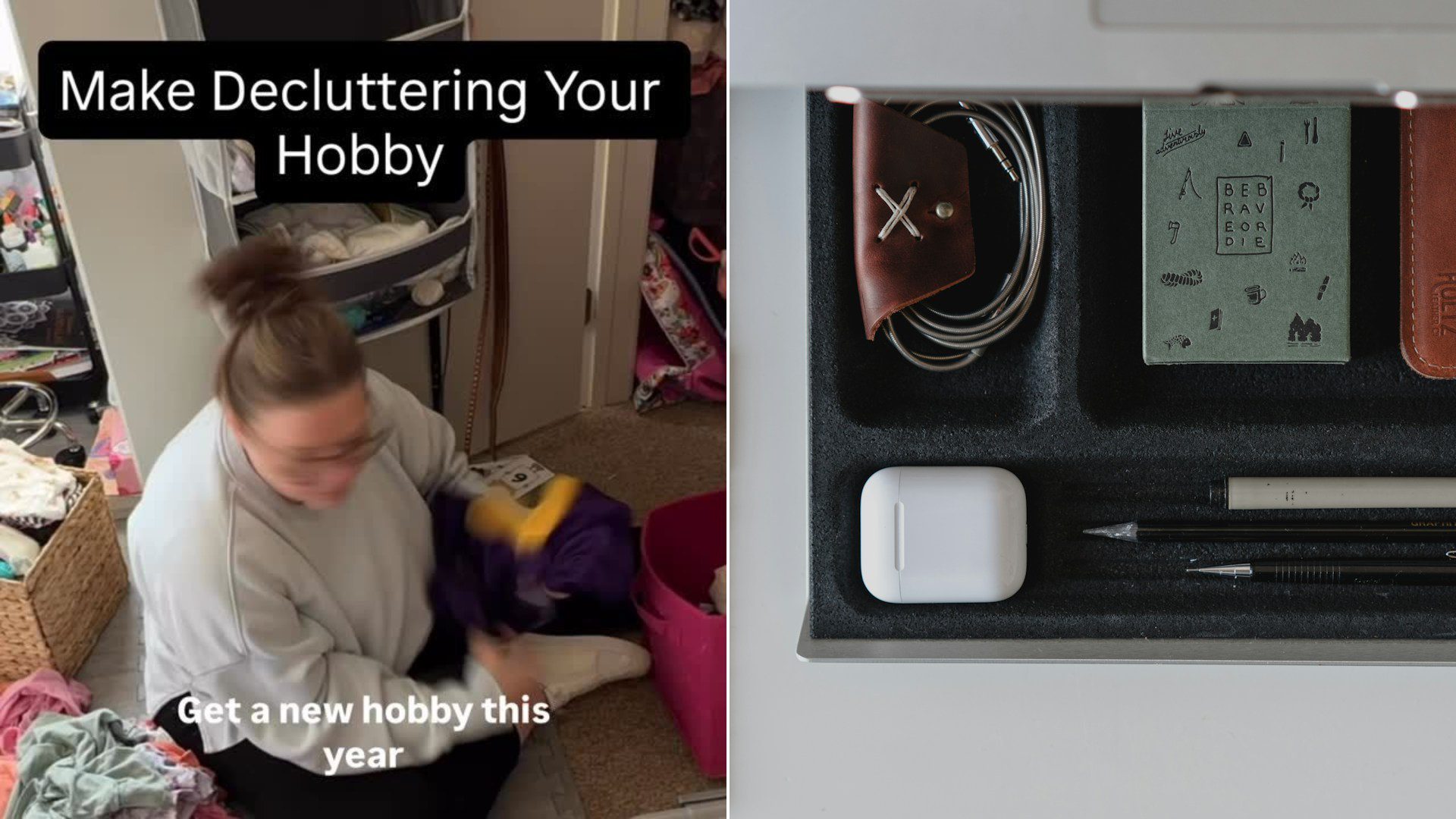
The caption sums up her message: if you actually want to get rid of clutter, decluttering needs to be the thing you do in your spare time. Her reasoning is practical, and it may be the permission slip a lot of tired homeowners have been waiting for.
Pick up decluttering instead of knitting
She opens with a playful challenge. Get a new hobby this year, and forget knitting, painting or gem art. Make decluttering your hobby instead. If you want your home under control, she says, decluttering needs to become that hobby for the next twelve months.
Her warning is blunt. If you think you will get your house under control in a weekend, or even a few weekends, you are setting yourself up for a breakdown. In her view, decluttering is not a task. It is a lifestyle shift.
Why the one big Saturday never works
The familiar plan goes like this: I will just take a Saturday and purge the house. She says that does not work, and she explains why. Decluttering may look like a physical job, but it is really a mental one, and she thinks everyone underestimates the brain power involved. Every single item you pick up requires a decision. Do I keep it, or do I toss it?
She describes the brain as having only so many decision tokens per day, and says that by hour three, you run out. That is decision fatigue. She also takes a swipe at the two minute transformation videos we all see online. We have been lied to by them, she says, because you cannot declutter a lifetime of stuff in forty-eight hours, and your brain will not let you.
Life does not pause for your purge
Her second point is just as down to earth. Just because you want to declutter does not mean life stops. You still have dinner to cook and clothes to wash, and the house still has to be maintained while you work on it. That is why she says the only way decluttering works is in small chunks. Her examples are easy to picture: what you do while the coffee brews, 20 minutes before bed, or 10 minutes on a Saturday morning. Unless you are willing to toss everything into a dumpster without a second thought, she says, you cannot do this fast.
What is decision fatigue, exactly?
The term describes the idea that long stretches of making choices can wear down our ability to choose well. The Behavioral Economics guide on decision fatigue describes it as a psychological cost of choosing, noting that long sessions of decision making can lead to poor choices because deciding takes effort. It points to a 2008 paper by Kathleen Vohs, Roy Baumeister and colleagues in the Journal of Personality and Social Psychology, which framed decision making and self-control as drawing on a limited resource. Researchers still debate how strongly and in what ways this effect shows up, so it is best treated as a useful way to describe a familiar feeling and not as a rigid rule. Most of us know the feeling well. After a morning of sorting closets, even picking a sandwich for lunch can feel like too much.
Why clutter itself is tiring
There is another reason to work in small stretches. Princeton psychology professor Sabine Kastner has spent about twenty years studying attention, and as Princeton Alumni Weekly describes, her work suggests visual clutter competes with the brain’s ability to focus. More objects in view mean more filtering work, which can lead to fatigue and reduced performance over time. In other words, the mess wears on you while you live with it, and the sorting wears on you while you fix it. Short sessions give your mind a break from both.
How to turn decluttering into a hobby
A hobby is something you enjoy returning to, not something you finish in a day. Here are some simple ways to bring her idea into your own routine.
- Attach it to something you already do. Declutter one drawer while the coffee brews, or one shelf while dinner is in the oven.
- Use the ten minute Saturday. Pick a time, set a timer and stop when it rings. A short, regular habit beats an exhausting marathon.
- Try the bedtime twenty. Twenty minutes before bed can clear a nightstand, a purse or a bathroom cabinet. Stop before you are worn out.
- Choose one small area at a time. A single junk drawer or one shelf means fewer decisions and a visible win.
- Keep a donation bag by the door. Make the decision once, drop the item in the bag and move on without rethinking it.
- Keep the house running. Meals, laundry and everyday cleaning still come first. Decluttering is the extra, not the replacement.
- Track your wins. Jot down each spot you finish. After a few months, the list may surprise you.
A note for people who feel behind
If you have been telling yourself that you just need one clear weekend, her message may be a relief. Slow does not mean failing. Twelve months of small efforts adds up to more than a single frantic weekend that leaves you tired and discouraged. It also gives you time to decide what really matters to you, which is the hardest part. For many of us, especially those downsizing or sorting years of family belongings, the pace is the point. You get to think about each item without rushing, and you avoid regretting something you tossed in a hurry.
The bottom line
Her advice comes down to a few ideas: treat decluttering as a hobby, expect it to take a year, expect your brain to tire out, and work in small chunks. No one has to give up their whole weekend or feel guilty about progress that is slower than the internet makes it look. Make a small habit out of it, and the house will change quietly, one drawer at a time.