

Few spaces in the house are as frustrating as a closet that never seems to work. Clothes pile up, hangers tangle and getting dressed takes longer than it should. Professional organizer @organizedetroit says she has organized hundreds of closets, and she shares where she always starts and three placement ideas that make a closet feel more functional and less overwhelming.

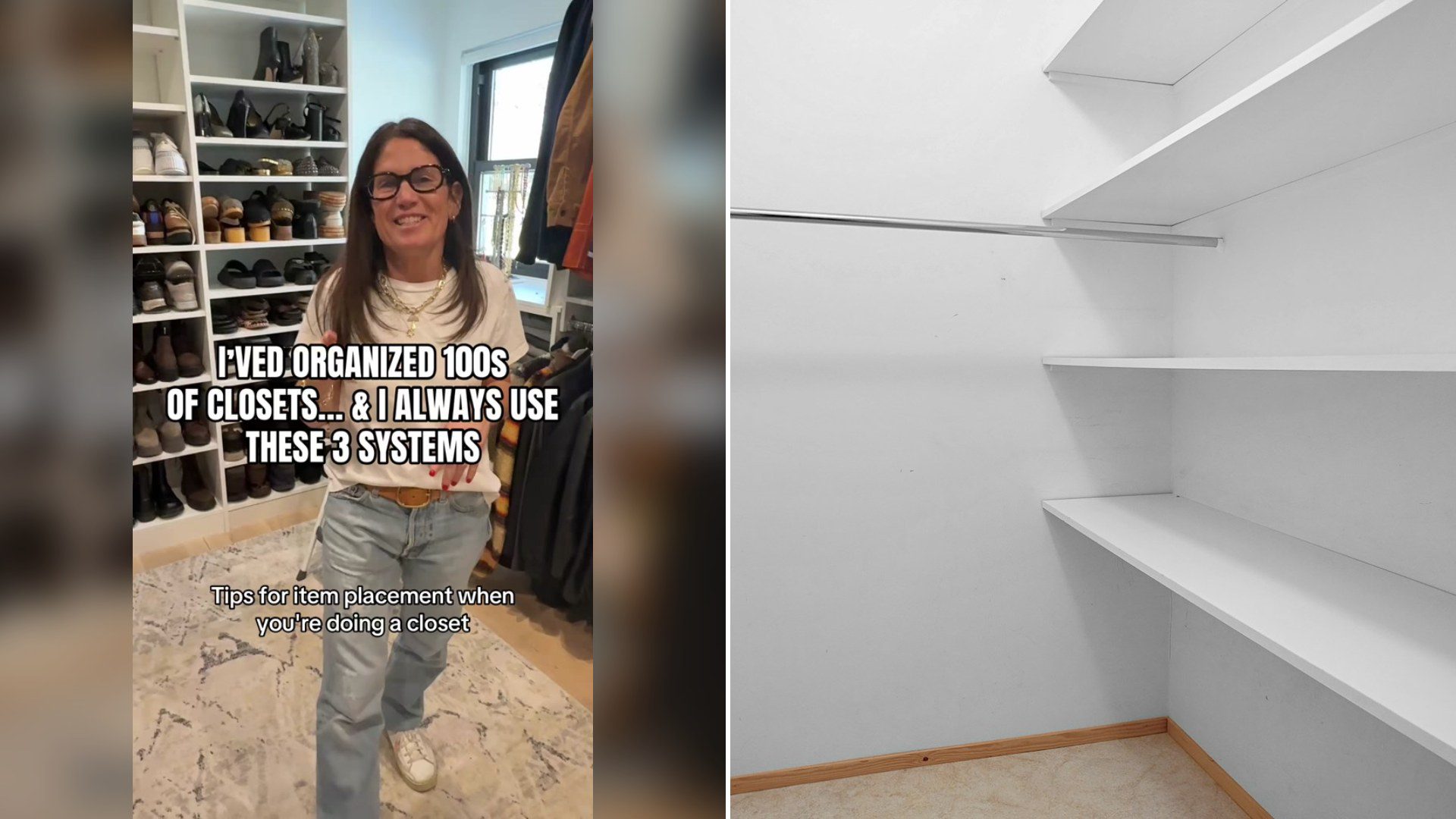
Her caption lists them neatly: long hanging first, heavier items on the bottom and lighter on top, and denim hung and separated for a cleaner look. Here is her walk-through.
@organizedetroit
Always Start With the Long Hanging
Her first rule is to do the long hanging items first. The reasoning is practical. A typical closet has the least amount of full-length hanging space, and there are only so many things that need to go there. Items like dresses, long coats and robes need the tallest section, so they claim that space before anything else.
She calls it taking the low hanging fruit: put the long hanging pieces away first, and then you can see what is left to place around them.
Heavier Material on the Bottom, Lighter on Top
The second tip comes from experience. When a closet has a double hang, with one rod above another, she always puts the heavier material on the bottom. In her example, jackets go on the lower rod, and blouses and shirts go on the upper rod, because those are made of lighter material.
If the top is heavier, she explains, it gives the illusion when you walk in of too much stuff, as if the closet is overflowing. She followed the same idea on the lower section of her example closet, placing long sleeve button downs below and lighter weight short skirts and tops above.
It is a small visual change, but it makes a closet look balanced and calm.
Give Your Denim a Separation Point
The third idea is for jeans. Many of us own a lot of denim, and a pile of jeans can quickly become a jumble. She suggests coming up with a separation point, a clear way to divide the denim into groups so each pair is easy to find.
She also stresses how to fold them. The crotch of the pants should always face the back, she says, and she repeats the word “always” three times for emphasis. In the closet she showed, the lighter denim went on the lower section, while the darker, heavier denim went above.
Her bottom line: think about these little things when you set up a closet, and you will use your space more efficiently and the flow will feel much more organized.
Putting Her Method to Work in Your Own Closet
You do not need hundreds of closets of experience to try these tips. Here is a simple way to follow her order.
Step 1: Take everything out and edit
Before placing anything, pull every piece out of the closet. Set aside items that no longer fit, are worn out or have not been worn in a year. A closet that holds only what you wear is far easier to arrange.
Step 2: Place the long items
Hang dresses, long coats and robes first, in the section with the most vertical space. If you have a lot of long items and not much room, take that as a sign to edit further.
Step 3: Divide the rest by weight
If you have two rods, put jackets, heavy sweaters on hangers and other thicker pieces on the bottom. Put lighter blouses, short skirts and tops above. Stand at the closet door and see how it looks. The goal is for the closet to appear balanced and not top heavy.
Step 4: Group like with like
Within each section, keep similar items together, such as button down shirts with button down shirts and skirts with skirts. A consistent order makes it easier to find what you want and put it back.
Step 5: Set up your denim system
Pick a clear separation point, such as by shade or by style, and fold each pair the same way. Keeping them consistent makes the stack look neat, and you can see at a glance what you have.
More Reasons These Small Tricks Matter
It might seem like a closet is just a place to hold clothes, but the way it is arranged affects how you feel every morning. A closet that looks orderly lets you see your options, find what you need faster and avoid the pile of clothes on the chair that so many of us create when we cannot decide what to wear.
Visual balance also helps you keep a closet tidy over time. When it looks like a well-arranged shop, you are more likely to put things back in their places. When it looks like a heap, it is easy to toss something in and close the door.
If you are helping an older parent or relative with their closet, these ideas can make a big difference, too. Placing the most used items at easy reach, keeping heavy items low and arranging things in a predictable pattern can make getting dressed simpler and safer.
Don’t Forget the Edit
Placement tips work best when the closet is not overstuffed. If hangers are jammed together or shelves are overflowing, no arrangement will look good. Before you rearrange, spend a few minutes removing what you do not wear. Donate good pieces, set aside items to repair and let go of what no longer suits your life. Then use her placement ideas to make what is left look and work its best.
The Takeaway
You do not need fancy organizers to get a closet working. Start with the long hanging items, put heavier pieces below and lighter ones above, and give your denim a simple system. Try it this weekend, and see how much better the whole closet feels.