

Everyone who follows this parent’s page has seen the cute photo: a baby peacefully wrapped in a koala towel hood, calm and photogenic, exactly the kind of image that gets saved and shared. What they haven’t seen is the ninety seconds before and after that photo was taken.

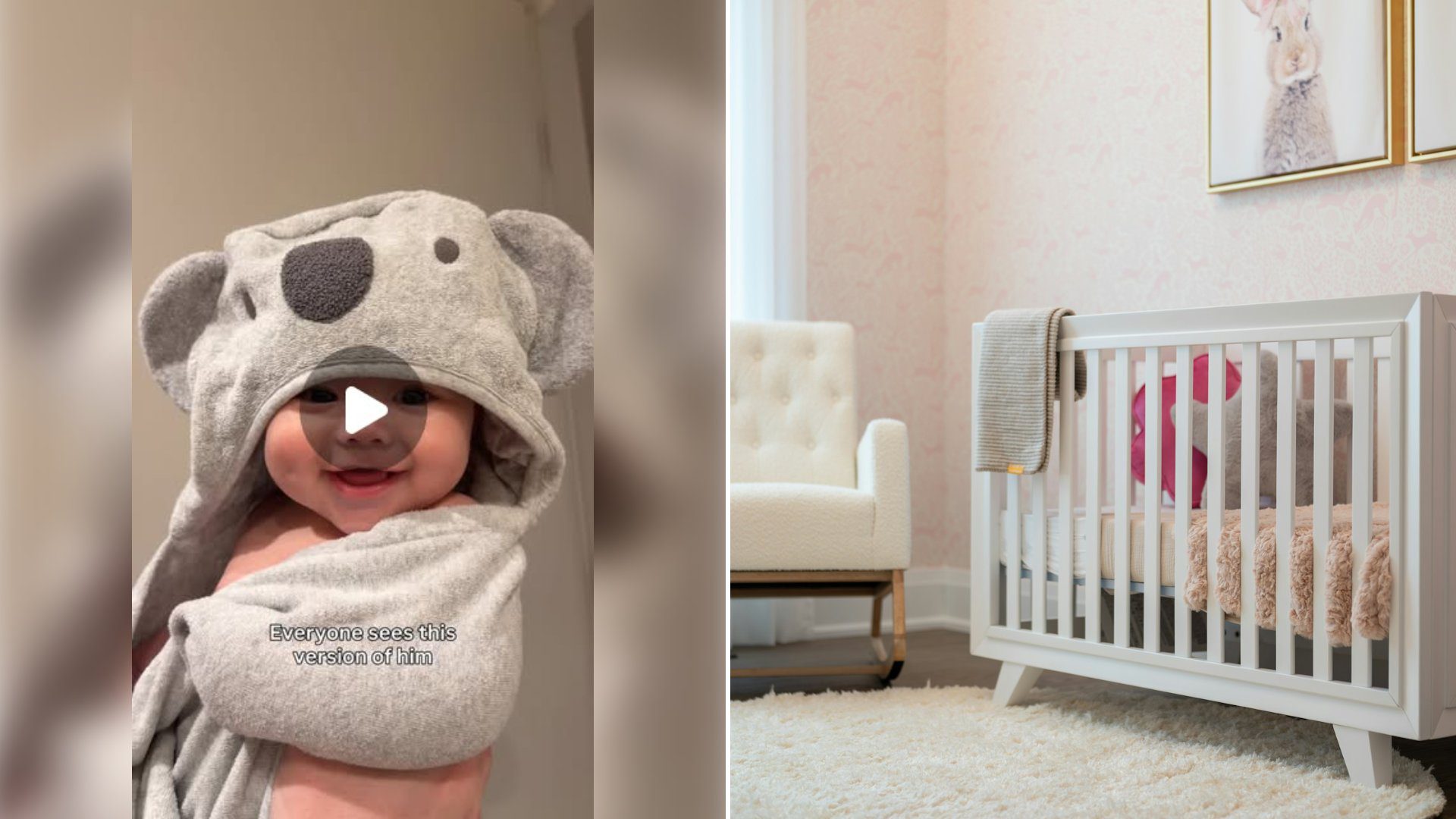
In the video from @mason__ferris, the parent contrasts that calm, cute public image with the chaotic, crying reality they actually experienced getting the baby dressed and settled. The caption spells out the gap plainly: everyone sees the cute version, while mom and dad are the only ones who see the version where they’re just trying to survive another day.
This kind of side-by-side reveal has become one of the most common and most effective formats for parenting content specifically because it addresses a documented problem with how parenting looks on social media. Researchers who study social media’s effect on new parents have repeatedly found that curated, polished images of parenthood — the calm nursery, the content baby, the put-together mom — contribute to feelings of inadequacy and comparison among people viewing them, even when the viewer knows rationally that the images are selective snapshots rather than a full picture of someone’s day.
The issue isn’t that any single cute photo is dishonest. It’s that photos are, by nature, a single frozen moment pulled out of a much longer and messier stretch of time, and an endless feed of those frozen moments from many different families creates a composite impression that parenthood is calmer and more photogenic than it actually is most of the time for most people. A baby might be calm for one still frame out of several minutes of fussing, and the photo that gets posted is, understandably, the calm one, since that’s the moment worth capturing and sharing.
Family and child development researchers have noted that this gap between curated and lived parenting experience can be particularly hard on new parents, who often have the least context for what’s normal and are most vulnerable to believing that other families have it more together than they do. Studies on new parent social media use have linked heavy exposure to idealized parenting content with higher reported anxiety and lower parenting self-confidence, especially among mothers in the first year postpartum, a period already marked by high rates of stress and mood changes tied to sleep loss and hormonal shifts.
That’s exactly why content that intentionally shows both sides, the posted photo and the chaos surrounding it, tends to perform so well and generate so much grateful engagement in the comments. It functions as a kind of correction to the feed itself, reminding viewers that the photo they’re scrolling past from any given family almost certainly has its own hidden ninety seconds of crying, spit-up, or frustration just outside the frame. Parents who see this kind of honest juxtaposition often describe real relief, not because the chaos is new information, but because seeing someone else name it directly makes their own daily experience feel less like a personal failure and more like the shared, unglamorous norm that child development experts say it actually is.
The format also does something subtler: it reframes the cute photo itself. Rather than treating the calm image as evidence that a baby, or a parent, is simply easier or more composed than others, it recontextualizes it as a thirty-second exception inside a much longer stretch of ordinary difficulty, which is a far more accurate description of what early parenting actually looks like behind almost every photo that gets posted.
More from Decluttering Mom
- Mom Behind the Tiffany Plate Shows the Lunch Her Daughter Made Her, From a Dragon Fruit She Says Got Glitter to a Skull Drawn in Mustard on Top of the Cottage Cheese
- Mom Takes Her Bonnet Off So Her Kids Can See Her New Haircut a Second Time and Her Little Girl Reaches Up to Feel It, Calling It So Pretty and Glossy
- Mom Filming in Her Kitchen Gets the White Socks Pulled Right Off Her Feet and Is Left Barefoot on the Tile Saying This Is Motherhood and She Has to Go to the Grocery