


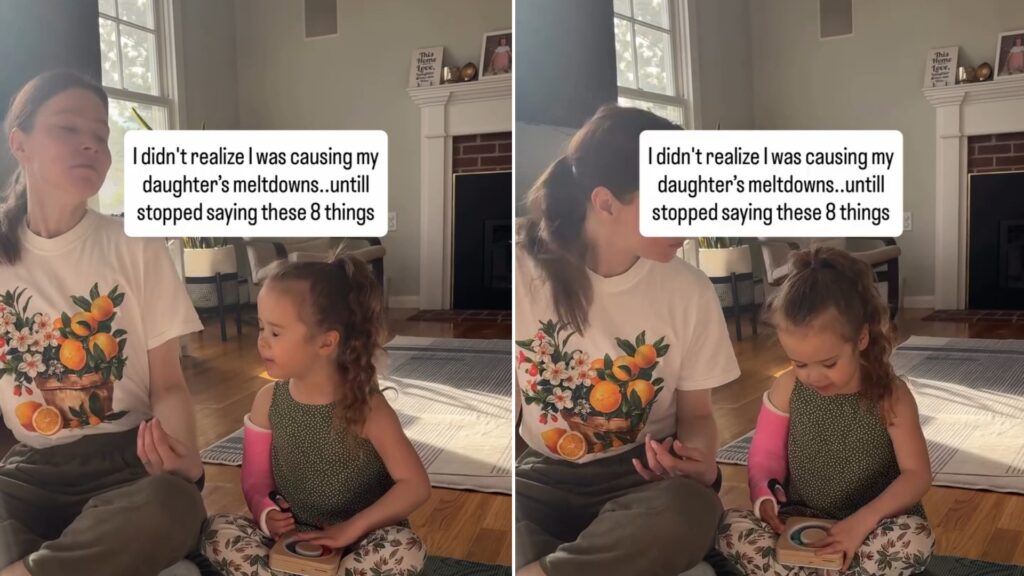
A single line shows up in nearly every grandparent’s parenting history: stop crying or I’ll give you something to cry about. It’s the kind of phrase that got said in kitchens and back seats for decades without much thought, and a parenting coach’s Instagram reel breaking down why that line no longer holds up has pulled in more than 218,000 views, roughly 98 times what a typical post in that space gets. The reel frames it as a generational hinge point: the phrase most people over 60 heard constantly as kids is now near the top of the list professionals tell new parents to drop. That gap between how one generation was raised and how their grandchildren are being raised is exactly where the video sits.
The Phrase Almost Every Grandparent Heard
Versions of the line traveled under different wording, big boys don’t cry, you’re fine, or the more direct threat about giving a kid something to actually cry about, but the underlying instruction was the same: stop the crying, now, regardless of what caused it. It wasn’t cruelty so much as the parenting common sense of the era, when managing a child’s behavior in the moment mattered more than naming what was underneath it. The coach’s reel treats that history with some sympathy rather than blame, framing it as a product of how an entire generation was taught to parent, not a personal failing of anyone who said it.
What Shutting Down Crying Actually Teaches
The concern researchers and clinicians raise about that phrase isn’t about the tears themselves, it’s about what a child learns to do with big feelings when the response is consistently “stop.” A widely discussed Psychology Today piece on the topic lays out both sides of this debate directly, noting that while some structured redirection toward problem-solving can build resilience, chronic suppression of emotion without any outlet is a different matter entirely, one linked in adult research to higher rates of rumination and distress. The line between the two comes down to whether a child is ever handed the words for what they’re feeling, or just told to make it stop.
The Replacement Language Making the Rounds
What’s replaced the old phrase, according to coverage of the shift including a widely shared CNBC report on the topic, is a shorter, more specific script: naming the emotion out loud, acknowledging that the feeling is allowed, and only then moving toward a fix. Instead of stop crying, the suggested line becomes something closer to “I can see you’re really upset right now.” It’s a small swap in wording that professionals argue changes what a child internalizes about whether their feelings are a problem to be managed or a normal part of being upset. The coach’s reel lands on that same practical distinction: retire the demand, keep the comfort.
This Phrase Isn’t Traveling Alone
It’s landing alongside a broader pile-on against a handful of similar lines from the same era, including the once-standard idea that big boys don’t cry. A HuffPost piece making the same argument puts it plainly in its own headline, arguing the phrase needs to be retired for good, on the grounds that telling any child, but especially boys, to suppress crying teaches them to hide distress rather than manage it. The overlap between that reporting and the coach’s reel isn’t a coincidence, it’s a sign that this specific category of command-based emotional language is having a real moment of reconsideration across parenting media at the same time, not just on one creator’s account.
Not a Verdict on How You Were Raised
None of this research frames the grandparents who used that phrase as having done something wrong. Most of them were repeating exactly what they’d heard from their own parents, in an era with far less public conversation about child development and emotional regulation than exists now. The generational contrast isn’t a scoreboard, it’s a snapshot of how quickly the accepted script for handling a crying child has changed in a single lifetime, from stop it right now to tell me what’s wrong.
The words a grandparent used decades ago made sense inside the parenting culture that raised them, and the words their grandkids are hearing now make sense inside this one, which is less a story about right and wrong than about how fast the ground under parenting can shift.