

Sleepovers used to feel like a default part of childhood, right up there with bike rides and birthday parties. Now they are one of the most divisive topics in parenting, with families quietly drawing hard lines about whether their kids will ever spend the night at someone else’s house. The arguments are not just about nostalgia or overprotectiveness, but about safety, mental health, and what growing up should look like in a world that feels very different from the one many parents remember.
Across group chats, school pickup lines, and viral videos, caregivers are weighing the classic promise of late night giggles against a long list of what-ifs. Some are doubling down on traditional overnights, others are inventing new formats like “sleepunders,” and a vocal group is saying no altogether. Underneath the noise, they are all trying to answer the same question: what actually serves their kids best.
The New Sleepover Culture War

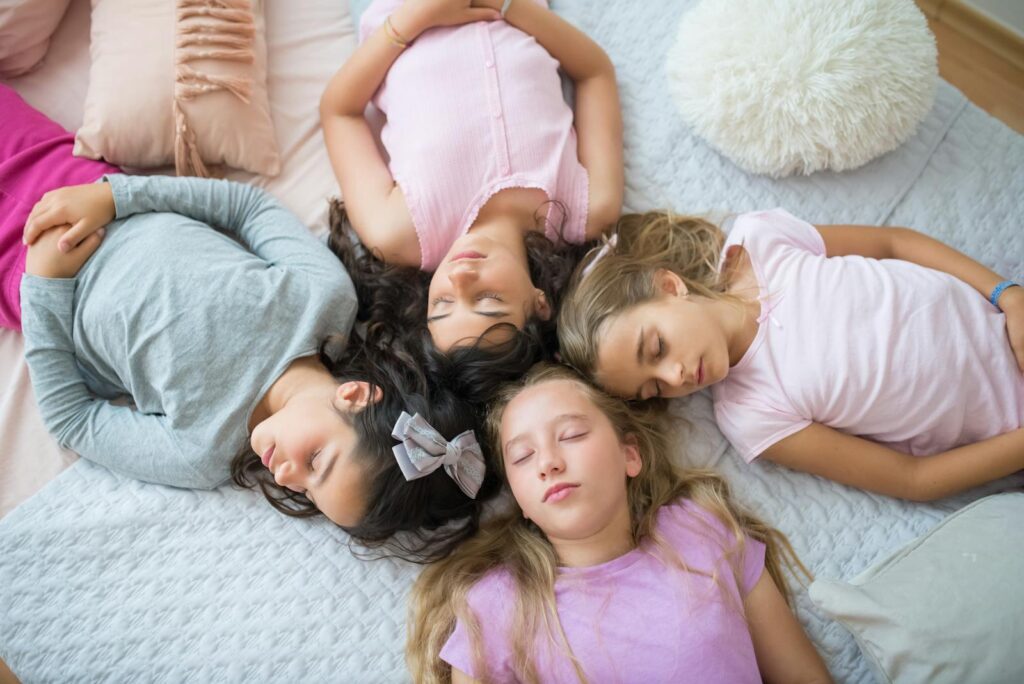
The current wave of debate did not start in a vacuum. Parents have watched social media fill with stories of boundary crossing, bullying, and worse, and that anxiety has turned a once casual yes into a complicated calculus. In one widely shared clip, Jan Huck sits in her car and spells out why she refuses to let her kids stay overnight, describing it as a trend she feels “very strongly” about and sparking a flood of comments from parents who feel the same way, as seen in coverage of Huck. Others have chimed in with their own hard boundaries, turning what used to be a quiet household rule into a public stance.
That online energy has spilled into mainstream parenting spaces, where people are asking, in very literal terms, “How safe are kids’ sleepovers?” Experts point out that no situation is 100% safe, including a night at home, but the conversation has made many parents more cautious about what they once treated as a rite of passage. Some are now calling or texting hosts with detailed questions about supervision, internet access, and who else will be in the house, echoing guidance that adults should not be afraid to ask direct questions before a child spends the night somewhere else, as pediatric specialists at University Hospitals Rainbow have advised.
Why Some Parents Are Opting Out Completely
On one end of the spectrum are families who have decided that the risks simply outweigh the rewards. Some, like a criminal defense attorney who posted a viral video in Mar explaining that he does not allow his children to go to sleepovers because of what he has seen in his work, argue that parents can never really know what is happening behind closed doors, even when they feel like they know the adults hosting, a point he makes bluntly in his Mar clip. Others worry about what happens when kids are exhausted and their judgment is off, a concern echoed by writers who point to research that “Sleepiness Leads to Poor Choices” and that teenagers do NOT think as clearly when they are up late with peers.
There is also a growing sense that the modern environment is simply more complex than it was a generation ago. Commentators who argue that “Sleepovers Aren’t Always Safe” point to unsecured guns, alcohol, drugs, and unsupervised internet access as hazards that can be present even in homes parents trust, warning that kids can face serious risks from Sleepovers Aren what they were in the past. Safety advocates highlight specific dangers like a child gaining access to an unsecured firearm or stumbling into explicit content online in the middle of the night. For these parents, the easiest solution is a blanket “no,” sometimes framed as a core family value rather than a temporary rule.
The Case For Letting Kids Stay Overnight
Plenty of parents, though, are not ready to declare the classic sleepover dead. Child development experts note that overnights can help kids practice separation from caregivers and build confidence in their own ability to handle small discomforts, from missing home to navigating someone else’s house rules. One analysis of Sleepovers points out that these nights away can be a useful way for children to exercise separation and build their ability to tolerate discomfort themselves, skills that matter long after the last slice of pizza is gone. Clinicians at pediatric centers describe how Benefits of Sleepovers include helping kids develop independence and social skills, as long as adults know how to set limits.
Psychologists who study Kids and sleepovers also point to the upside: shared experiences that deepen friendships, chances to practice conflict resolution, and the simple joy of being in a different environment. Educators who work with tweens and teens say these nights can be a low stakes way to learn cooperation, compromise, and problem solving, echoing programs that highlight how Sleepovers provide an opportunity for kids to build Social Skills like communication and conflict resolution. Parenting coaches also note that when adults prepare kids ahead of time, overnights can stretch mental flexibility, a point underscored by guidance that encourages parents to “Know the Benefits” and describes how these experiences can support mental flexibility.
Middle Ground: Sleepunders, Pauses, And New Rules
Between the all-in and never-ever camps, a lot of families are experimenting with compromises. One popular option is the “sleepunder,” where kids show up in pajamas, eat the pizza, watch the movie, and then get picked up before bedtime, a format that has been described in coverage of Jan Huck’s stance on How to handle overnights and whether a child even wants to go. Other parents are taking temporary breaks, like the family who declared “No Sleepover February” and shared that they still see overnights as “an important part of childhood” but wanted a reset after a run of exhausting weekends, a tension captured in a piece that quoted one parent saying, “But I think they are an important part of childhood,” while another flatly stated they were done, as seen in the Feb discussion.
Some families are also rewriting the rules of engagement instead of banning overnights outright. Parenting educators who say “Why We Don’t Do Sleepovers, and What to Do Instead” describe themselves as a “no sleepover” family but still encourage late night playdates, early pickups, and hosting friends at their own house, arguing that kids’ ability to make good decisions is weaker when they are exhausted and unsupervised, a point laid out in the Jun essay. Others are simply narrowing the circle, allowing overnights only with close relatives or families they have known for years, a strategy that lines up with guidance from pediatric experts who frame the question as “Are Sleepovers Safe” and emphasize that it is natural to have concerns when a child spends the night somewhere else, as noted in the Are Sleepovers Safe guidance.
Real Risks Parents Are Weighing
Even parents who say yes to sleepovers are looking more closely at the specific risks. Child safety experts talk about the “Lack of Control Over Environment” when kids are in someone else’s home, noting that adults cannot always know who will be there, what substances are accessible, or how screens are monitored, a concern spelled out in counseling resources that describe how this lack of control affects a parent’s comfort and assessment of risk in Lack of control over the environment. Articles that walk through “Other possible risks” list access to alcohol, drugs, pornography, and unsupervised time on the internet during an overnight, warning that these are more likely when kids are in unfamiliar homes, as one expert named Taylor notes in a piece on Other risks.
More from Decluttering Mom: