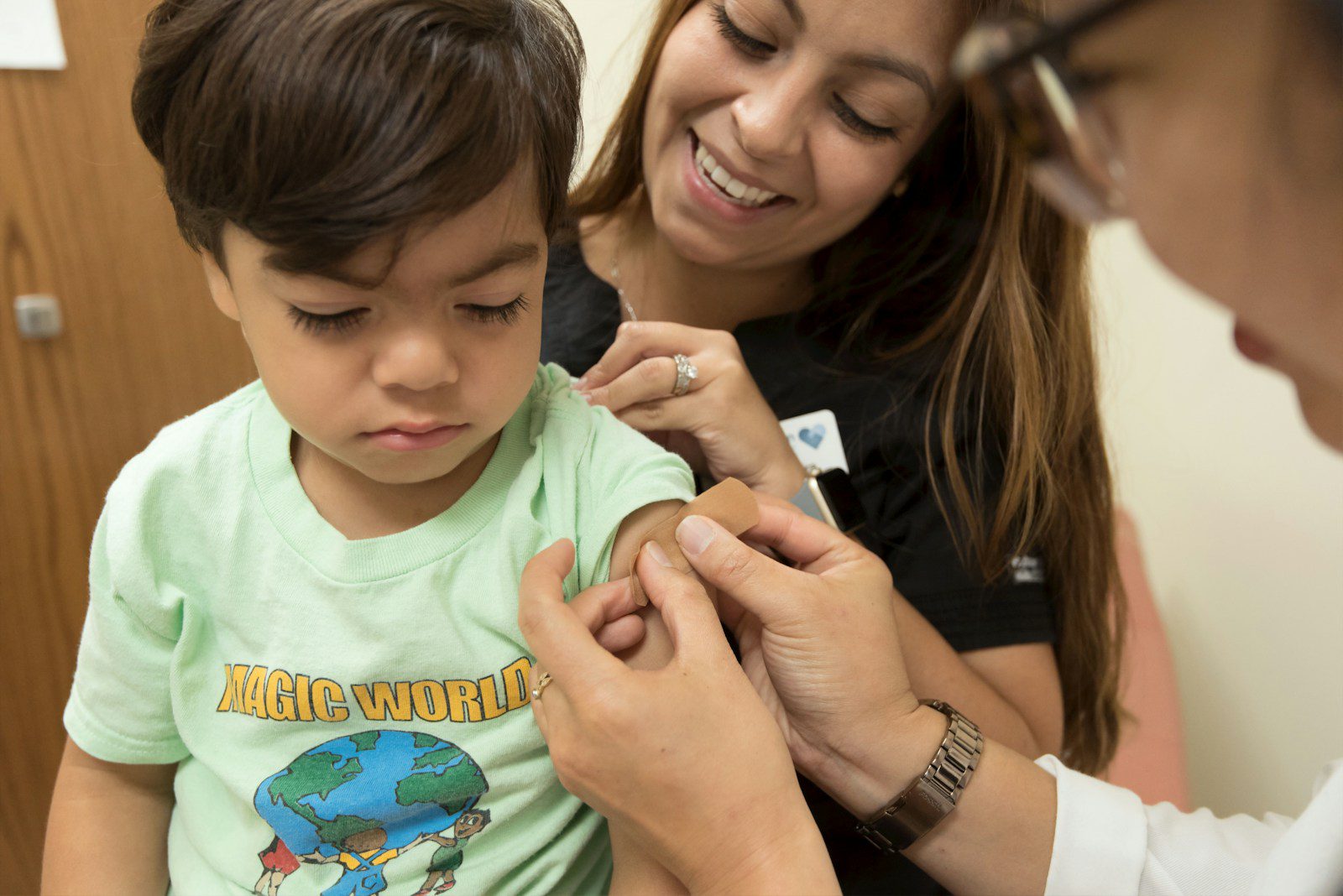
Parents dropping kids off for back-to-school physicals this year are running into two different official vaccine schedules depending on which state they live in — and pediatricians themselves are split on which one applies to their own patients, let alone their own children.

The divide traces back to changes the federal government made to the CDC’s childhood immunization schedule starting in 2025, which by January 2026 had cut the number of diseases covered by routine recommendation from 17 to 11, and the number of routine vaccines from 13 to 7, removing COVID-19, hepatitis B for all infants, rotavirus, influenza, hepatitis A, and meningococcal ACWY from the routine list and reducing HPV from two or three doses down to one. Those changes remain tied up in ongoing federal litigation over how vaccine policy gets set, according to a Congressional Research Service legal analysis of the dispute.
Key Points
- The American Academy of Pediatrics’ own 2026 immunization schedule, published as a policy statement in Pediatrics on January 26, 2026, keeps its longstanding, broader recommendations intact — covering 18 vaccine-preventable diseases, including RSV, hepatitis A and B, rotavirus, influenza, meningococcal disease, measles, and pertussis.
- A KFF analysis found that as of January 2026, 28 states plus Washington, D.C. have said they will not follow the CDC’s narrowed schedule for at least some vaccines, instead pointing to AAP or other non-federal guidance; 25 of those states plus D.C. are departing from CDC guidance for all routine childhood vaccines.
- Every state with a Democratic governor has departed from the CDC’s new guidance, and so have four states with Republican governors — Alaska, Mississippi, New Hampshire, and Vermont — per the same KFF analysis.
What This Means for Families
- School and daycare requirements now depend heavily on the state you live in, since many states set their own entry requirements using whichever schedule — CDC’s or AAP’s — they’ve chosen to follow.
- Pediatricians in practice are largely still following the broader AAP schedule for routine care, even in states that haven’t formally adopted it, because it reflects the guidance most physician groups helped write.
- Ask your child’s pediatrician directly which schedule your state and school district are using for the 2026-27 school year rather than assuming the federal schedule is the only one that matters.
KFF’s analysis notes that the practical effects of this split may not be fully visible until states finish translating their vaccine recommendations into concrete school-entry requirements and exemption rules for the coming academic year — meaning the gap between what the federal government recommends and what a given state, school, or pediatrician’s office actually requires could keep shifting through the fall.