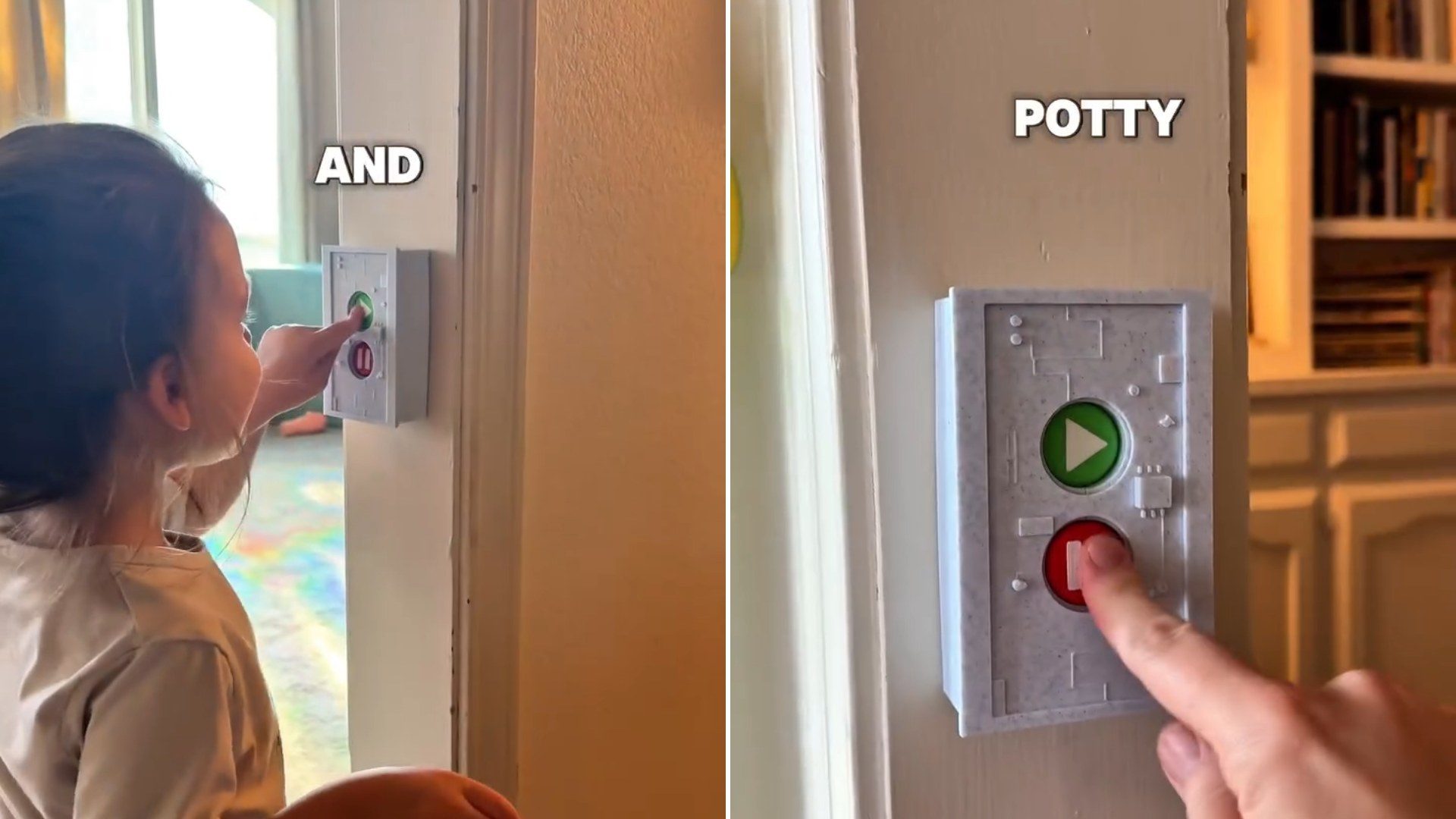
A pediatric physical therapist’s DIY “pause button” tool for toddler meltdowns during transitions is going viral, and the reason it’s spreading has as much to do with how little it costs to build as with how it works, according to her own Instagram post. The account, followed by 140,000 people for credentialed pediatric therapy content, demonstrates the tool directly and explains the reasoning behind it rather than just showing the finished result. It’s built to give a toddler mid-transition, whether that’s leaving the park, turning off a screen, or getting out of the bath, a physical action to perform instead of just an instruction to obey.
A physical button gives a toddler something to actually do. Most transition instructions are entirely verbal: “time to go,” “turn it off,” “two more minutes.” A toddler mid-meltdown is often too dysregulated to process spoken instructions at all, let alone comply with them. A tactile pause button changes what’s being asked of the child from “understand and obey” to “press this,” which is a far lower bar during a moment when the nervous system is already overloaded.
The build itself is what’s driving the attention. Rather than a purchased sensory product, the version demonstrated is assembled from cheap, ordinary materials, which is precisely why parents are saving and sharing it instead of just liking it. A tool other parents can put together in a few minutes with things already in the house removes the two biggest barriers to actually trying a new strategy: cost and setup time.
Pressing the button functions as a warning, not a surprise. The core idea a pediatric therapist brings to a tool like this is sequencing: transitions go smoother when a child gets a concrete, repeatable signal that something is about to change, rather than the change simply happening to them. A button a toddler presses themselves turns that warning into an action the child controls, instead of one more thing being announced or done to them.
Giving a toddler control over the moment lowers the stakes of the transition. Much of toddler transition resistance isn’t really about the activity ending. It’s about a two- or three-year-old having almost no control over their own schedule. A tool that hands over one small, harmless piece of control, the timing of the button press itself, can defuse a fight that was never really about leaving the playground in the first place.
It works because it’s repeatable, not because it’s clever. A single tool doesn’t fix meltdowns by itself. What makes an approach like this useful over the long run is that a toddler can learn what the button means through repetition, the same way any consistent routine cue eventually gets absorbed. Therapists who work with toddlers regularly tend to favor tools exactly like this one because they don’t rely on a child’s ability to reason in the moment, only on their ability to recognize a pattern they’ve seen before.
The credential behind the tool is part of why it’s spreading. Pediatric physical therapists work with sensory and regulation differences as a routine part of their caseload, not as an occasional parenting theory. A tool coming from that background carries a different kind of weight than a generic parenting hack, because it’s built on the same reasoning used with kids who have documented sensory processing needs, just applied to an ordinary toddler on an ordinary bad afternoon.
It fits into a category therapists already rely on. Visual schedules, countdown timers, and warning cues before a transition are standard tools in early intervention and pediatric therapy settings, used specifically because they give a child something concrete to track instead of an abstract sense of time passing. A physical pause button is the same idea in a different form: a tactile version of a warning cue that a toddler can act on themselves rather than just receive.
None of the individual pieces here are complicated on their own. A tactile object, a consistent routine, a small transfer of control to a two-year-old who otherwise has none of it. What’s made this particular version spread is that a credentialed therapist is showing her actual reasoning alongside the build, so parents aren’t just copying a trend, they’re getting the mechanism behind why a two-dollar button might succeed where a stern warning usually doesn’t.