


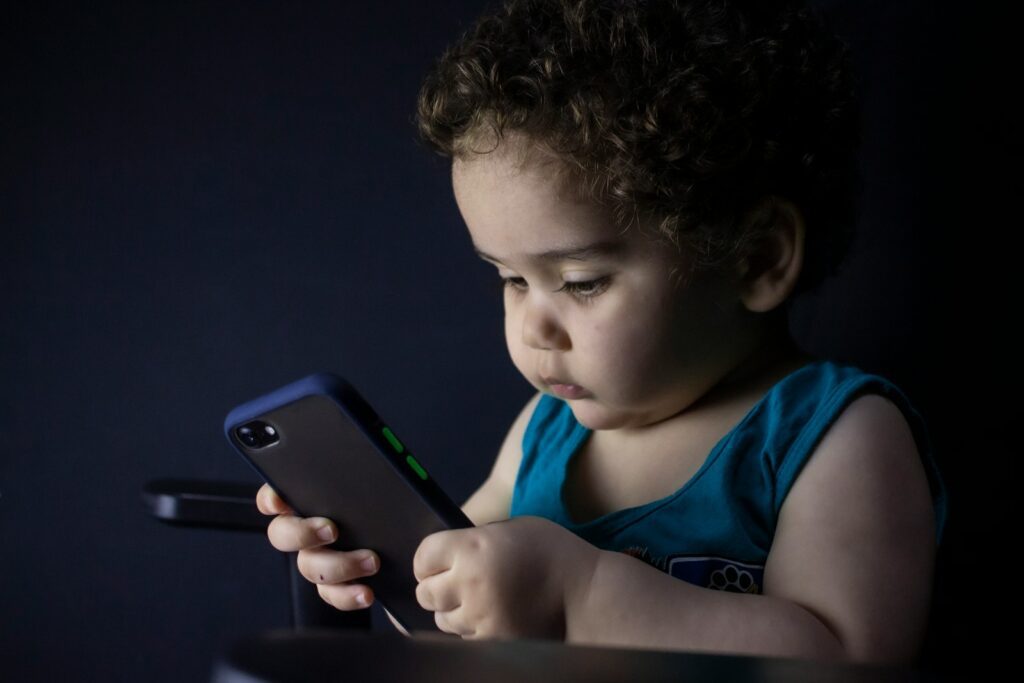
The American Academy of Pediatrics has quietly dropped the number that shaped a generation of parenting arguments: the recommended daily screen-time limit. In updated digital-media guidance, the organization tells families to stop counting minutes and start paying attention to what kids are watching, who they’re watching it with, and why a screen is in front of them at all.


Key Points
- The AAP’s new policy replaces rigid hour-by-hour time limits with a framework built on quality, context and conversation.
- Screens are still discouraged entirely for children under 18 months, aside from video chatting with family.
- The guidance shifts focus from “screen time” to the broader “digital ecosystem,” including autoplay, infinite scroll and algorithm-driven feeds designed to hold a child’s attention.
- Age-specific risks are called out directly: language and motor delays in toddlers, poor sleep and weaker attention in school-age kids, and exposure to self-harm or disordered-eating content among teens.
What Changed
For years, pediatric guidance boiled down to a simple formula: a set number of hours by age, full stop. The updated AAP policy abandons that formula. Instead of a stopwatch approach, it asks parents to evaluate three things every time a device comes out: the quality of the content, the context in which a child is using it, and whether an adult is present to talk through what’s on the screen.
The AAP is explicit that this isn’t a loosening of the rules. Infants under 18 months still learn best through face-to-face interaction, and heavy solo screen use at that age is linked to delayed language development, weaker social skills and disrupted sleep. What’s changed is everything after that. For school-age children and teenagers, the AAP now points to “engagement-based” app design, the autoplay buttons, endless scroll and targeted recommendation algorithms built specifically to keep a child looking longer, as a bigger threat to wellbeing than the raw hour count ever was.
What Parents Should Do
- Create a written Family Media Plan tailored to your own household rather than following a generic hourly cap.
- Co-view or co-play content with younger children instead of handing over a device solo.
- Delay giving kids a personal tablet or phone; favor shared family devices for longer.
- Set specific screen-free times and zones, such as during meals or the hour before bed.
- Model the digital habits you want your kids to copy, since children mirror parental phone use closely.
The AAP frames the shift as a call for shared responsibility rather than a parenting checklist. Protecting kids online, the guidance argues, now requires “teamwork” among parents, pediatricians, teachers, technology companies and lawmakers, not just decisions made at the kitchen table. For families who have spent years tracking minutes on an app, the bigger adjustment may be learning to ask better questions instead.