


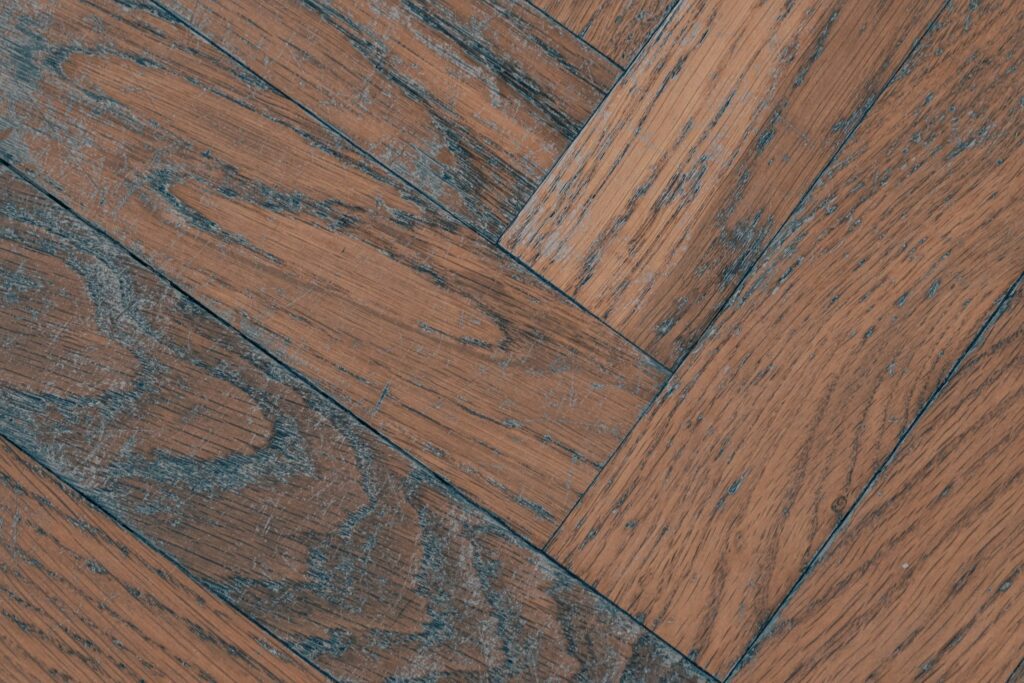
For most of the last decade, the safest bet in flooring was also the plainest one: wide, pale boards running the same direction through every room in the house. That era is loosening its grip. Walk into a newly renovated kitchen or entryway this year and you’re increasingly likely to find the wood laid on the diagonal, in interlocking V shapes, or in tight herringbone rows that catch the light differently depending on where you’re standing. Manufacturers are racing to keep up with the shift, not create it. Two of the industry’s better-known engineered wood brands, AHF Products and Bjelin, both rolled out new herringbone collections in the first half of 2026, and the designers behind them aren’t being shy about why. “Herringbone is having a true resurgence,” Tim Ryan, a designer at AHF Products, told Hardwood Floors Magazine. The floor, in other words, isn’t just the thing you stand on anymore. It’s doing design work.
Why the Floor Suddenly Has Something to Say
Two trends are moving together right now, and that’s part of why this one feels so noticeable. The first is pattern. The second is warmth. According to the 2026 Industry Outlook from the National Wood Flooring Association, published through Hardwood Floors Magazine, white oak now holds the preference of roughly 63 percent of NWFA members, gray stains are steadily losing ground, and close to half of members report growing demand for browner, more natural finishes. One installer summed it up plainly in that same survey: consumers are “getting away from the gray spectrums” and back toward wood that actually looks like wood.
Bryan Hodges, global color and design manager for wood finishes at AkzoNobel, put it a different way in a piece on 2026 color forecasting for Hardwood Floors Magazine: “Natural surfaces, such as light, dark, and warmer brown tones are increasingly dominating wood finishes in all spaces.” Notice that word in the article’s own title, too: rhythm. Warm tone and visual rhythm are showing up in the same sentence across the industry this year, and pattern is the most direct way to put rhythm into a floor. A herringbone or chevron layout does something a plank floor simply can’t: it gives the eye a repeating shape to follow, which reads as intentional and layered rather than default.
Consumer-facing data backs up the warm, natural-material half of that story too. Roomvo, a visualization platform used by nearly 900 flooring retailers, reported in its 2026 trends analysis that engineered wood flooring rose to 34 percent of visualizations in 2025, with oak holding 24 percent of wood flooring searches and beige and brown remaining the top color choices year over year. Put those threads together and you get a fairly clear picture: homeowners want floors that look grounded, natural, and a little more considered than a big-box plank, and pattern is one of the clearest ways to signal that.
Herringbone, Chevron, and the Rest of the Family
These terms get used interchangeably in casual conversation, but they’re genuinely different looks, and knowing the difference will help you talk to a contractor or shop with confidence.
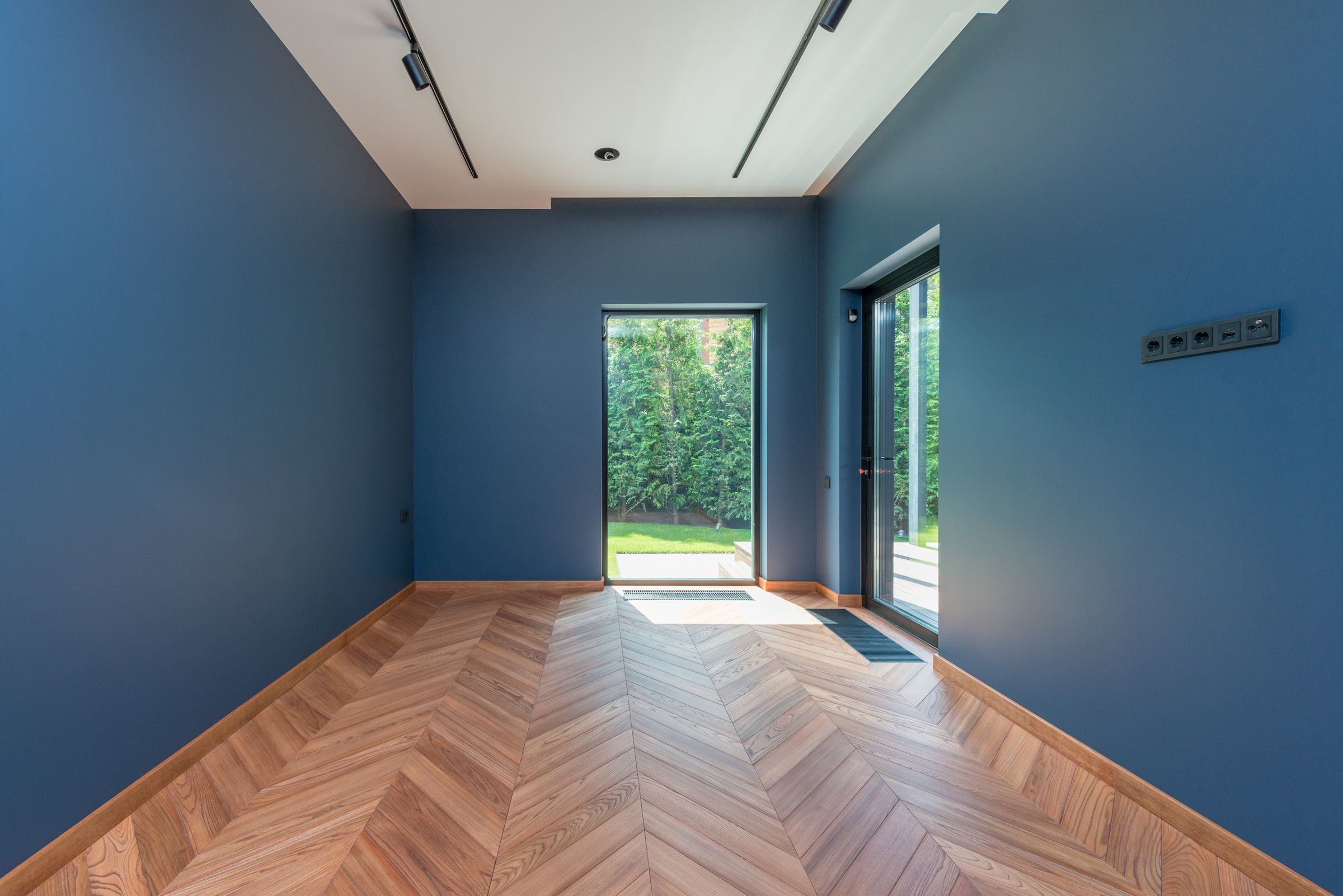
Herringbone uses rectangular planks laid at 90-degree angles to one another, so each row forms a broken zigzag with small notches where the pieces meet. It’s the classic pattern you’d see in a Parisian apartment, and Sara Onsmark, product manager for the Woodura line at Bjelin, described its staying power well when her company launched an updated herringbone collection in January: “Herringbone has never looked this good, and we’re convinced this is the future of flooring.” Chevron, by contrast, uses planks with the ends pre-cut at an angle so they meet in a continuous, unbroken V, with no offset notch. It reads more graphic and streamlined than herringbone, and it tends to feel a touch more modern.
Beyond those two, you’ll also see basketweave (square blocks alternating direction, a nod to traditional parquet), brick or running-bond layouts with mixed plank lengths for subtler texture, and hybrid installs that mix a patterned field with a straight-laid border. None of these require you to abandon a wood species or finish you already love. Herringbone and chevron are layouts, not materials, so you can get either one in warm white oak, a deeper walnut tone, or a mid-century-leaning natural finish, whatever fits your room.

What Pattern Actually Costs You
Here’s the part worth budgeting for honestly. A patterned install costs more than a straight-plank install of the same material, and the gap comes from two places. The first is waste. Herringbone and chevron layouts require precise angled cuts at every board end, and that cutting eats material, so you’ll typically need somewhere in the range of 10 to 20 percent more flooring than a straight run just to account for offcuts. The second is labor time. Setting a pattern requires establishing a centerline, dry-fitting rows to keep the angles true, and working more slowly than a straight-lay job allows. Installers who do a lot of pattern work generally price it well above standard plank installation, often by 30 to 50 percent or more depending on your region, the complexity of the pattern, and how experienced the crew is with it. Ask any contractor for a written quote broken into material and labor separately, so you can see exactly where the premium is coming from before you commit.
Material choice affects the number too. Engineered hardwood, rather than solid, has become close to the default for pattern installs, and it’s telling that both of the 2026 launches mentioned above are engineered products. Engineered construction handles seasonal humidity swings with less expansion and contraction than solid wood, which matters more in a pattern where every joint needs to stay tight. It’s also often the more forgiving, and sometimes more affordable, choice for a first patterned floor.
The Install Itself: More Art Than Swap-In
A straight-plank floor is fairly forgiving of a slightly uneven subfloor and a less experienced crew. A patterned floor is not. Every irregularity in your subfloor shows up more visibly in a repeating pattern, so proper leveling and moisture testing before installation matters even more here than usual. You’ll also want to ask specifically whether your installer has pattern experience, not just hardwood experience generally. Laying a true herringbone or chevron floor is closer to a craft skill than a standard installation task, and a crew that’s never done one before will be learning on your floor. That’s not necessarily a dealbreaker, but it is something to know and price for, and it’s a reasonable thing to ask for photos or references on.
Give yourself more time on the calendar, too. A patterned room typically takes noticeably longer to install than the same square footage in straight planks, simply because of the layout, dry-fitting, and cutting involved. If you’re coordinating other renovation work around your floor, build in that extra runway.
How to Get the Look Without Redoing the Whole House
You don’t need to rip out every floor in your home to bring this trend home, and honestly, most people shouldn’t. Pattern reads as a statement precisely because it’s used with restraint, so a single room, or even part of one, is often the more effective and more affordable move.
An entryway is the classic starting point, and for good reason. It’s usually a small, contained footprint, which keeps both material waste and labor cost manageable, and it’s the first thing anyone sees when they walk in your door. A kitchen is another strong option, especially if you want the pattern to visually anchor an open-concept space where the kitchen flows into a living area laid in straight plank. A primary bathroom or a walk-in closet works well too, especially if you’re already replacing that flooring for other reasons, since the cost delta on a small room is much easier to absorb.
If you’re not ready to commit to a full patterned install anywhere, there are lower-stakes ways in. A herringbone-laid runner or area rug in a hallway gives you the visual rhythm without touching your subfloor at all. Some engineered click-lock lines now offer pre-assembled herringbone panels designed for straightforward DIY installation, which shrinks both the cost and the skill barrier considerably compared to a fully custom pattern job. And a patterned border framing a straight-laid field, a technique borrowed straight from traditional parquet floors, lets you use pattern as an accent rather than covering an entire room in it.
What ties all of this together is that pattern and warmth are solving the same problem for people right now: floors that felt safe for years are starting to feel forgettable. You don’t have to overhaul your whole house to fix that. Pick the one room where you actually linger, the entryway that sets the tone for your whole home or the kitchen where everyone ends up standing anyway, and let the floor do a little more talking there. That’s really what this trend is about. Not more flooring, just more intention in the flooring you already have.