


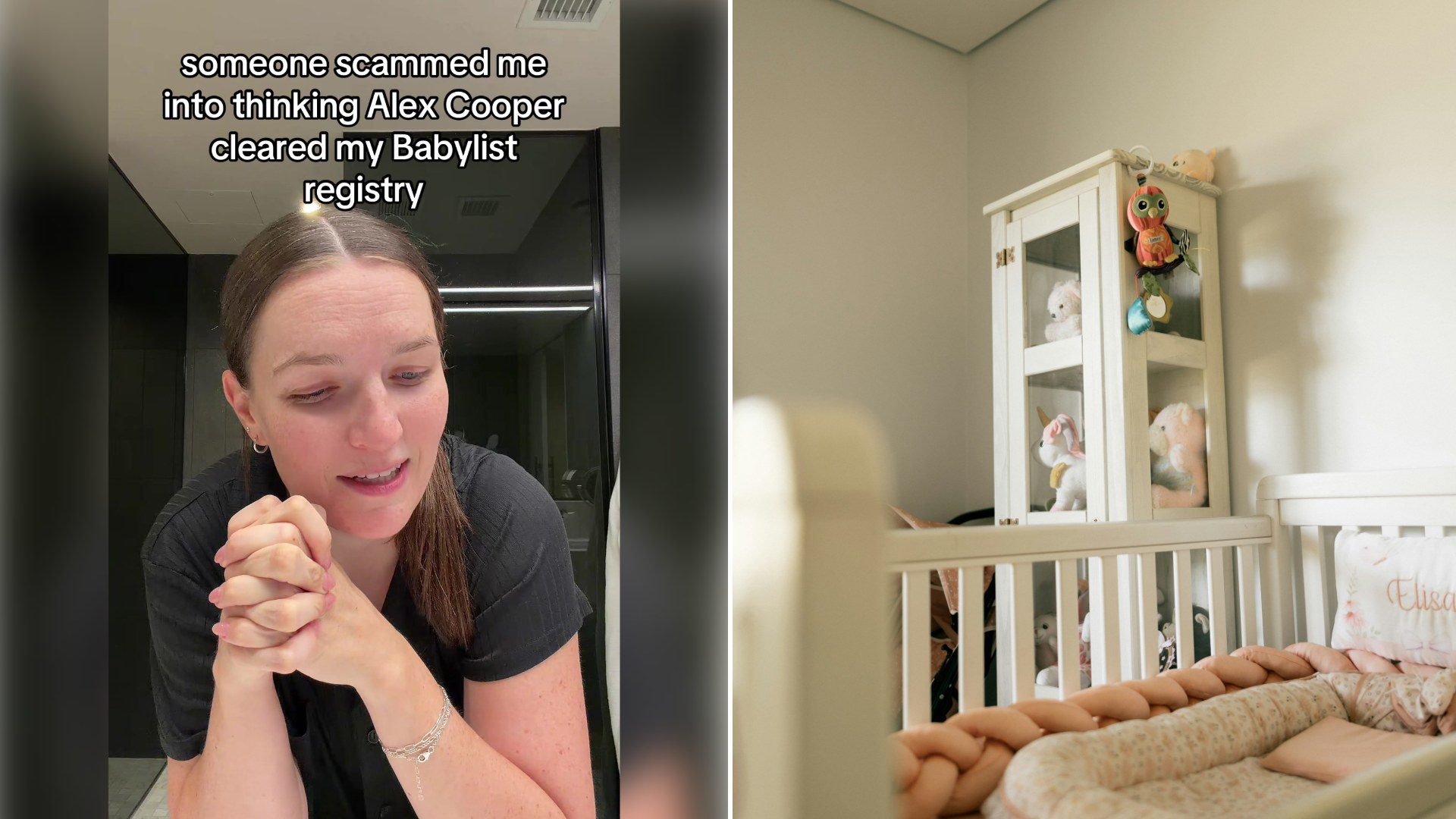
TikTok creator @guacamolleigh, known offline as Molleigh Pompilio, says a strange scam involving her baby registry turned into an outpouring of genuine generosity from more than 40 strangers after her original story spread online.
@guacamolleigh To whoever posed as @Alexandra Cooper to fake clear my registry, I hope you’re pleased with yourself☹️ Thank you for your help, @Babylist. #Babylist #BabylistIyForward #Babygang #AlexandraCooper #DaddyGang ♬ original sound – MOLLEIGH POMP
Pompilio says she discovered that items on her Babylist baby registry had been marked as purchased, seemingly under the name of podcaster Alex Cooper, but that the gifts never actually arrived. According to her account, the marks on the registry created the impression that her needed baby items had been taken care of, when in fact nothing had been sent at all.
It’s worth being precise about what is and isn’t established here: Pompilio has described the purchases being falsely attributed to Cooper’s name, but there is no indication Cooper herself was involved in any way, and the incident appears to be an instance of someone else using or referencing the name without her knowledge. The story is being treated strictly as Pompilio’s account of what happened on her registry, not as a claim about Cooper’s actual conduct.
After Pompilio shared what had happened, the response from strangers online reportedly went well beyond just sympathy. More than 40 people are said to have stepped in to actually purchase the items that had been falsely marked as bought, with helpers reportedly located across 21 states and two countries. What started as a frustrating and confusing experience turned into a genuine wave of support from people she had never met.
Registry-related stories have become a recognizable subgenre of pregnancy and new-parent content precisely because registries sit at an emotionally loaded intersection of vulnerability and generosity. A registry is, functionally, a public list of things a family says it needs, which makes it both a convenient way for loved ones and strangers to help and, occasionally, a target for confusion or misuse. Pompilio’s story captures both sides of that dynamic in a single arc: the unsettling discovery that something had gone wrong, followed by a level of stranger-driven support large enough to span dozens of participants across the country and beyond.
A statement attributed to Babylist has also been referenced in connection with the incident, though the specifics of how the false purchase marks were made, whether through a technical glitch, a prank, or something else, remain part of the story as told by Pompilio rather than independently detailed here. The throughline that has resonated with viewers is less about how the scam happened and more about how quickly a community mobilized once they heard about it.
The scope of the community response described in connection with this story, more than 40 people across 21 states and two countries, is notable less for its exact figures and more for what it represents: strangers who had never met Pompilio choosing to act on a story they encountered online. That kind of coordinated, distributed generosity has become a recognizable pattern whenever a sympathetic story about a scam or mix-up spreads widely enough, though the scale can vary considerably from one instance to the next. As with the rest of this story, the specific numbers describing the response are being treated as reported figures tied to Pompilio’s account rather than independently verified totals, since they describe an organic, decentralized wave of support rather than a single tracked campaign.
The involvement of a well-known public figure’s name in the false purchase marks, even without any actual connection to that person, likely amplified attention to the story beyond what a similar registry mix-up might normally receive. That amplification appears to have worked in Pompilio’s favor here, since it’s plausibly part of why so many strangers encountered her story in the first place and chose to step in, even though the underlying issue, missing registry items regardless of whose name was attached, would have been just as real without that detail.
The specificity with which Pompilio’s story has been reported, down to the number of states and countries represented among the strangers who stepped in, also underscores how far a single social media post can travel once it resonates. A registry mix-up that might once have stayed a private frustration between one family and one retailer instead became something a distributed, international group of strangers felt compelled to personally address, which says as much about the reach of modern platforms as it does about any individual act of kindness within that response.
The Takeaway
Registry scams and mix-ups, whatever their exact mechanism, tap into a vulnerable moment for expecting parents who are relying on public registries to help stock up on essentials before a baby arrives. It’s a reminder to periodically check registry activity directly rather than assuming a “purchased” label always means an item is truly on its way.
The more heartening thread here is what happened next: strangers who saw a parent in a tough spot chose to act. That instinct, filling a gap for someone you’ve never met simply because you can, is worth holding onto well beyond any one viral moment, and it’s a good reminder that community generosity often shows up exactly when it’s needed most.
For expecting parents managing a public registry, it’s worth periodically checking in directly with the retailer if something looks off, rather than assuming a status update is always accurate. And for everyone else, this story is a useful example of how quickly online communities can turn concern into concrete help when a clear, specific need is shared.