

You have probably said it a hundred times. “Clean your room, and then you can focus on your homework.” It turns out there may be some real brain science behind that old line. A piece in Princeton Alumni Weekly, from a 2015 print issue, describes research by Princeton neuroscientist Sabine Kastner on how clutter competes for your brain’s attention.

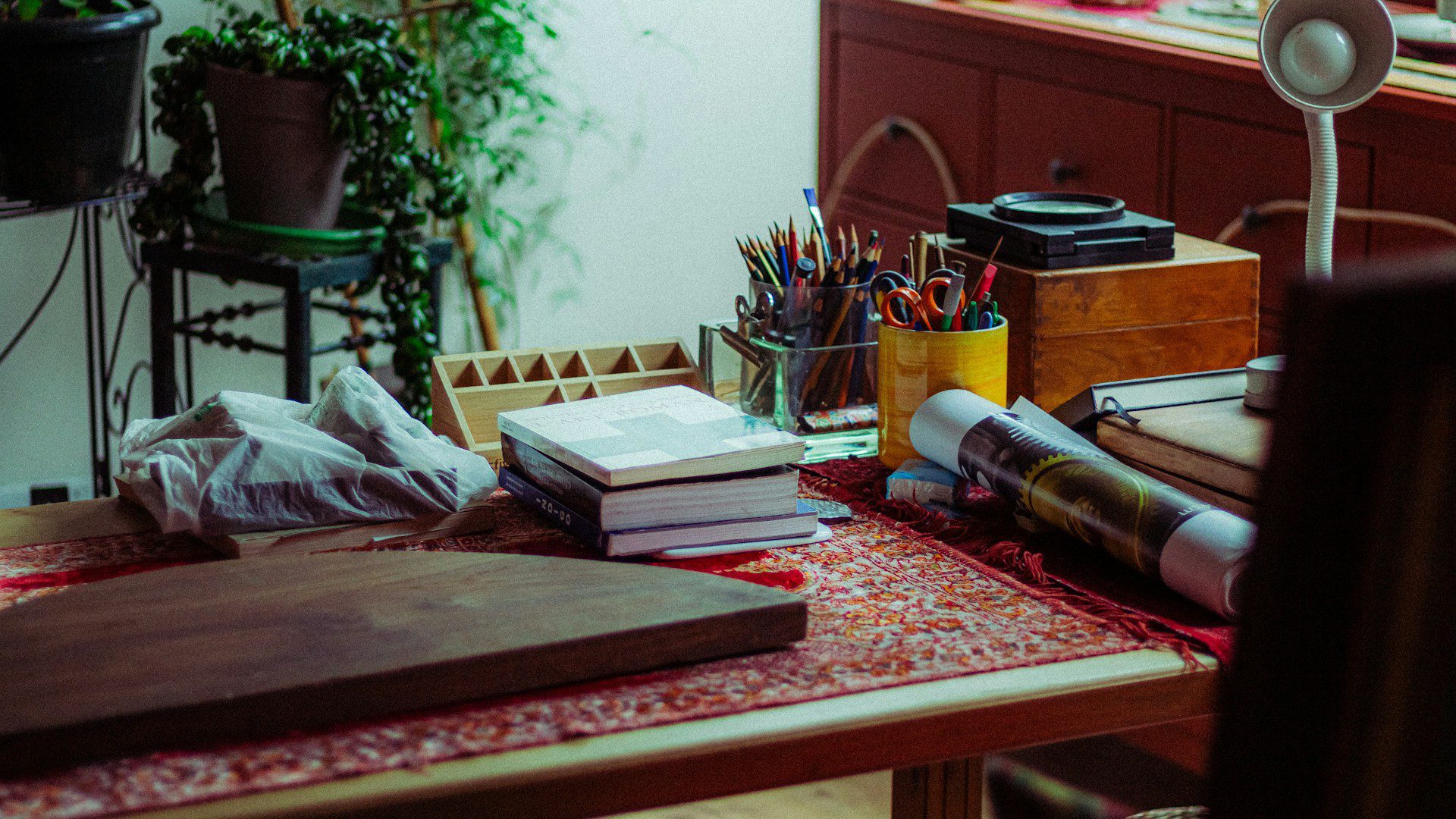
The idea is easy to picture. Think of the kitchen table covered in mail, school papers, a half-finished craft and a stack of mugs. Even when you are not looking at any one item, your brain is taking all of it in.
What The Research Says
According to the article, Kastner’s work used fMRI, a type of brain scan, to look at how the brain handles what we see. The finding was that the more objects there are in view, the harder the brain has to work to filter them out. Over time, that effort tires the brain and reduces its ability to function.
In other words, a busy scene is not neutral. Your mind has to sort what matters from what does not, and that sorting takes energy. A clear surface asks less of you.
What This Does Not Prove
It is worth being fair about the limits. This is attention research done in a lab. It is not a study of how messy homes affect health, and it does not say that a cluttered house is harmful in some bigger way. What it does offer is a sensible reason to think that a calmer visual space can make it easier to concentrate.
That is a modest claim, but a useful one, especially if you are raising kids or working from a kitchen table.
The Part About Kids
Here is the piece that caught our eye. According to the article, Kastner suggests that some children may be overwhelmed by clutter rather than unable to focus. Tidying the workspace is the advice that comes with it.
Read that again if you have a child who “can’t pay attention” during homework. Before assuming something is wrong with the child, it may be worth looking at the desk. A child sitting in a sea of toys, crayons, loose papers and chargers may simply be facing too much to filter out.
That does not mean every child who struggles with focus just needs a cleaner room. Some kids need other kinds of help, and a teacher or doctor is the right place to start when you have real concerns. But a tidy desk is free, quick and worth trying first.
It also helps to remember how a child experiences a room. Grown-ups walk past a pile of laundry or a stack of boxes without a second thought, but a child sitting right in the middle of a mess may be taking in far more than we realize. Seeing the desk from the child’s seat is the first step toward fixing it.
A Ten Minute Desk Reset
- Clear the whole surface. Take everything off, even the things that “belong” there.
- Wipe it down. A bare, clean desk is a good fresh start and shows kids what the goal looks like.
- Put back only what is needed for the task at hand. Paper, a pencil and the book for tonight’s work are usually plenty.
- Give everything else a home. A basket, a drawer or a shelf nearby keeps supplies close without keeping them in view.
- Turn off extra distractions. Put the toys, tablets and loose snacks somewhere out of sight while homework is happening.
- End each session with a two minute tidy, so tomorrow starts clean.
If a full reset feels like too much on a school night, start smaller. Clear just the area directly in front of your child, the width of a notebook and a pencil case. Even that small patch gives the eyes a calmer place to land.
Make It Work For The Whole House
The same idea applies to grown-ups. If you pay bills at the dining room table or answer email from a corner of the living room, try clearing the space before you sit down. You may notice you settle in more easily.
You do not need a perfect, magazine-ready house. You need a few clear spots where the mind can rest. Start with the places where focus matters most, such as the homework desk, the home office and the kitchen counter where the family paperwork piles up.
Let kids help set it up. Children are more likely to keep a space tidy when they helped decide how it works. Let them pick the basket, label the drawer or choose where the pencils live. A small bit of ownership goes a long way.
And be kind to yourself. Clutter happens in busy families, and nobody keeps every surface bare. The goal is not to win a cleaning contest. It is to give your brain, and your kids’ brains, a little less to fight through each day.
So the next time homework turns into a battle, skip the lecture for a moment. Look at the desk first. If the research is right, clearing it may be one of the easiest ways to help a young mind settle in and get to work.
More Stories You May Like
- Consuming Too Much Decluttering Advice Can Make Decluttering Feel Harder, Because Your Brain Gets Overloaded If You Never Act On It
- School Tells a Parent to Stop Making Their Kid Good Lunches Because Other Kids Are Jealous and Parents Are Furious
- Thrift Flipper Paid Forty Dollars For An Italian Leather Couch At Goodwill And Says One Hour Of Work Means Five Hundred Sixty Dollars In Profit