

Organizing products promise to fix everything, but not every container earns its place. Professional organizer @resetorganization, who works with clients in the Los Angeles area, shares the items she almost always removes from clients’ homes and the easy, inexpensive swaps she brings in instead.

Her point is that materials and sizing can make or break a space. Items meant to be great solutions can end up working against you. Here is her full rundown.
@resetorganization
Drop Front Shoe Boxes
First on her list are drop front shoe boxes. In theory, she says, they are amazing because they separate your shoes. In practice, they take up a ton of space and are clunky. The front door of the drop front box is always breaking, and they collect dust, so your shoes get dirty.
She says she has seen them work well in a few closets, but nine times out of ten they are not the best solution. As alternatives, she points to the shoe organizers she uses for clients, including a stackable style for heels and expandable shelves she loves in shelving units with plenty of height between shelves, as well as a combination of the two.
Bulky Plastic and Wood Hangers
Next up are plastic and wood hangers. Wood hangers are beautiful, she says, but if you do not have the proper clothing rod space, they work against you. Her swap is a slim velvet hanger, which gives you more room on the rod.
Multi Pant Hangers
She also does not love the pant hangers with multiple bars. In theory they seem smart, but in practice they create more bulk in the closet. Once fully released, they become much wider, as shown in the product image, and your clothes end up sitting on top of each other along the rod.
Her swap is baby hangers for pants, which she uses for male and female clients alike. They fit perfectly and are not clunky, because the end of a full size hanger is not getting tangled in the next one. If your clothing rod is higher, she says the multi pant hangers can work, and another option is putting your pant loops through an S hook.
Drawer Organizers With Mesh Inserts
Drawer organizers with mesh inserts that separate everything are another item on her list. She says they are great for getting familiar with categorizing, file folding and color coordinating. But only so much fits in them, and she finds many clients stuff just two pairs of leggings into each little cavity. It becomes clunky and hard to maintain.
Her swaps are bins without the dividers, which fit more and let you pull out one bin at laundry time and refill it. She also loves dresser dividers, whether acrylic or bamboo, to separate pajamas, T shirts, sweatpants, sweatshirts and workout clothes. They also save you from hunting for an organizer that is the perfect depth for your dresser.
Bins in the Wrong Size
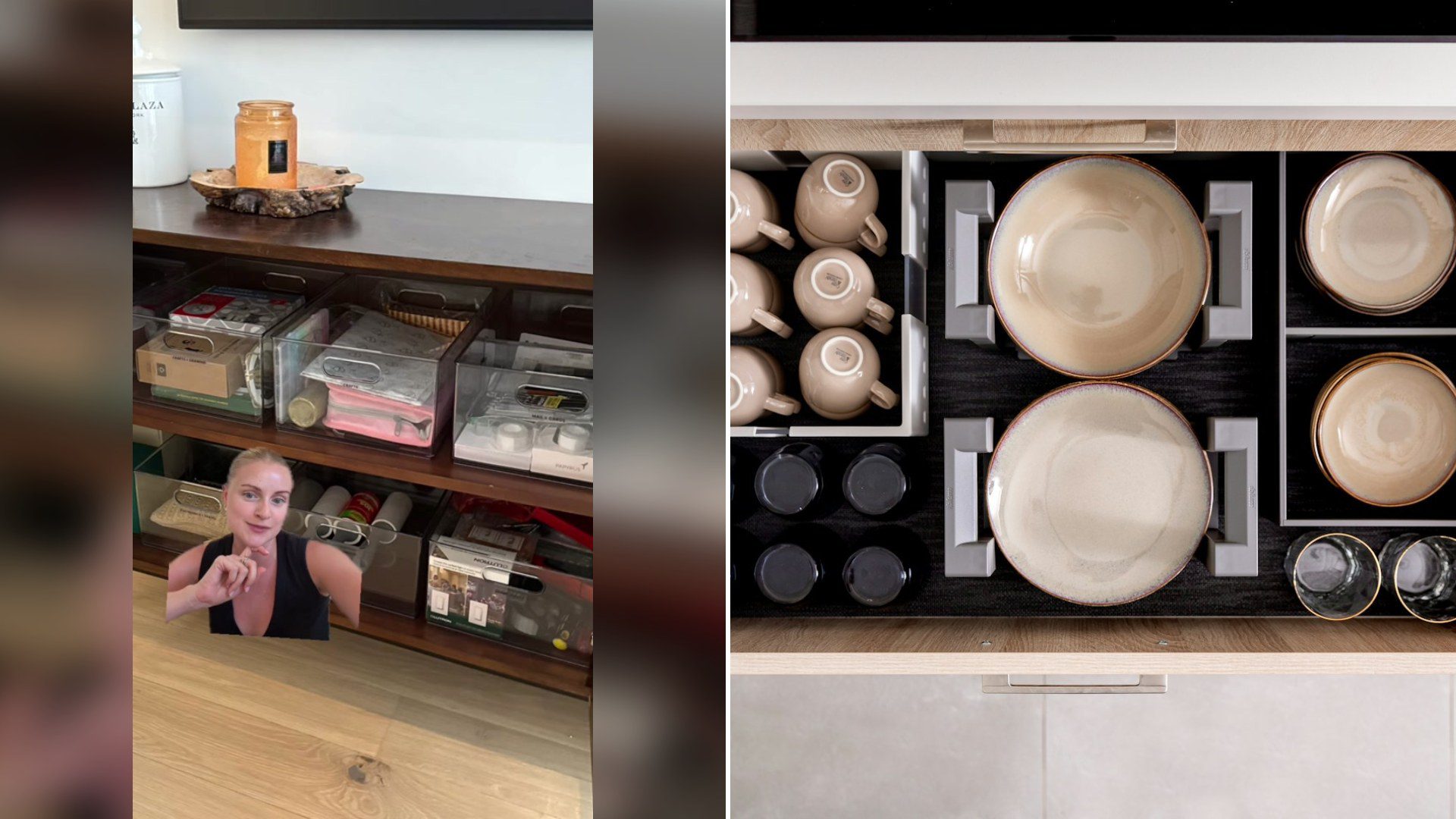
Last on her list are bins that are not sized correctly for the space or the job. She likes bins and says visual clutter is real, and that bins combat it, since not everything needs to be on display. But a bin with the wrong depth for the shelf or cabinet makes the system counterproductive.
Her example is T shirts. A tapered bin does not make the most sense for them, because a more squared off bin lets you fit more. She also shares a client story: the client bought acrylic bins that were too small for her media console, so she could not categorize and organize properly. Swapping in correctly sized bins let them use the space fully and organize everything.
She notes that all the swaps are easy and inexpensive.
A Quick Guide to Choosing Better Organizers
Her advice lines up with some simple principles you can use before you buy anything new.
Measure first
Before shopping, measure the width, depth and height of the shelf, drawer or cabinet. Write the numbers on a card and keep them in your purse or wallet. Bins that fit the space exactly use it best.
Choose slim over bulky
In a closet, every fraction of an inch on the rod counts. Slim hangers allow more clothing to hang without crowding, and they make the closet look uniform.
Pick flexible over fixed
Expandable shelves, adjustable dividers and open bins can change as your belongings change. Fixed compartments can only hold what they were designed for.
Think about how you will use it
If you will pull out a bin of leggings at laundry time, an open bin is easiest. If you want to see all your shoes at once, an open shelf may be better than a closed box.
Buy only after you declutter
The best storage product is the one you do not have to buy. Edit your belongings first, then decide what, if anything, you need to contain.
What to Do With the Products You Are Replacing
If you already own some of the items on her list, you do not have to throw them in the trash. Perfectly good hangers, bins and shoe boxes may be welcome at a thrift store, a school or a local charity that accepts household goods. You can also reuse them in other parts of the house, such as a garage, craft room or pantry, where bulk matters less.
The Takeaway
Not every organizing product is a good fit for every space, and a popular item may be working against you. Her message is that small swaps, such as slim hangers, the right size bin and simple dividers, can make a big difference without costing much. Take a close look at one closet or drawer this week and ask whether your containers are helping or getting in the way.