

A professional organizer posting as @method_seattle has a message for every homeowner staring at a packed garage and wondering whether it is time to rent a unit across town. Her answer is blunt: “If you’ve run out of space, you don’t need more storage.”

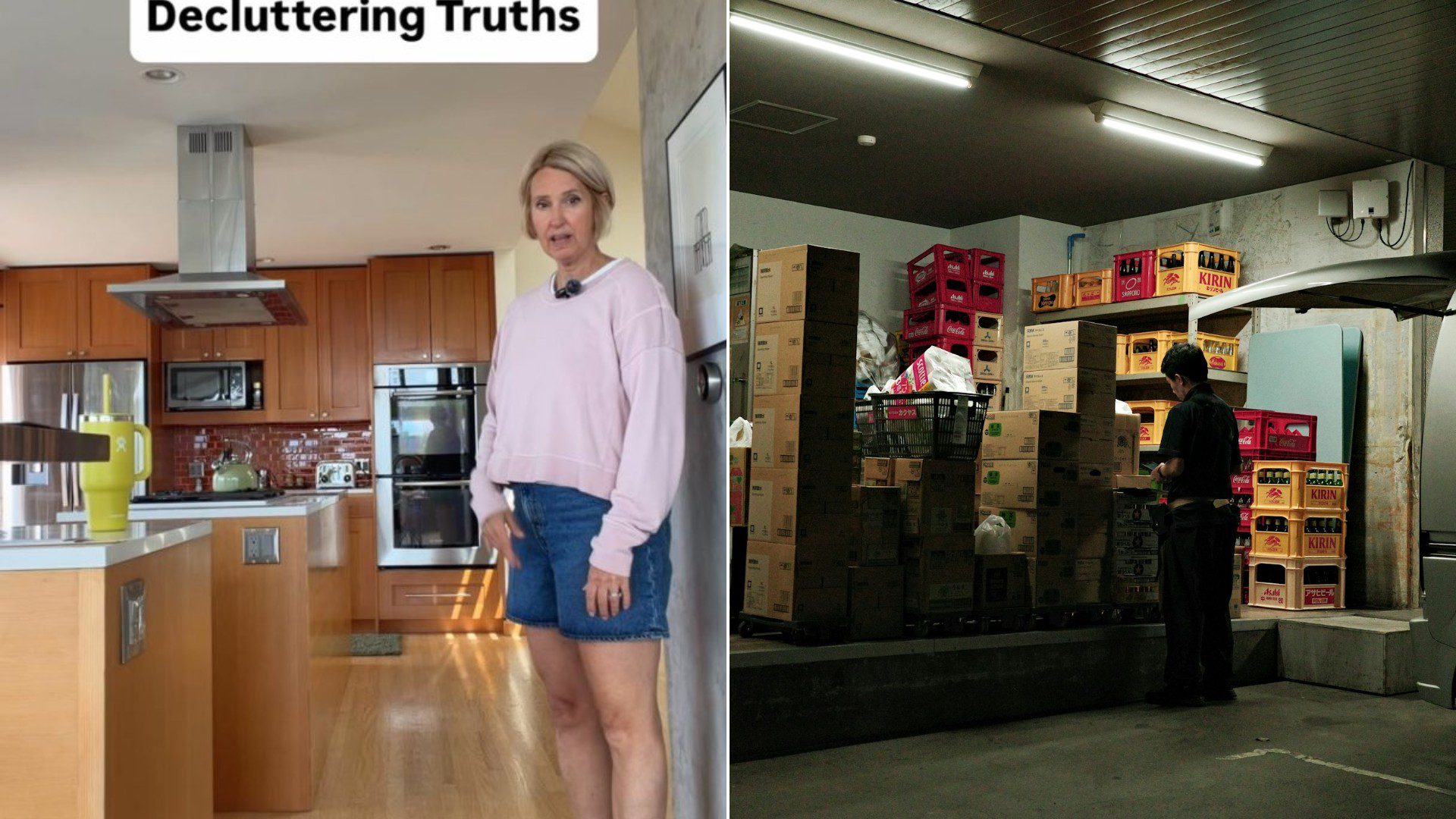
It is the kind of sentence that stings a little, because most of us have said the opposite. When the closets fill up, the instinct is to buy bins, shelves or a monthly storage rental. She says that instinct treats the symptom and ignores the problem.
She keeps going from there, and the next line is the one that hits parents and grandparents hardest.
“Your Kids Don’t Want The Stuff You Saved,” She Says, And That Changes Everything
In her video, the organizer says plainly that your kids do not want the things you have been saving for them. The china, the boxes of school projects, the furniture you kept because it was too good to throw out: she says the next generation is not waiting to inherit it.
Plenty of grown children would agree. Many live in smaller homes, prefer simpler styles, and have no room for a full set of formal dishes or a heavy dark-wood hutch. Saying so out loud to a parent feels unkind, so the boxes stay put and the guilt stays with them.
That is the quiet cost of holding on. The stuff does not just take up space. It also carries an unspoken promise that somebody will want it one day.
“You Are Never Going To Use It Someday”
The third line from her video may be the toughest of all: “You are never going to use it someday.” She is talking about the gadgets, the extra towels, the craft supplies and the clothes that might fit again.
Anyone who has moved house knows the pattern. You pack a box marked someday, carry it to the new place, and unpack it into a closet that is already full. Years pass and the box never opens.
Professional organizers often describe this as the difference between a possession and a plan. A thing you use has a place in your week. A thing you keep for someday only has a place on a shelf, and shelves cost money, time and peace of mind.
Why Buying More Storage Rarely Fixes The Problem
Storage rentals are a big business in the United States, with units found in nearly every town. The monthly fee is easy to forget once it is charged to a card, which is exactly why a unit can quietly cost more over a few years than the items inside are worth.
Add up the math yourself. If a unit costs $100 a month, that is $1,200 a year. Five years of rent could buy replacements for most of what is inside, and a lot of it would be things you could not name if someone asked you to list the contents.
Extra storage at home works the same way. A new shelf fills up within weeks, because the habit of keeping everything has not changed. The space was never the issue. The decision to keep was.
How To Start Letting Go Without Feeling Awful
If the organizer’s three lines landed a bit too close to home, here are some gentle ways to act on them.
Start with one small area, such as a single shelf or one drawer. Pull everything out, wipe the surface, and put back only what you have actually used in the past year. A small win builds the energy for a bigger job.
Ask your kids directly. Instead of guessing, send a short message or ask at the next family dinner which items they truly want. Some will name one or two treasured pieces, and that is a gift in itself, because you can stop worrying about the rest.
Photograph the sentimental things. A picture of a child’s artwork or your mother’s tea set keeps the memory without the box. You can print the photos in an album that takes up an inch of shelf space.
Give things a second life. Donation centers, local charities, school art departments and community groups take clean, usable items. Anything of real value can be sold online or at a consignment shop, and the money can go toward something you will enjoy today.
The Question To Ask Before You Rent A Unit
Before signing for any extra space, ask yourself one thing: would I buy this again today at the price of storing it? If the answer is no, you have your decision.
The organizer’s message is not meant to shame anyone. It is a nudge to treat your home as a place to live now, not a warehouse for a future that is not coming. When the garage floor is clear again, many people say the relief is bigger than they expected.
Her words may be short, but the idea behind them is worth a long think. You have run out of space because you have kept more than your life needs. The fix is lighter shelves, not bigger ones, and the best time to start is this weekend, with one box and one honest question.
If your kids really do want something, they will tell you. If they do not, you have just been handed permission to let it go.
More Stories You May Like
- Organizer Says The Secret To A Tidy House Is Not More Storage, And Her Fix For The Pile On The Kitchen Counter Costs Nothing
- Mom Of Three Who Decluttered Everything Says Holding On To Pricey Gifts And Marketplace Piles Will Never Put The Money Back In Your Pocket
- Mom Gives Her Kids Only Five Christmas Gifts Each, Want Need Wear Read And Learn, And Skips Gifts For Her 11 Week Old Altogether