

Her catchphrase this time is a loving one: she is not attacking you, she is just aggressively encouraging you. Professional organizer @wonderlandallys is back with another round of things she wants thrown away today, and this list hits some of the most common hiding places for clutter in the American home: the empty electronics box, the junk drawer of pens and the textbooks gathering dust on the shelf.

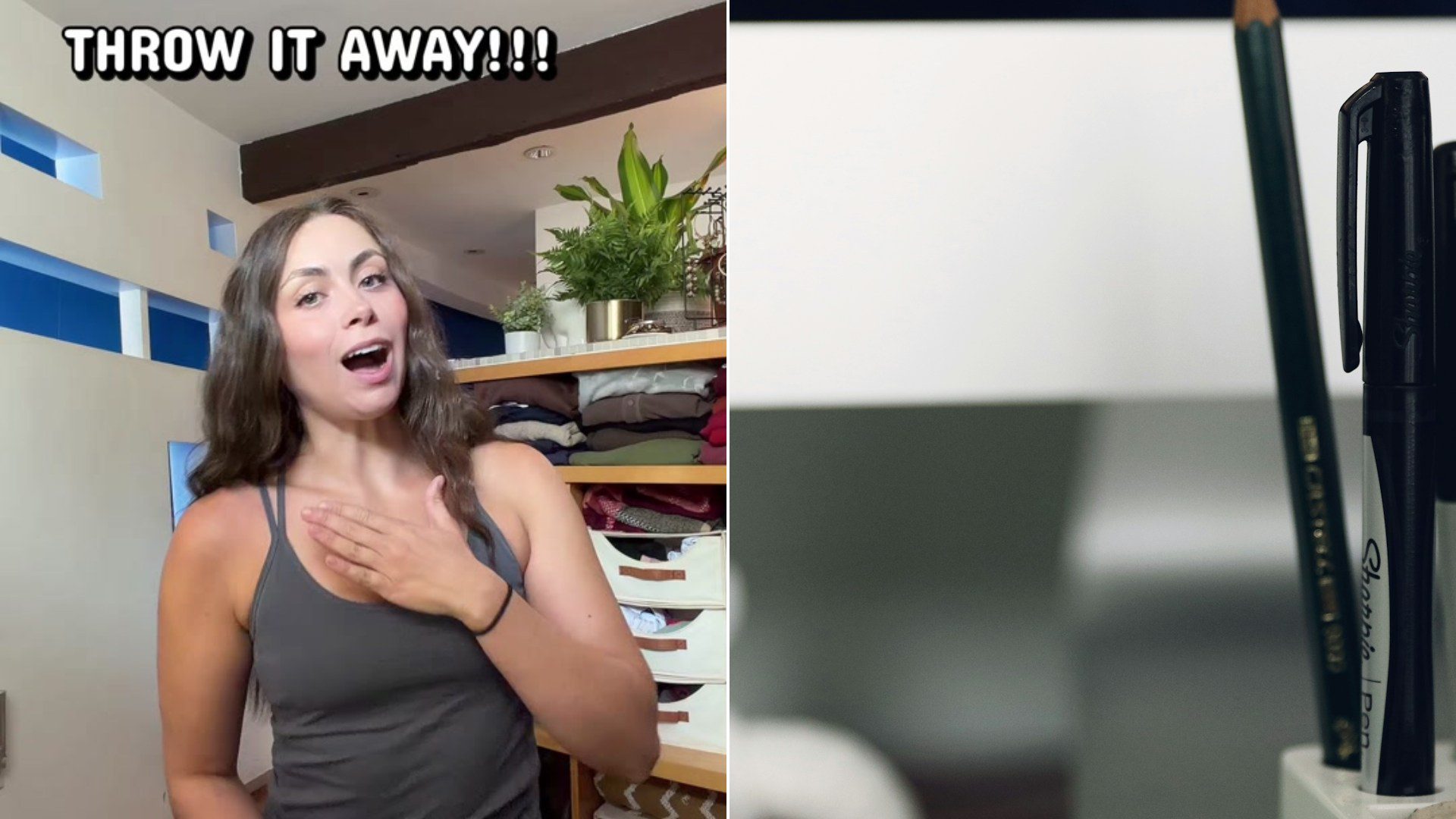
As in her earlier installments, she says to please, pretty please, do it today, meaning right now. It should not be hard, she says, and she believes in you. Here is what she wants you to let go of, and some practical tips for doing it smoothly.
@wonderlandallys
Number one: empty electronics boxes
Holding up an empty box, she says plainly that you do not need it. If there is any information on the box that you feel you need to keep, such as a model number or a spec list, just snap a picture and get rid of the box.
She expects the pushback: what about resale value? She says she does not care if you think the box will help, because first of all she does not think it will, and second, in her opinion the empty space you gain is worth far more than whatever extra money you might get from reselling the item, which you probably will not do anyway.
That is a useful reality check. Many of us keep boxes for phones, tablets, speakers and small appliances for years, stacked in a closet or the attic, with a vague plan to sell the item someday. Most of the time, that someday never comes, and the boxes just take up shelf space.
Number two: old or excessive pens, pencils and markers
Next up is the writing tool pile. Unless your house is a classroom or a daycare, she says, you probably do not need five hundred pens. Pick a few that you actually like and actually want to use, and get rid of the rest.
The number five hundred is a joke, but the idea is real. Pens collect from banks, hotels, conferences, doctors’ offices and giveaways until a kitchen drawer cannot close. A quick test, scribbling each one on a scrap of paper, reveals how many are dried out. Those can go in the trash right away.
Number three: old textbooks
Her third item is the textbooks that have been collecting dust on your shelf for the past decade. She acknowledges that you might have been able to make a buck or two from them back in the day, but at this point they are probably outdated and can go.
If a textbook is from a field that changes quickly, such as technology, medicine, law or tax rules, an edition that old may do more harm than good. For topics that do not change, such as classic literature or a favorite cookbook, a keeper is a keeper. The question is whether you will really open the book again.
Her disclaimer: donate and recycle where you can
She is careful to add that she uses throw away as a blanket statement, so please donate and recycle where it is appropriate. But some things are garbage, she says, and they belong in the garbage can. Her answer to anyone worried about landfills is to stop buying garbage and bringing it home.
Here is a practical guide to what to do with each category:
- Electronics boxes: Flatten the cardboard and put it in your curbside recycling if your local program accepts it. Foam inserts and plastic wrap often cannot be recycled and belong in the trash. Check the rules for your area.
- Pens and markers: Working ones in good shape can go to a school, a church office, a nonprofit or a teacher who might be short on supplies. Dried-out ones go in the trash, though some manufacturers run mail-in recycling programs for writing instruments.
- Textbooks: Recent editions in good shape may be welcome at a local library sale, a used bookstore or a charity shop. Outdated ones can go to paper recycling after you remove any covers that cannot be recycled.
Save the info before you toss the box
The photo trick is worth borrowing for more than electronics. Before you recycle anything, ask yourself what information you would actually need. For a gadget, that is usually the model and serial number, the purchase date and the warranty details. Take a clear picture of the label or the box, and keep it in a folder on your phone named for the item or the year. Pair it with a snapshot of the receipt, and you have everything you would need for a warranty claim, without the cardboard.
The same method works for instruction manuals, which are often available online, and for product packaging with a code you might need. A digital record takes up no space and is easier to find than a box in a closet.
A tough love approach with a soft landing
The organizer’s style is brisk, but her point is gentle. These are not precious possessions. They are things we hold on to out of habit or a small fear that we will regret letting go. Taking five minutes to clear a drawer, a shelf and a closet corner can give you back real space, and the sense of relief is often bigger than expected.
Start with whichever of the three is easiest. If you have a box in sight right now, pick it up. Take the picture. Then enjoy the extra room and the quiet satisfaction of crossing something off your list today.