

Every organizer has a favorite kind of job, and for @organizingbyally it is the one where she can see she has truly made a difference in someone’s life. Her latest project was a super cluttered bedroom in New York City, and the way she tackled it offers a lesson for anyone staring at an overstuffed room and wondering where to begin.

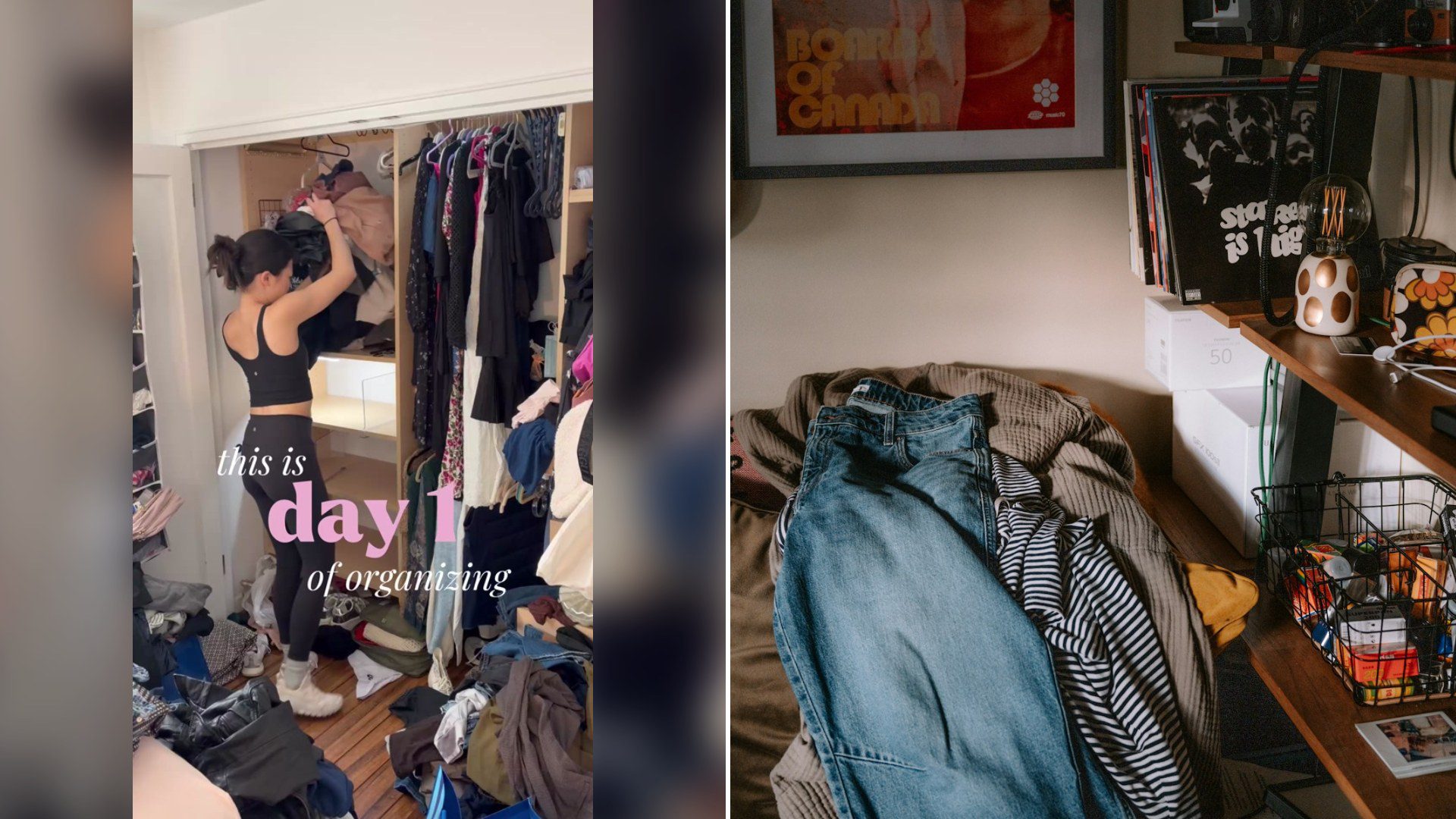
Her method is simple and surprisingly calm. When she takes on a job that stretches over several days, she gives each day one category of belongings. No bouncing from the nightstand to the desk to the bookshelf. One category, finished properly, then on to the next. For day one in this bedroom, the category was clothes.
@organizingbyally
Gathering Everything in One Place
The first step was to collect every piece of clothing from all over the room. She pulled items off the floor, out of the closet and out of the dresser, then sorted them into categories. Seeing it all together is often a wake-up call, because most of us have no idea how much we own until it is piled in one spot.
From there, she and her client went through the clothes category by category and item by item. The client decided which pieces she wanted to donate. The organizer did not make those calls for her. She guided the process, and the client made the choices, which is a big reason the results tend to stick.
Making a Plan and Shopping for Supplies
Once the donation decisions were made, the organizer started folding clothes and putting things away while mapping out a plan for the space. Then she headed to the store to pick up the supplies the room needed. That order matters. She decided what her client was keeping first, and only then bought the bins and baskets to fit it. Plenty of people do it backward, buying containers before they know how much they need to contain.
Back in the bedroom, she made a smart change to the closet. She removed the shelf in the middle so the dresses could hang straight down instead of getting squished or shoved aside. In the open space underneath the dresses, she assembled a set of drawers. That turned dead space into useful storage without adding any furniture to the room, which is a big deal in a New York City bedroom where every square foot counts.
She also added baskets to the open shelves and dividers inside all of the drawers, so each type of clothing has its own spot.
The Part That Makes It Last
The client shared that her biggest challenge with staying organized is that she forgets about things when they are hidden and tucked away. The organizer says that made labels the most important piece of the whole job. A label tells you what lives where, even when you cannot see inside. It also gives you a gentle nudge to put things back where they belong instead of dropping them on the floor or a chair. At the end of the day she signed off by promising to be back for day two.
How to Try This at Home
You do not need to hire a professional to borrow this approach. Here is how to adapt it to your own bedroom.
Pick one category per session. Clothes are a great place to begin because they are usually not tied to deep memories the way photographs or keepsakes are. Once you see progress there, the rest feels more doable.
Gather everything first. Pull clothes from the floor, the closet, the dresser, the laundry basket, the back of the door and the spare room. Do not judge yet. Just collect. You cannot make good decisions about a pile you have not seen in full.
Go item by item. Hold each piece and ask whether you wear it, whether it fits, and whether you feel good in it. If the answer is no, it goes in the donate bag. Keep the bag by the door so it actually leaves the house this week.
Plan before you buy. Measure your closet and drawers, count what you are keeping, then shop for containers. A few well-chosen baskets and drawer dividers beat a cartful of bins that do not fit.
Rethink the closet layout. If you have a shelf or rod in an awkward spot, ask whether moving or removing it would help. Long dresses and coats need room to hang. Folded items can go in drawers or baskets below.
Label for your future self. If you are the type who forgets what is out of sight, labels are your best friend. A simple label on a drawer, shelf or basket takes seconds to make and saves you from digging through everything later. Use plain words like socks, sweaters or workout clothes so anyone in the house can follow the system.
Make it visible where you can. If hidden things get forgotten, consider open shelves, clear bins or baskets with a label on the front. The goal is a system you will really use, not one that only looks nice for a week.
Why One Category at a Time Works
Decluttering wears you out because every decision uses up a little energy. When you jump from category to category, your brain keeps switching gears, and you reach decision fatigue quickly. Staying with one type of item lets you compare things side by side, notice duplicates and set a standard. If you already have seven black cardigans, it gets much easier to let a few go.
It also gives you a clear finish line. At the end of the day you can point to something and say that part is done. That feeling builds the momentum to come back tomorrow. As this New York organizer showed, a big, cluttered room becomes manageable once you break it into days and categories, and a few labels help keep it that way.