

Some organizing jobs take weeks. Others can be done in a weekend if you have a plan. Professional organizer @organizingbyally recently shared a project that went from clutter to calm in just two days, covering an entryway, a living room and a multipurpose closet that had become a catchall for random stuff.

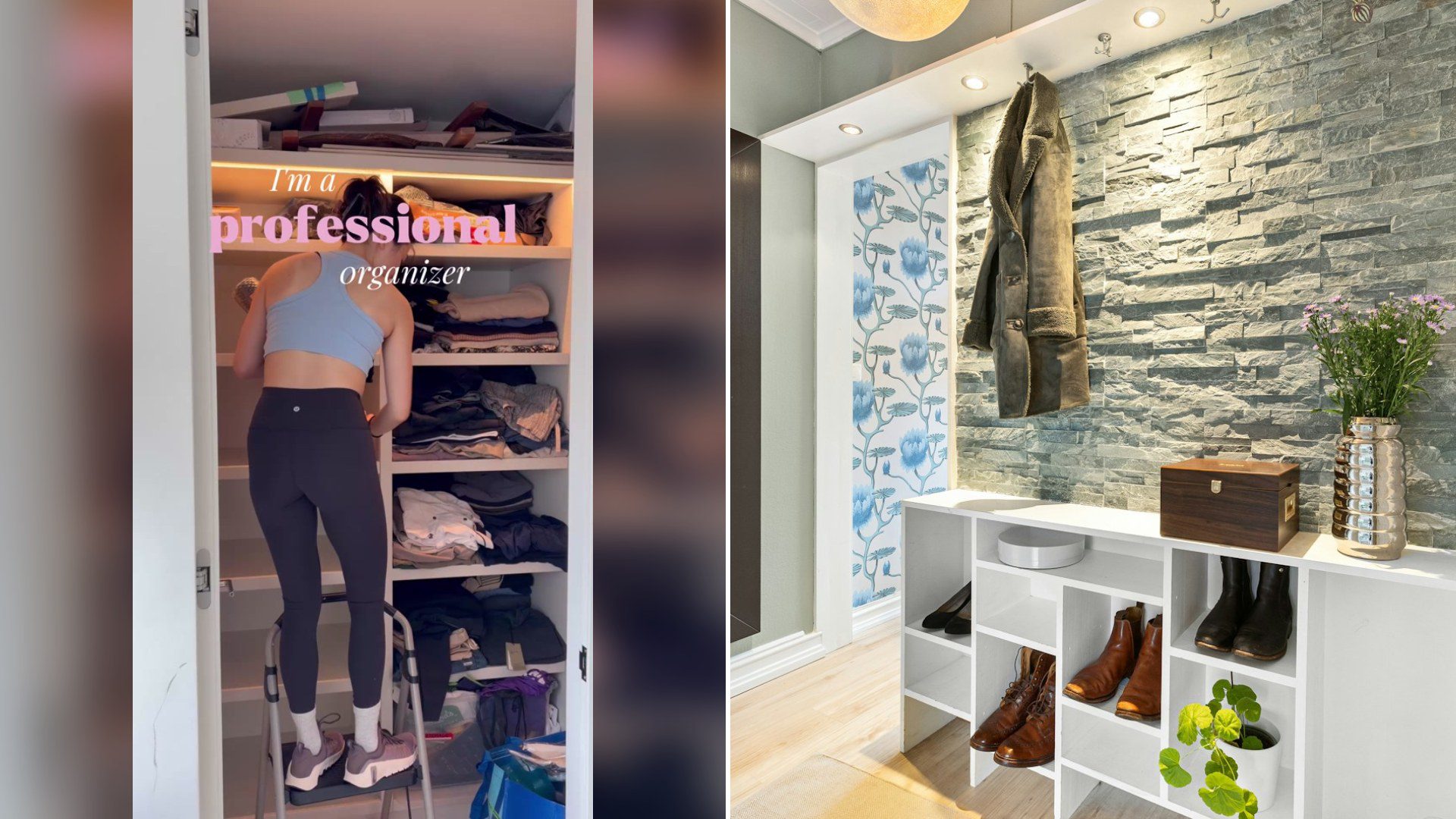
Her goals were clear. First, declutter as much as possible. Second, find a real home in the closets for all the miscellaneous items that had been scattered around the living room. Here is how she pulled it off.
@organizingbyally
Day One: Empty the Closets and Edit
She began by pulling everything out of the closets. That may sound like it would make a bigger mess, but it is the best way to see what you have. Working with her clients, she helped them edit out anything they wanted to toss or donate. She said the clients did an amazing job of making decisions, and significantly reduced the amount of clutter in their home.
This is a key point. The organizer did not decide for them. She gave them the space and the structure to choose, and they responded. When people make their own decisions about their belongings, they are far more likely to keep up the system once the organizer leaves.
Day Two: Bins, Baskets and a System
The next morning, she went to the store to buy the bins needed to create the system. Notice the order again: she shopped only after the editing was done. That way she knew exactly what needed to be stored.
Her choices were based on how the spaces work. The shelves in the walk-in closet are very deep, and she pointed out that items get lost in the back. So she picked bins that would maximize the shelf area and pull out like drawers. Instead of reaching into the dark and hoping, you slide out the bin and see everything.
Giving Each Closet a Job
She reserved the entryway closet for the things you need on the way out the door, such as reusable shopping bags, shoes and scarves. That is smart because it keeps the stuff you grab daily right where you need it.
For the multipurpose closet, she used clear bins to contain and categorize general household supplies. Clear bins let you see what is inside at a glance, which cuts down on digging.
One of her clients had been keeping clothes in multiple stacks on each shelf. The problem is familiar to anyone who has tried it: the front stack has to come off before you can see what is behind it. She arranged the clothes in baskets so every item is visible without moving anything. She also assembled a shoe rack to organize the floor space and hold the shoes that are worn less often. To finish, she labeled everything to give her clients a guide to the new system.
Lessons You Can Use This Weekend
You do not need to hire anyone to borrow her ideas. Here is how to put them to work.
Empty one closet completely. Take everything out and set it on the floor or bed. It is the only way to see the true contents.
Edit before you buy. Make your keep, donate and toss piles first. Then measure your shelves and buy only what you need.
Match containers to your shelves. Deep shelves are great for pull-out bins. Shallow shelves work better with open baskets.
Create a launch pad by the door. Use the closest closet for what you grab on your way out: tote bags, shoes, hats, gloves and scarves. Everything else can live elsewhere.
Use clear bins for the supply closet. Group batteries, light bulbs, tape, tools, cleaning supplies and extra paper goods by type, and make sure you can see them.
Switch from stacks to baskets. If you have piles of sweaters or t-shirts that need to be unstacked to find the one you want, try baskets or bins you can pull out. Fold items upright so you can see each one.
Give the floor a job. A simple shoe rack lifts shoes off the floor and makes use of space that tends to turn into a heap. Keep the everyday pairs near the door and the rest in the closet.
Label every container. Labels help everyone in the house know where things go, and they make it easier to put items back after using them.
Why Two Days Is Enough
This project worked because it had a clear structure. Day one was for decisions. Day two was for building the system. When you separate the two, you do not get stuck buying storage for stuff you will end up tossing. You can use the same split at home. Spend a Saturday sorting and donating, and let Sunday be for containers and putting things away.
It also helps to pick a modest scope. Three spaces in two days is plenty. Trying to organize the whole house at once usually leads to piles in every room and a lot of exhaustion. By focusing on a small group of connected spaces, such as the entryway, the living room and the closets that serve them, you finish the job and enjoy the results right away.
Where Did All the Random Stuff Go?
The biggest question in any home with clutter is where everything goes. In this project, the answer came down to giving each type of item a spot in a closet, so the living room could be a living room again. Everyday items live near the door, supplies live in clear bins and clothes live in baskets where they can be seen. That is the whole secret: a home for everything, and a label to remind you where it is.