


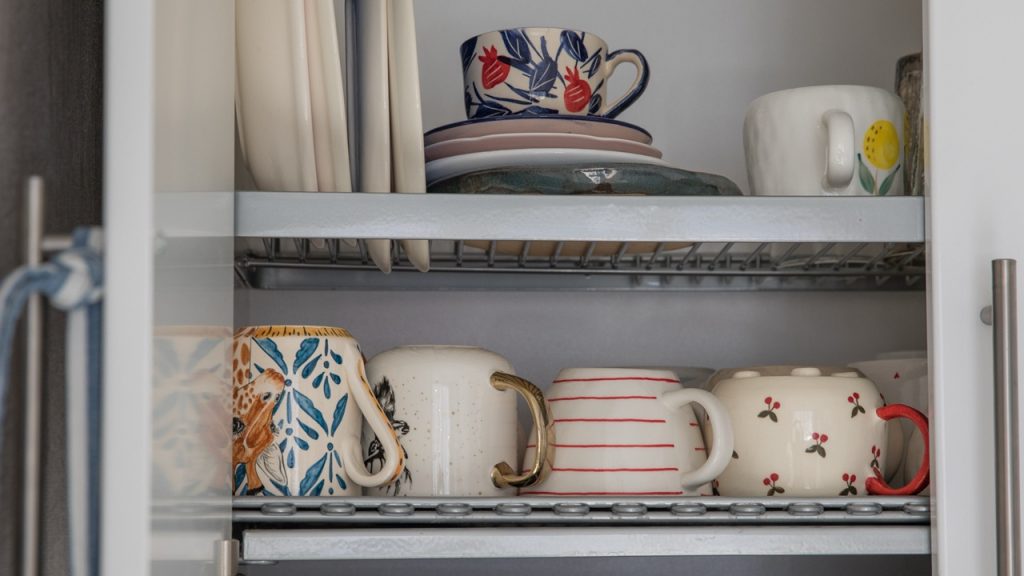
1. Mugs and Drinkware

The OnePoll survey found that 40% of homeowners feel anxious about clutter, often citing overstuffed drinkware drawers as a common issue. Professional organizers advise keeping only what’s used regularly—typically two to three mugs per person—and storing keepsakes or extras separately. This helps clear cabinet space and reduces visual clutter.
2. Plastic Food Containers

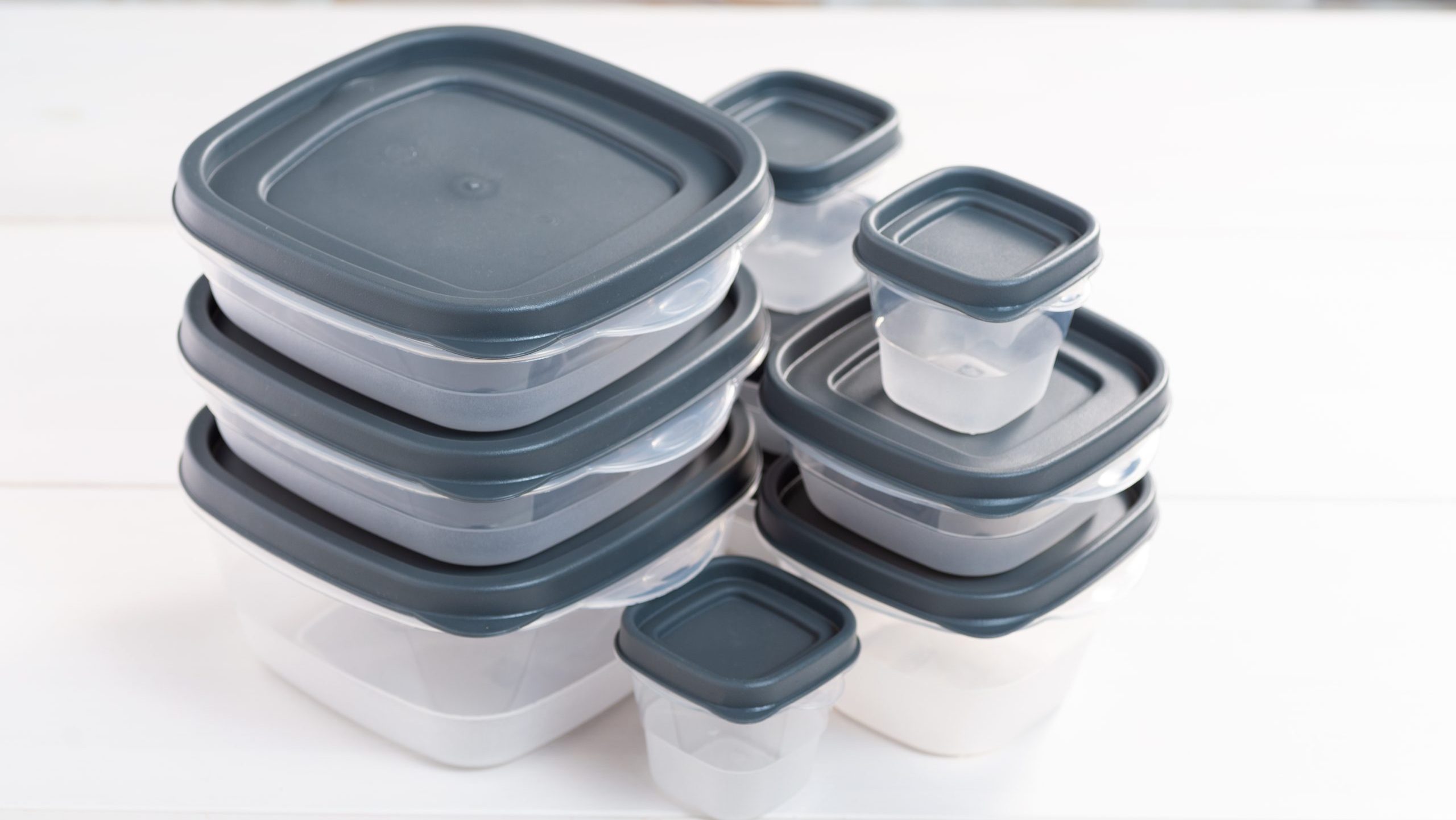
Real Simple reports that mismatched, excess food containers create persistent kitchen clutter—especially lids without limits. Experts recommend retaining just two matching sets and discarding mismatched, warped, or one-off pieces that impair daily cooking efficiency.
3. Cords and Cables

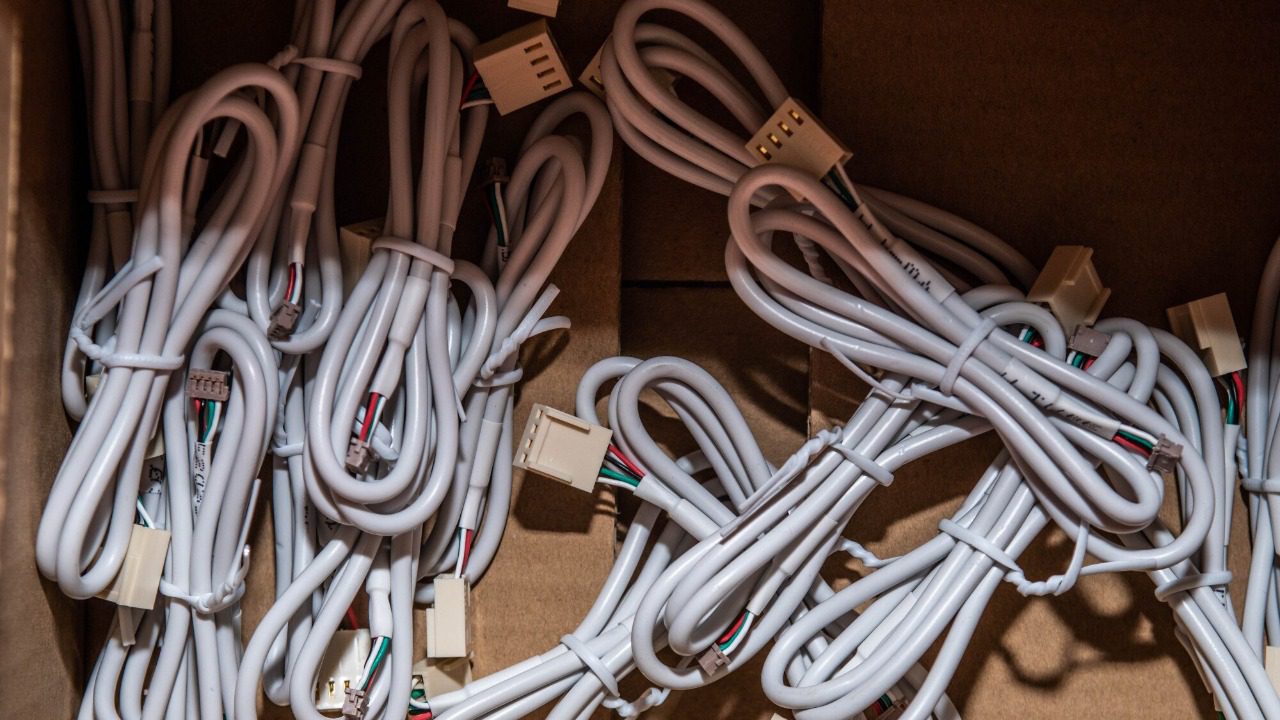
Apartment Therapy calls cord clutter one of the most widespread household problems, especially in drawers and home offices. Experts recommend labeling all cables upon arrival and tossing unidentifiable or unused ones after six months—this prevents confusion and drawer chaos.
4. Gift Bags and Tissue Paper


The Spruce recommends people limit their collection of gift wrap and tissue to what fits in one small bin. Most homes hold far more than they’ll ever use, and faltering or out-of-date designs tend to accumulate out of sight. Trimming this down frees up space and simplifies storage.
5. Hotel Toiletries and Sample Products


A New York Times feature found that many people hold onto hotel toiletries and beauty samples until they expire, often without ever using them. Organizers recommend keeping just one travel kit on hand and donating unopened items to local shelters to reduce countertop and drawer clutter.
6. Extra Bedding and Linens
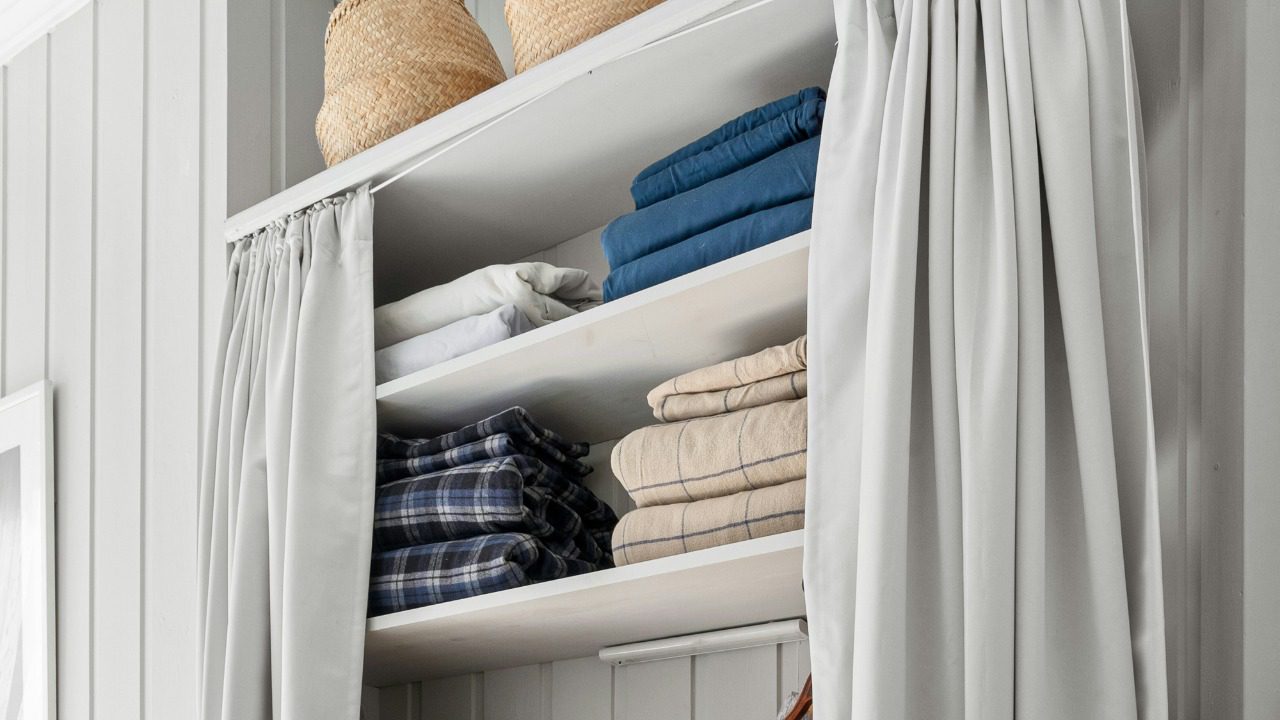
Good Housekeeping advises limiting bedding to two sheet sets per bed and one or two extra blankets for guests. Any more tends to go unused yet still takes up valuable closet space. This guideline helps maintain an organized linen section and reduces storage bulk.
7. Holiday Decorations

Talker Research found that holiday items account for nearly one-third of many Americans’ storage units. Seasonal décor often takes over attic or garage bins. Organizers suggest eliminating worn or duplicates, consolidating bins, and labeling each container clearly to save space and reduce holiday prep stress.
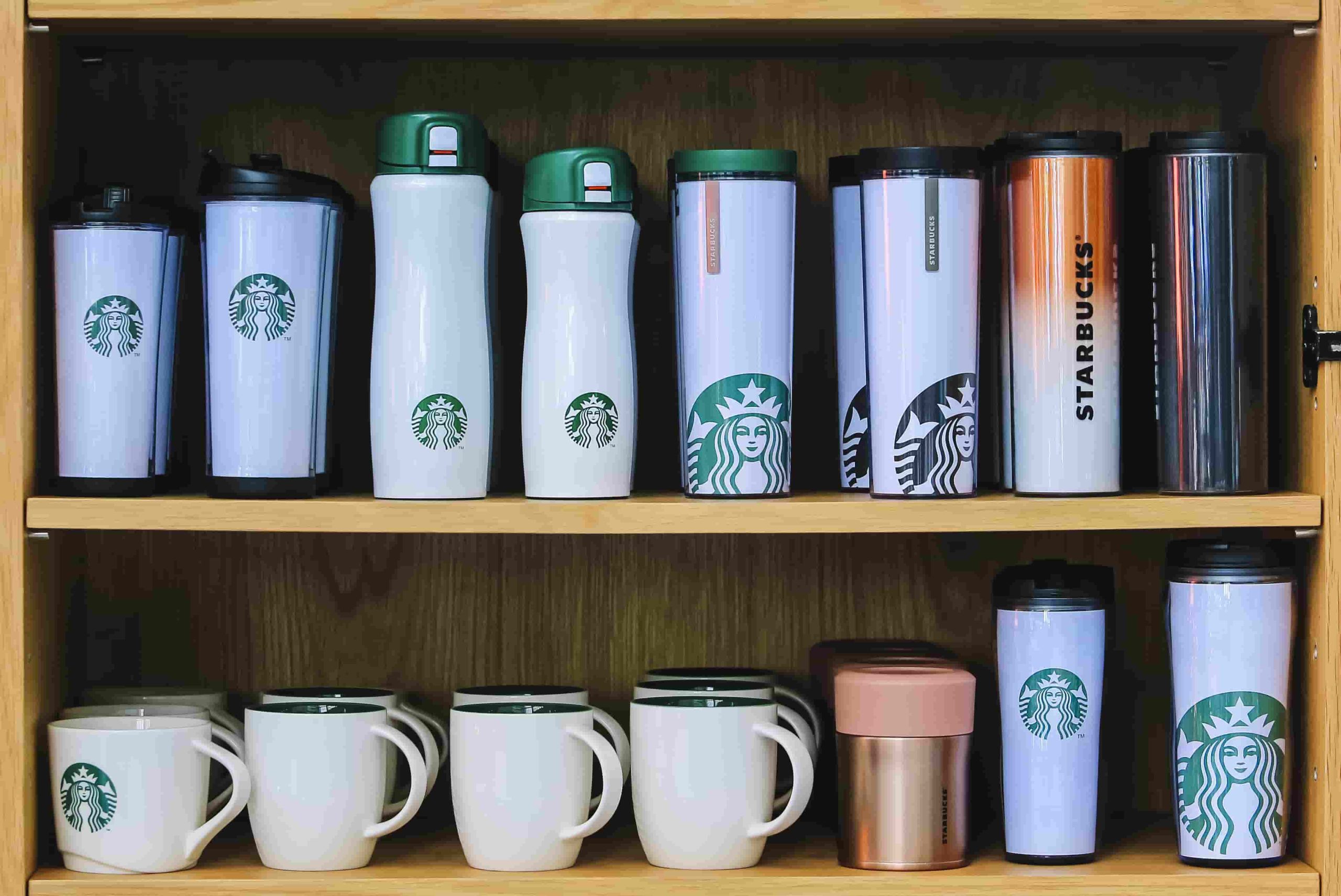
8. Water Bottles and Travel Cups

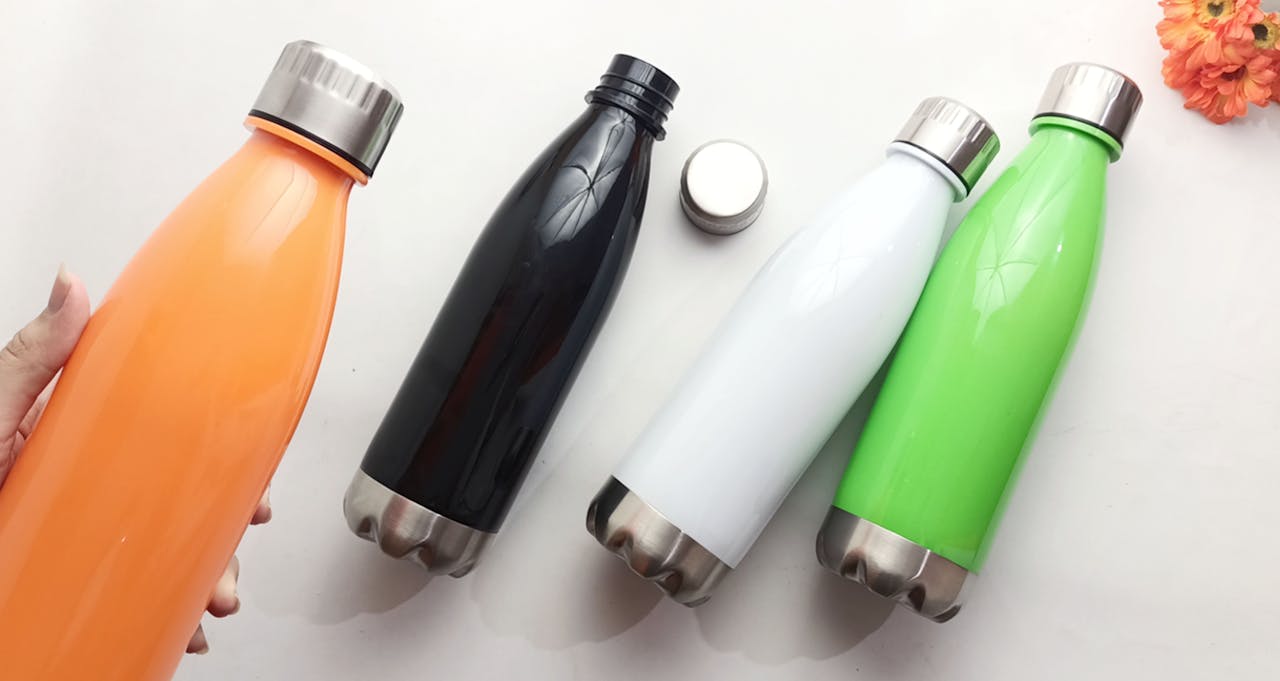
Most households keep far more reusable bottles and cups than they actually use. Real Simple reports that people commonly use only 2–3 regularly but clutter drawers with many more. Limiting bottles to what fits in a basket or drawer per person keeps storage simple and functional.
9. Tote Bags and Reusable Grocery Bags

The Spruce notes that many homes accumulate dozens of reusable bags, with few actually used regularly. Organizers recommend keeping 5–10 based on household size and donating or recycling extras. This reduces shelf crowding and streamlines storage.
10. Paperwork and Manuals


The National Association of Productivity and Organizing Professionals (NAPO) reports that around 80% of paperwork stored in homes is never used again. Organizers advise digitizing what’s needed and recycling the rest to reduce drawer clutter and simplify filing systems.
11. Kitchen Gadgets

Apartment Therapy points out that many households store dozens of single-use kitchen gadgets—like berry huller tools or avocado slicers—that rarely get used. Experts recommend keeping only items used weekly and donating the rest. This clears drawer space and simplifies cooking prep.
12. Candles and Home Fragrance Items

A survey featured by The Container Store via Talker Research shows households often own dozens of candles or fragrance items but regularly use only a few. Organizers recommend reducing each scent category to one or two favorites and donating unopened extras to prevent cluttered surfaces and scent overload.