


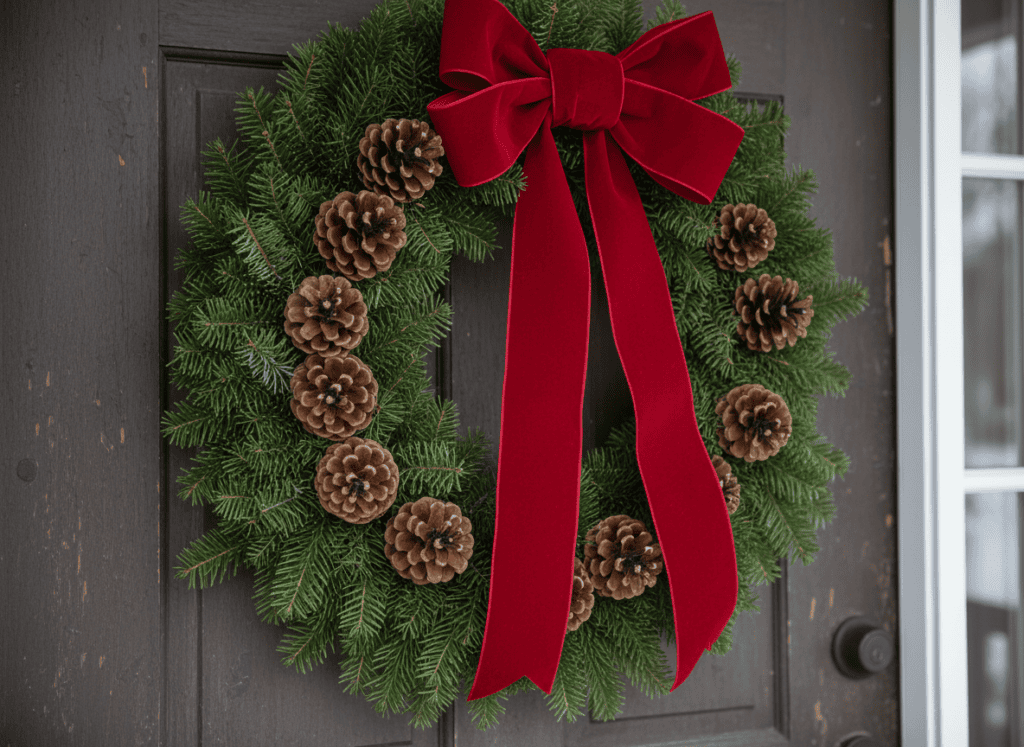
Natural evergreen wreaths are still, by most industry accounts, the dominant segment of the U.S. wreath and garland market — and market researchers tracking the category put its overall growth at a compound annual rate of roughly 4.9% through 2030, faster than the broader holiday decor sector as a whole. That’s a meaningful shift after a decade in which artificial greenery quietly took over most of the rest of the Christmas aisle. It’s also a strange one, because on paper, the fake wreath should be winning this fight outright: it survives a closet for a decade, it doesn’t shed needles on the porch, and it costs less per season the longer you keep it.
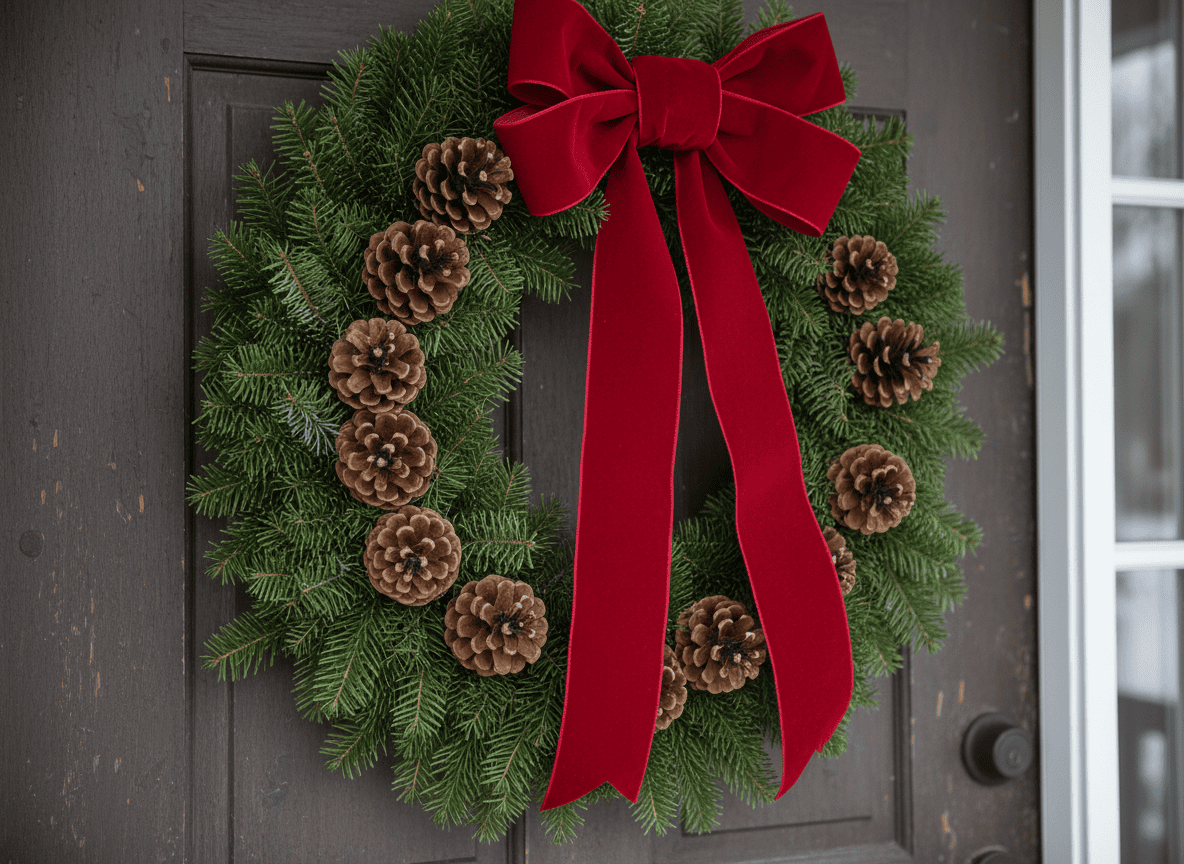

Real Wreaths Are a Bigger Business Than People Assume
Fresh, cultivated greenery isn’t a cottage-industry afterthought — it’s a measurable line item in U.S. agriculture. The 2024 USDA floriculture survey recorded $75.6 million in sales of cut cultivated florist greens among operations with $100,000 or more in annual sales alone, a category that includes the boughs, fir, and pine used in wreath-making nationwide. That’s real farmland, real growers, and real seasonal labor behind every fresh wreath sold at a nursery or farmers market, not a decorative afterthought tacked onto the tree business. It also helps explain why nurseries and garden centers, rather than big-box retailers, are the segment gaining the most attention from industry analysts watching the space.
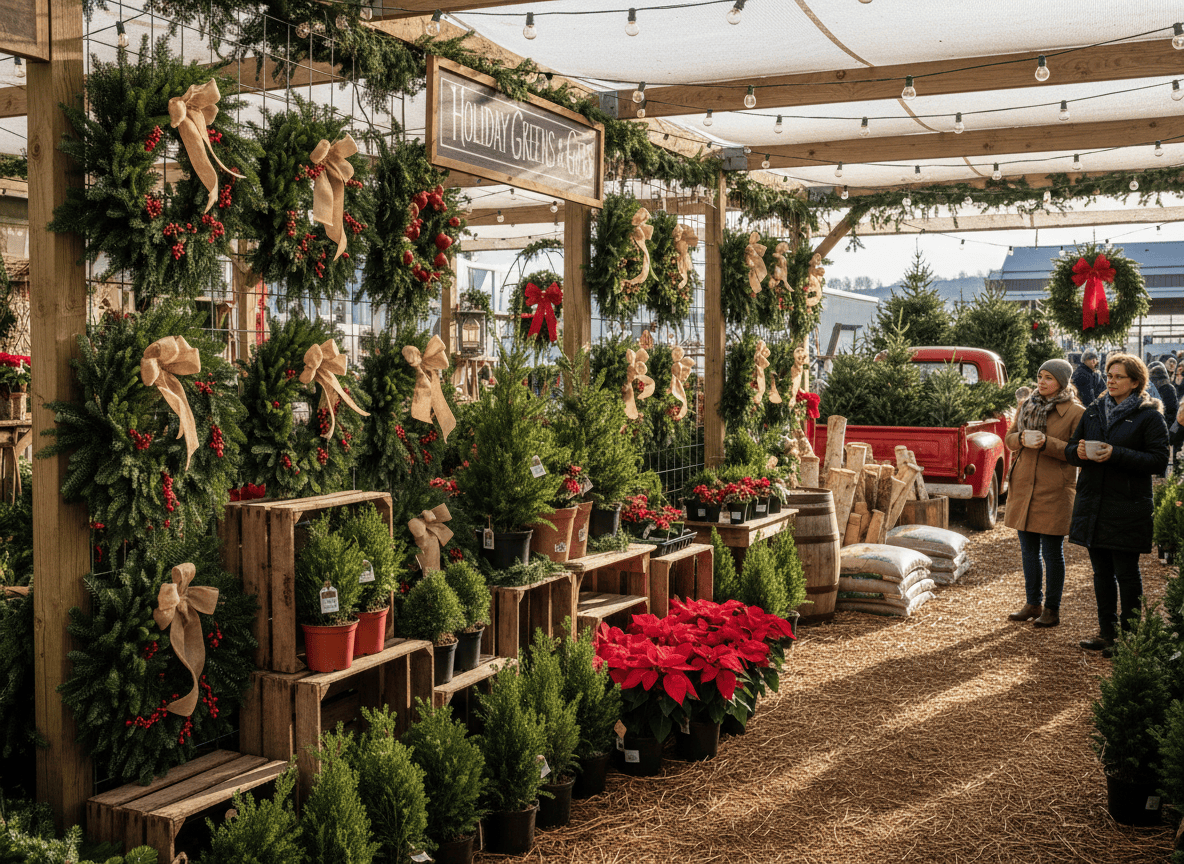
Much of that fresh-wreath supply still runs through small, local channels rather than national chains. Extension programs like North Carolina’s 4-H fresh wreath fundraiser exist precisely because handmade evergreen wreaths remain a viable annual fundraising product for growers and community groups, something that would be a much harder pitch if buyers were universally satisfied with a box pulled out of the attic every November. Analysts at Grand View Research, tracking the broader Christmas decor category, note that trees and ornaments still dominate overall decorative spending, with ornaments posting the fastest growth rate of any single category — which only underscores that wreaths are behaving as their own distinct micro-market, driven by different buyers and different motivations than the rest of the holiday aisle.
Why the “Cheaper Over Its Lifetime” Math Still Doesn’t Win
The financial argument for artificial wreaths is genuinely sound, at least on a spreadsheet. A quality faux wreath sold at retail typically runs somewhere in the $50 to $150 range but can be reused for five to ten seasons if stored properly, working out to roughly $10 to $20 a year. A fresh evergreen wreath has to be repurchased annually, typically landing between $30 and $75 depending on size and where it’s sourced, which means the artificial version wins on pure cost-per-year math almost every time. And yet buyers keep choosing fresh anyway. That gap between what the spreadsheet says and what people actually do is exactly where this trend lives.
What’s Actually Driving Shoppers Back to Fresh
The contrast becomes clearer when you look at what’s happening with Christmas trees in the same season. A 2025 Ipsos survey commissioned by the American Christmas Tree Association found 83% of households planned to use an artificial tree, a category where the fake option has essentially won for good. Wreaths are behaving differently, and the likely reason comes down to what a wreath is actually for. Nobody buys a wreath to look at for six weeks in a climate-controlled living room; it hangs outside, in weather, as a one-season, high-scent, high-texture accent piece — closer in spirit to a bouquet of flowers than to a piece of furniture like a tree. Scent alone is a documented purchase driver in this category: growers and market researchers have repeatedly flagged fresh evergreen fragrance as a top reason shoppers give for choosing natural greenery over synthetic, something an artificial wreath, however well-made, cannot replicate.
The Real Trade-Off Households Are Making
None of this means the economics have stopped mattering. Plenty of households run both: an artificial tree indoors for the decade-long investment, paired with a fresh wreath on the door because it’s a smaller, cheaper, more disposable purchase where the sensory upgrade is worth paying for annually. That split explains how a category can grow at nearly 5% a year in cultivated greens sales while the tree side of the same industry keeps ceding ground to plastic and PVC. It’s not that shoppers have become irrational about Christmas math — it’s that a wreath and a tree are solving two different problems, and only one of them benefits from being reusable.
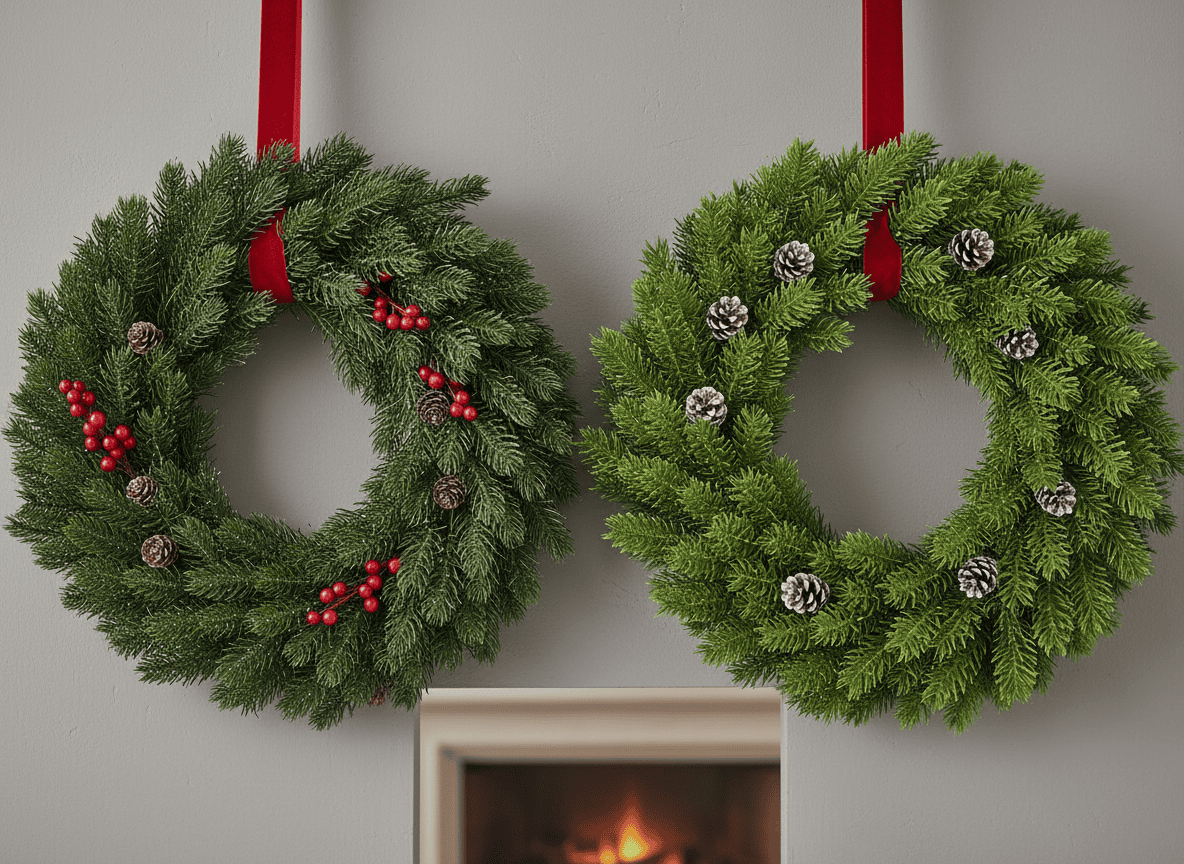
Fresh greenery has carved out a durable niche precisely where reusability matters least and sensory experience matters most, and that’s a distinction the “which one is cheaper” framing has always missed. The receipts say artificial wins over time. The doorstep says something else entirely.