


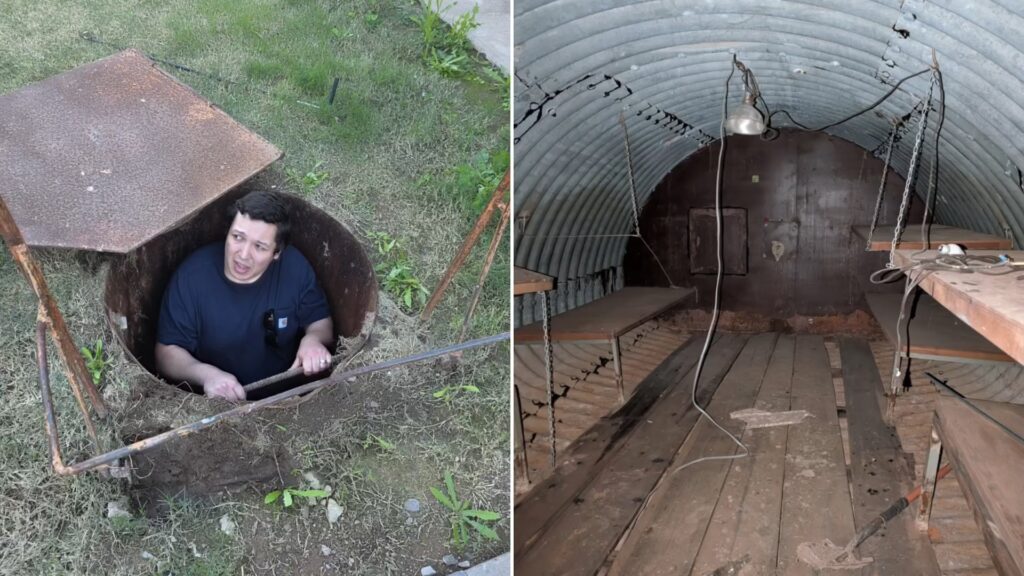
A real estate agent touring a backyard with her clients discovered a fully hidden underground storm bunker that never appeared anywhere on the listing paperwork, according to her own Instagram reel. The video, posted by an agent with 1,900 followers, documents the discovery as it happened during the showing.
Key Points
- The bunker was found underground in the backyard during a routine showing, not flagged in advance by the listing agent or the paperwork.
- Nothing in the listing disclosures mentioned the structure before it turned up on camera.
- The agent who found it has a relatively small following of 1,900, yet the clip has traveled well beyond that audience.
- The discovery happened in front of her clients, who were actively considering the property at the time.
Why undisclosed features like this matter
Sellers are generally required to disclose known material facts about a property, and a hidden structure of any size sits squarely in that territory. A storm bunker isn’t the kind of feature a buyer expects to stumble into unannounced. It raises immediate questions: whether the current owners knew it was there, whether it was permitted when it was built, and whether it’s structurally sound after however many years underground without documented upkeep. None of those questions get answered by a listing sheet that never mentioned the bunker existed in the first place.
What buyers should do if this happens to them
- Ask the seller directly, in writing, whether they were aware of the structure and when it was added.
- Request permit records from the local building department rather than relying on the seller’s account alone.
- Have any undisclosed underground structure inspected separately before closing, since a general home inspection doesn’t always cover features like this.
- Loop in a real estate attorney if the seller’s disclosure forms genuinely omitted a known structure, since that can affect the deal itself, not just the price.
Storm bunkers are more common than most buyers assume
Underground shelters like this one tend to date back decades, often built by a previous owner during a period of heightened concern about severe weather or civil defense, then sealed up and forgotten by whoever bought the house next. Because they’re usually accessed through a hatch tucked into a yard rather than connected to the home itself, they’re easy for a seller, or a listing agent who never walked the full property line, to genuinely miss when disclosure paperwork gets filled out. That gap between what’s built into a property and what actually makes it onto the forms is exactly what turned an ordinary showing into a moment worth recording.
Video discoveries like this one tend to spread fast because they capture something buyers rarely get to see: the moment an agent realizes a property holds more than what’s on paper, in real time, with the clients standing right there.