


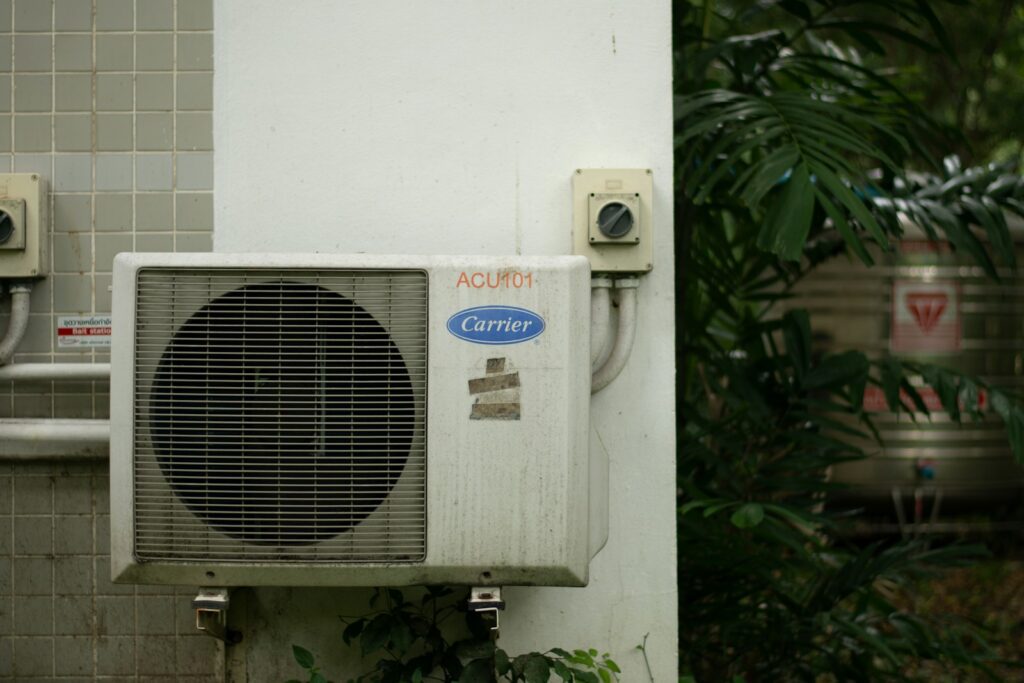
Replacing a central air conditioning system now costs homeowners an average of $5,977, with most full-system jobs falling somewhere between $1,400 and $12,500 depending on unit size, ductwork condition, and local labor rates, according to fresh contractor pricing from Angi. That’s a full-system replacement, the outdoor condenser, indoor coil, and often the ductwork that connects them, not a furnace inspection or a minor repair, and the price gap between those two categories is exactly why waiting until a unit fully fails tends to cost more than replacing it on a homeowner’s own schedule.
What “Central AC Replacement” Actually Includes
Angi’s data separates central air from smaller categories like window and portable units for good reason: the equipment and labor involved are entirely different. A central AC system alone runs $2,500 to $4,500 in equipment cost, with installation labor adding another $3,500 to $7,000 on top. Ductless mini-split systems, an increasingly common alternative for homes without existing ductwork, run $2,000 to $3,000 for equipment with installation ranging much more widely, from $1,200 to $10,000 depending on how many indoor units the system needs.

Unit Size Changes the Price More Than People Expect
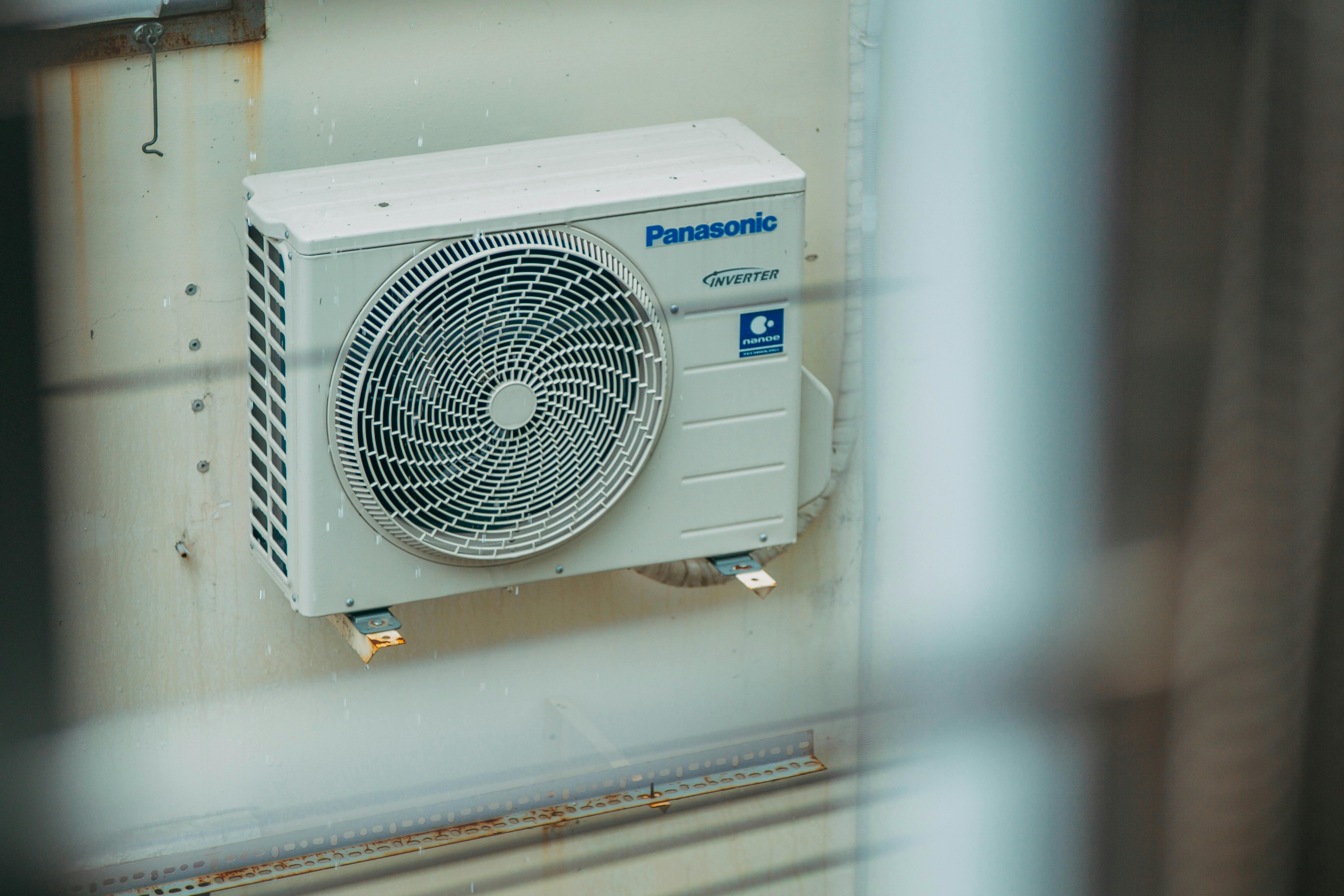
Central AC systems are sized in tons, and getting the sizing wrong is one of the most common, and expensive, mistakes in a replacement project. Angi’s tonnage breakdown shows a 1.5-ton system averaging $1,300 to $4,000, while a 5-ton system built for a larger home runs $2,800 to $6,800. An undersized unit will run constantly and still struggle to cool the house; an oversized one cycles on and off too quickly, wearing out components faster and leaving humidity poorly controlled. A load calculation from a licensed contractor, not just a guess based on square footage, is what determines the right tonnage for a given home.
Efficiency Ratings Drive a Real Price Jump
Higher-efficiency systems cost meaningfully more upfront. Angi notes that AC units with the highest SEER ratings can run three to four times the price of lower-efficiency models, a gap that reflects both more advanced compressor technology and the long-term energy savings those systems are built to deliver. Homeowners weighing that tradeoff should factor in how long they plan to stay in the home, since the higher-SEER premium pays for itself over years of lower utility bills, not immediately.
Ductwork Is the Line Item Homeowners Forget to Budget For
A quote for the AC unit itself can look reasonable right up until the ductwork estimate arrives. Angi’s data puts ductwork replacement or extension at $3,000 to $7,500 for roughly 300 linear feet, which applies to homes where existing ducts are damaged, undersized for a new system, or simply don’t exist yet. Add in smaller line items ($100 to $150 for new electrical circuits if the panel needs an upgrade, and $25 to $200 to remove and dispose of the old unit), and the gap between the sticker price on a new AC unit and the total installed cost can be substantial.
Geothermal Sits in a Different Price Tier Entirely
For homeowners comparing every cooling option, geothermal systems are worth knowing about even if most won’t choose one. Angi’s data shows geothermal equipment running $4,200 to $12,000, with installation adding another $11,000 to $28,000 because of the underground loop system that has to be dug or drilled before the unit ever goes in. That total, potentially exceeding $30,000, dwarfs even a high-end central AC replacement, which is why geothermal remains a niche choice reserved mostly for homeowners planning to stay in a property for decades and prioritizing long-term energy savings over upfront cost.
Why Waiting for Full Failure Almost Always Costs More
Angi’s guidance is direct on this point: AC repairs run $450 to more than $2,000 depending on what’s wrong, while full replacement averages $5,977, and a system 10 years or older is generally past the point where repair makes financial sense. The problem with waiting for total failure is timing, not just cost. A system that dies during a heat wave forces homeowners into rushed, often premium-priced emergency service, with less time to compare contractor quotes or shop for a unit that fits the home’s actual cooling needs. Replacing proactively, once a system starts needing repeated repairs, generally means better pricing and a system that’s properly sized from the start.