Ask any reseller what part of the business they dread most, and the answer is rarely the hunt. It is the listing. Photographing, measuring, writing a title and hitting publish is the chore that piles up in the corner of the spare room.
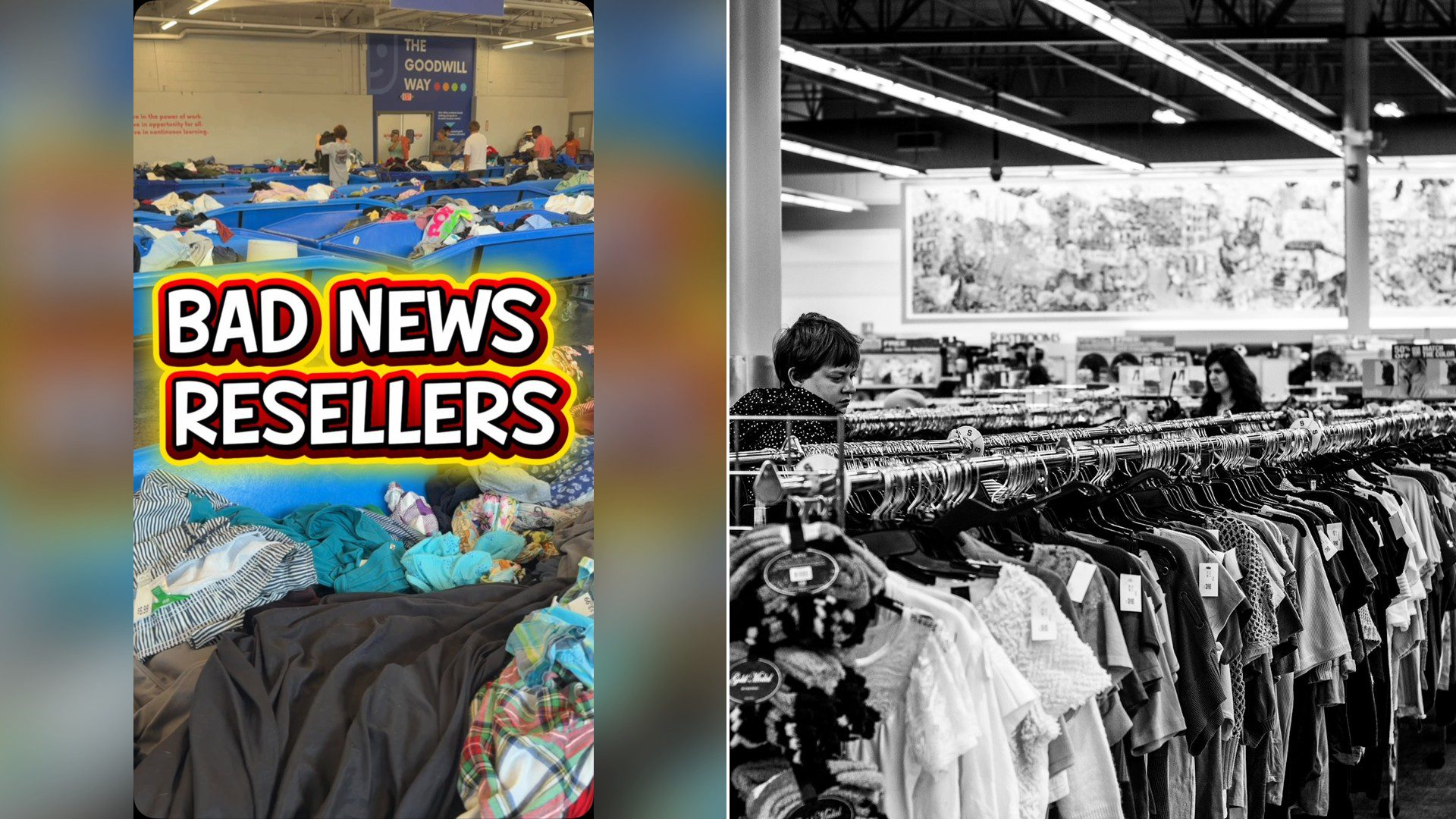
Reseller @stephanie.selectthreads says that dreaded chore is exactly where the money is. In her words, “the secret to making money from the Goodwill bins is the one thing we all hate doing, and that’s getting it listed.”
View this post on Instagram
“I’ve Been Listing Like Crazy And Here’s What’s Selling”
She did not just say it, she showed it. After a stretch of listing nonstop, she ran down the items that had actually sold, one by one, with the price each one brought in.
The top of the list was a vintage coat that sold for $125. Close behind was a sweater from a well-known label that went for $80, and a jacket that sold for $63.
Then came the middle of the pack, and this is where it gets interesting for anyone who thinks you need a designer score to make a profit. A Quince linen dress sold for $35. A Peruvian Connection t-shirt brought $30, and so did a pair of pants, a shirt, a towel robe and a vintage nightgown from Salzburg.
The Everyday Brands That Quietly Paid Off
A Talbots cardigan sold for $27, and a Torrid corset top and a tank top each sold for $20. A Nike golf shirt sold for $25, and so did a Duluth Trading piece, a cardigan and a jacket.
Her cheapest sale in the rundown was an LL Bean women’s piece at $16. She also mentions a daily practice dress that sold for $24, a pair of leggings for $29 and shorts for $28.
One of the sales was personal. She says a Quince cashmere sweater sold to a follower for $25, a reminder that a social following can turn into buyers when you list consistently.
Sales Have Picked Up, And She Is Hoping The Slowdown Is Over
She closes with a bit of honesty that fits the business. Sales have “really picked up over this last week,” she says, and she hopes the slowdown is over. Anyone who has resold knows the stretch where nothing moves and the stretch where everything does.
The lesson in her rundown is plain. A pile of clothing in a bag earns nothing. The same clothing, listed with good photos and a clear title, can turn into $20, $30 and sometimes $125 apiece.
Why Listing Feels So Hard, And How To Make It Easier
Most people put off listing because it feels like a hundred small decisions. What size is this, what do I call it, what is it worth, where do I put it? Each one is minor, but together they wear you out.
The fix is to turn those decisions into a routine. Pick one spot with good natural light and photograph the whole batch at once, front, back, tag and any flaw. Take your measurements in a single sitting and jot them on a sticky note so you are not hunting for the tape measure later.
Titles matter more than most beginners think. Buyers search by brand, item type, size, color and material, so put those words up front. A title like “Quince Linen Dress Women’s Size Medium” will be found far more often than “Pretty summer dress.”
Honest descriptions protect you. If a sweater has a small pull or a coat has a missing button, say so and photograph it. Fewer returns and happier buyers are worth the extra sentence.
Check What Things Actually Sold For Before You Price
Her whole video is built on sold prices, and that is the smart habit to copy. Asking prices are wishes. Sold prices are what real buyers paid, and most resale sites let you filter for them.
Look at the condition, the size and the season. A linen dress listed in spring sells faster than the same dress in a snowstorm, and a wool coat does the opposite. Timing your listings to the weather is free money.
Small Habits That Keep The Pile From Growing
- List a few items every day rather than saving it all for one huge weekend.
- Keep a labeled bin for items that are photographed and waiting to be posted.
- Skip anything that is stained, faded or missing parts unless the brand is truly special.
- Track what you paid and what it sold for so you know which finds are worth the trouble.
If you are decluttering your own closet rather than digging through bins, the same logic applies. The coat you stopped wearing could be the $63 jacket someone else is searching for right now.
Why Cheap Finds Still Add Up
Look back at the prices in her rundown. Most of them sit between $20 and $35. None of those sales will make anyone rich on their own, but a steady stream of them adds up to real money over a month.
That is also why consistency beats a single big find. One lucky $125 coat is nice. A routine of listing a few pieces every day is what keeps the sales picking up week after week.
The takeaway from @stephanie.selectthreads is refreshingly simple. The sourcing gets the glory, but the listing gets the paycheck. Do the boring part and the sales follow.
More Stories You May Like
- Reseller Pulls What Looks Like Curtains Out Of A Goodwill Bin And Pays Just Over $10, Then Learns The Gown Is Listed For $1,032
- Kraft Announces Cinnamon Roll Mac And Cheese Sold Only At Walmart, And Commenters Say It Is Crossing The Line While Chili Crisp Won Them Over
- Mom Gets Approval To Fly A Spain Flag During The World Cup Then Complaints Roll In, So She Swaps In An Abide No Hate Flag And Defund The HOA Porch Pillows