

Lee Meyer started reselling with seven dollars. She was so nervous about spending even that much that she wasn’t sure it would work. She bought a few items, sold them, reinvested the money, and says she has essentially been flipping that same $7 ever since.

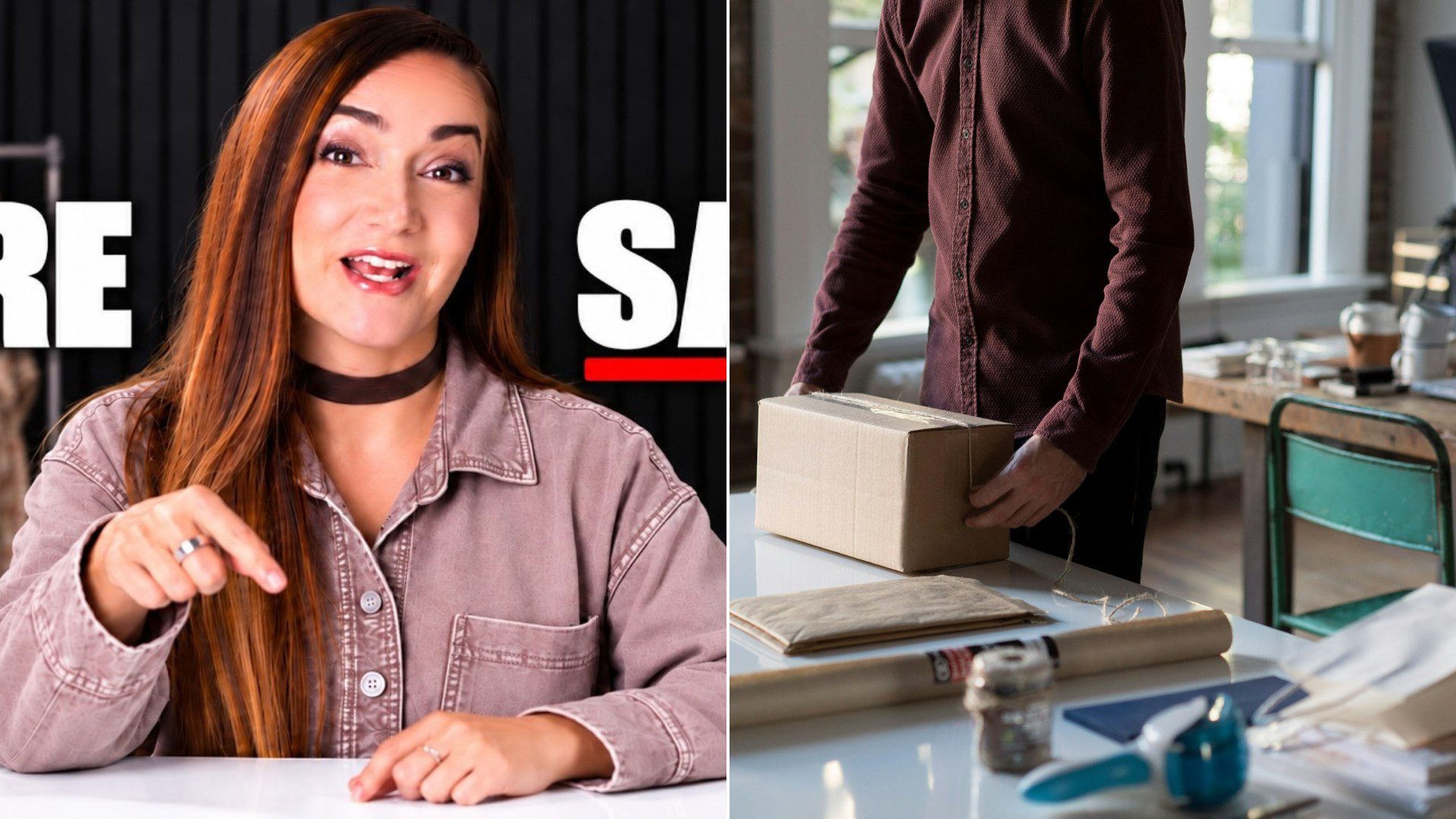
Today, she says she has made well over $100,000 in net profit flipping used clothes online. On her channel, The Empowered Reseller, she boiled it down to what she calls 99% of what matters in about 12 minutes.

“Your Goal Is Not To Find Cheap Stuff”
Her first lesson is the one she says beginners get backward. “Your goal is to buy something for less than somebody else is willing to pay for it.”
A $1 t-shirt nobody wants is worse than a $20 jacket that buyers consistently pay a hundred bucks for. Every buying decision comes down to three things: selling price, demand and profit.
She also has a quick rule. If you have to spend five minutes convincing yourself an item is a good buy, “it probably isn’t. Put it back. There will be another item.”
Why A Coffee Mug Listed At $10,000 Proves Nothing
To learn what an item is worth, she says, look at sold comps, and she stresses the word sold. Someone can list a coffee mug for $10,000, but that does not make it worth $10,000.
Compare similar brands, materials, age and condition, and look at the range. “Don’t find the one crazy sale at $150 and decide yours is worth $15 when every other one sold is $35.”
Clothing With Holes And Stains Sells For $50 To $100 Or More
Lee says she has shown clothing with holes, stains, fading and heavy wear on her channel that sold for $50, $100 or even more. She has also seen obscure vintage pieces outsell well-known labels.
The reason is that “buyers don’t necessarily think the way that resellers think.” You see an old sweater, and the buyer sees a chunky Norwegian wool ski sweater. You see a beat-up jacket, and they see distressed vintage workwear. You see a tiny outdated purse, and they see a Y2K baguette.
On your next sourcing trip, she suggests picking up an item and asking why someone would want it before you look at the brand. Is it wool, silk or linen? Is it embroidered or made in the USA? Does it look western, boho, preppy or outdoorsy?
Five Dollars Of Profit Means 20 Sales To Earn A Hundred
Lee warns against filling your cart with cheap, easy inventory. If you make $5 profit per item, you need 20 sales to make $100, while two sales at $50 profit do the same job.
Every item takes sourcing, photos, listing, sorting, customer service and shipping. Her advice is to set a minimum sale price and a minimum profit. Otherwise it is easy to “build a huge store without building a lot of income.”
Titles, Photos And Pricing Are Where Listings Win
She calls the title your search real estate. Instead of “beautiful women’s shirt, size large,” she suggests naming the brand, item type, size, material, style and aesthetic, such as an extra-large embroidered boho floral tunic blouse.
Keywords can hold the money. She lists words like puff sleeve, prairie, goth, western, Penny Lane, color block and cable knit, because buyers search with them.
- Photos do not need an expensive camera, but they need good lighting and accurate color.
- Show the front, back, labels and any important details.
- Show flaws and describe them. “The right buyer might not care at all.”
“Ten good listings done live have ten opportunities to sell,” she says. “One perfect listing sitting on your camera roll has zero.” For pricing, use the realistic sold range, then pick a number. It is not permanent. If you leave room for offers, don’t turn a $35 item into a $150 listing.
When An Item Won’t Sell, Ask Four Questions
Before slashing the price, she says to check demand, visibility, desirability and pricing. If nobody is buying the item at all, changing the title will not fix it.
Demand with no views points to your title, keywords, category or item specifics. Lots of views with no sales points to price, condition, photos, or being a less desirable version of the item.
Revenue Is Not Profit
If you sell something for $100, you did not make $100, she reminds beginners. There are costs of goods, marketplace fees, shipping, supplies, promoted listing fees and software.
Two sellers can sell the same jacket for $50, but if one paid $5 and the other paid $30, they did not get the same result. Saving or earning an extra $5 on 1,000 items is $5,000, she says.
She also notes that free shipping is not free. “Somebody is going to pay for that shipping, and that somebody is you.” Weigh the item packaged, since the package counts toward the weight, and use poly mailers for most clothing.
Pick One Marketplace And Learn It
You do not need accounts on a dozen sites when starting out. She says eBay has an enormous buyer pool, Poshmark is simple for clothes and accessories, and Depop tends to attract younger, fashion-forward and vintage-minded buyers.
The real question is where the buyer for this particular item is, because a vintage men’s workwear jacket and a tiny Y2K skirt may attract different shoppers.
The One Mistake That Makes Everything Else Useless
Her big warning comes near the end: buying something without knowing why somebody else would want it. After a bad buy, the title is hard, the comps are weak, nobody searches for it, and you keep lowering the price.
“When you’re sourcing, ask yourself one question. Who wants this and why? If you can’t answer that, you probably shouldn’t buy it.”
Her starting plan for tomorrow is simple: pick a marketplace, source about five items, research sold comps, photograph clearly, write searchable titles, price from comps, list and ship quickly. “Done is better than perfect. Go out and list something.”
More Stories You May Like
- Reseller Who Started With Just $7 Now Has Over $100,000 In Profit Flipping Used Clothes And Says Beginners Only Need 7 Things
- Picker Hit Garage Sales With Mama Picker And Says The Last Sale Was One Of His Favorites In A Long Time
- YouTuber Urges Selling Everything Collecting Dust After A Reader Stuck Trying To Sell Grandma’s China Worth $2,000 For Just $600 To Pay Rent