


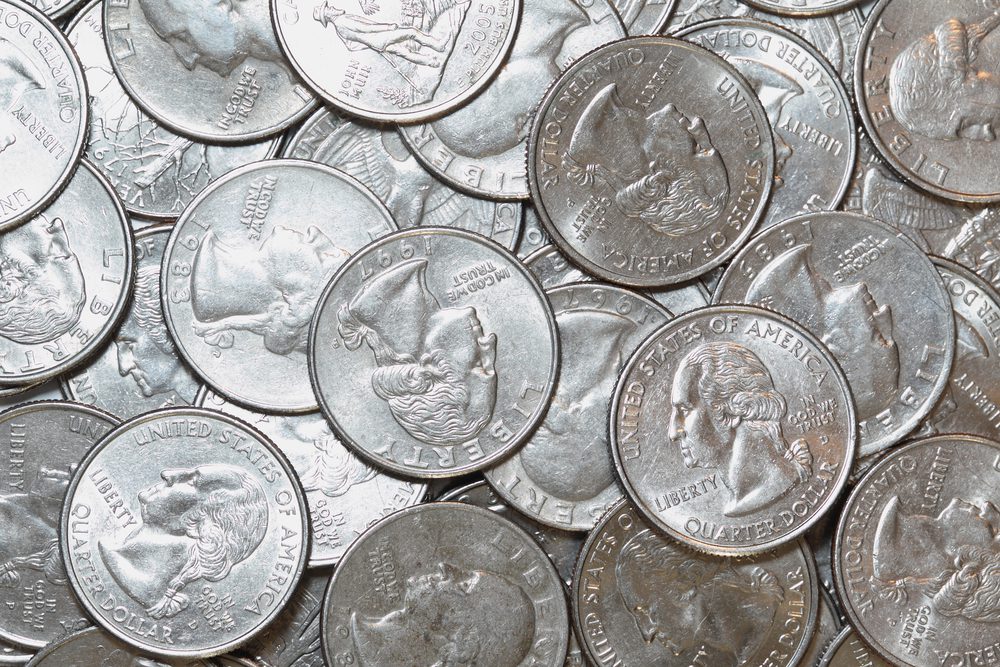
Who knew that those state and territory quarters collecting dust in your jars, pockets, and piggy banks could potentially be worth more than their face value? If your interest is piqued, then continue reading. The U.S. Mint’s 50 State Quarters program, which ran from 1999 to 2008, and the subsequent District of Columbia and U.S. Territories program, have produced some scarce and potentially valuable coinage varieties worth hunting for. This article is based on real-world trends, insights from coin experts, and trusted sources, and will take you on a thrilling journey through the world of coin collecting.
1. 2004-D Wisconsin Extra Leaf Low Quarter

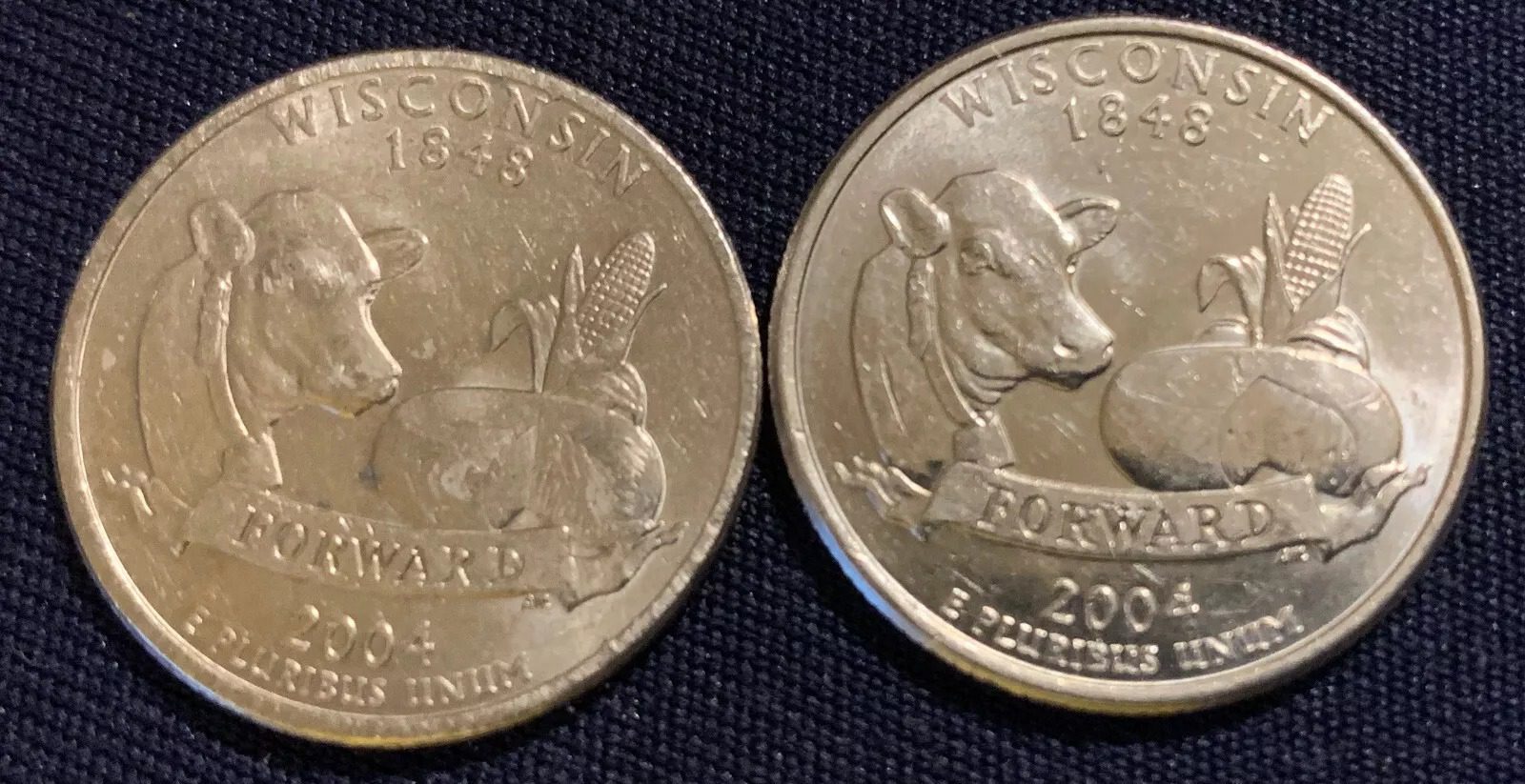
This Denver-minted variety shows an extra leaf on the left ear of corn on the reverse. In the Low Leaf version, the leaf curves downward toward the cheese wheel. There is also a separate High Leaf variety, but the Low Leaf is typically more dramatic.
- How to spot it: Use a 10× loupe and look just left of the corn ear. The added leaf is raised (not a scratch) and blends into the design.
- Common mix-ups: Contact marks or cuts will look sharp/irregular and disturb the metal; the real leaf has smooth, design-like contours.
- Where it’s found: Most examples trace back to the Upper Midwest, but they turn up in pocket change and quarter rolls nationwide.
- Approximate value: $50–$300 depending on grade; certified high-end Mint State pieces can sell higher.
2. 2005-P Minnesota Double Die Extra Tree Quarter
This Philadelphia issue is famous for dozens of doubled-die reverse varieties that add the appearance of an extra evergreen along the lakeshore. Strength ranges from subtle to bold.
- How to spot it: Examine the space between the large central tree and the shoreline. On stronger varieties, a distinct “extra tree” rises between them.
- Tip: Look for split serifs or clear separation lines on needles/branches under magnification.
- Availability: Seen most often from bank-wrapped rolls; still occasionally found in circulation.
- Approximate value: Many sell around $25 in uncirculated condition; the boldest varieties can bring more.
3. 2008-P Arizona Extra Cactus Leaf Quarter
The Arizona reverse shows a saguaro and a rock with the motto. Certain Philadelphia strikes developed a die chip/crack that looks like an extra cactus leaf to the right of the main stalk.
- How to spot it: Check to the right of the big saguaro arm; the extra “leaf” often connects the cactus to the rock and can obscure designer initials.
- What causes it: A late-stage die break (chip) that adds raised metal—errors are raised, not incised.
- Approximate value: Typically up to $50 in minty condition; minor chips are worth less.
4. 2005-P Kansas “IN GOD WE RUST” Quarter
On some 2005-P obverses, a grease-filled die weakens the T in TRUST, leaving the motto reading “IN GOD WE RUST.” Lightly affected coins show a faint T; stronger examples lose it almost entirely.
- How to spot it: Inspect the motto with a loupe; the missing/weak T should appear smooth and flush (not scratched away).
- Collector note: Grease errors vary in strength; premium depends on eye appeal and overall grade.
- Approximate value: Better uncirculated examples can bring $100–$200; circulated pieces are usually lower.
5. 2005-D California Doubled Die Quarter
California quarters have documented doubled-die listings—most are modest—including doubling seen on letters such as the R in LIBERTY and parts of “CALIFORNIA.” Expect many minor varieties and a few better ones.
- How to spot it: Look for split serifs, notching, or slight separation on letters (especially the R of LIBERTY) under 10× magnification.
- Reality check: Many examples show light machine doubling (flat, shelf-like) which carries little to no premium.
- Approximate value: Typical collectible varieties run up to about $25 depending on strength and grade.
6. 2009-P District of Columbia Doubled Die Quarter

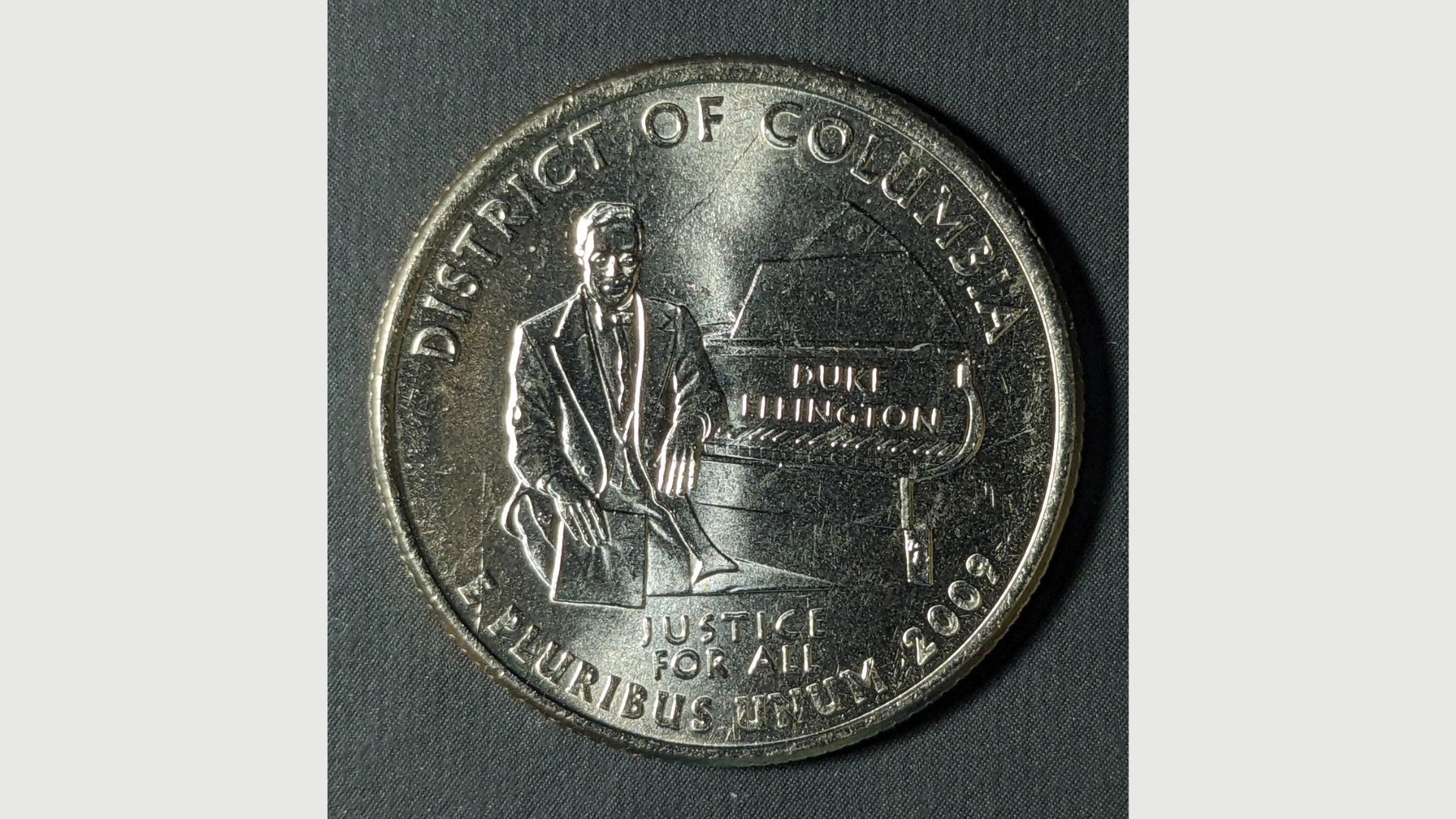
The Duke Ellington design includes prominent lettering; select 2009-P coins show true doubled-die doubling on parts of “ELLINGTON” (notably the “ELL”).
- How to spot it: Look for split serifs and clear secondary impressions on the letters rather than flat, shelf-like machine doubling.
- Designation: Strong varieties are cataloged (e.g., FS-801 type listings) and are easier to sell if attributed.
- Approximate value: Uncirculated examples often trade around $30; bolder, certified pieces can bring more.
Quick collecting tips: Weigh clad quarters (~5.67 g), use a 10× loupe, and compare to verified photos from reputable sources. When value matters, consider third-party grading (PCGS/NGC) or at least a recognized variety attribution. Market prices vary with grade, eye appeal, and demand.