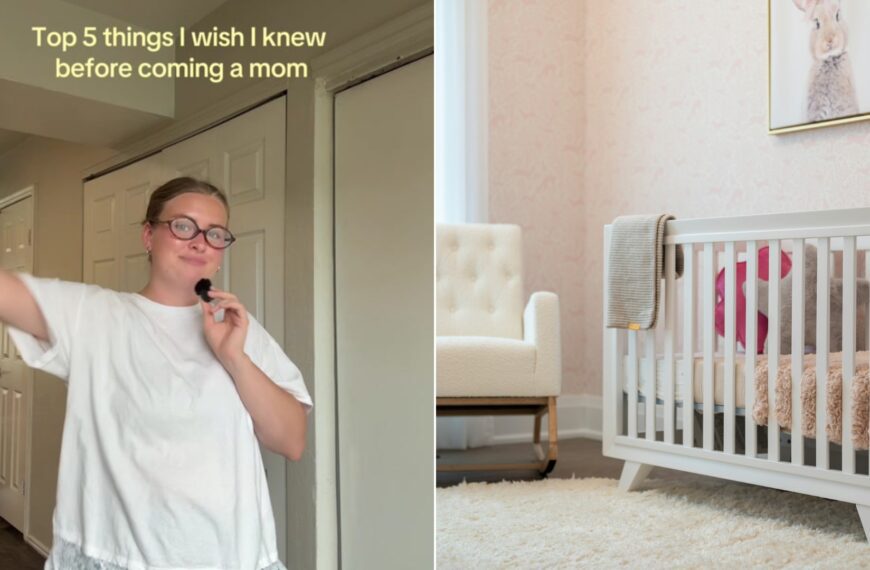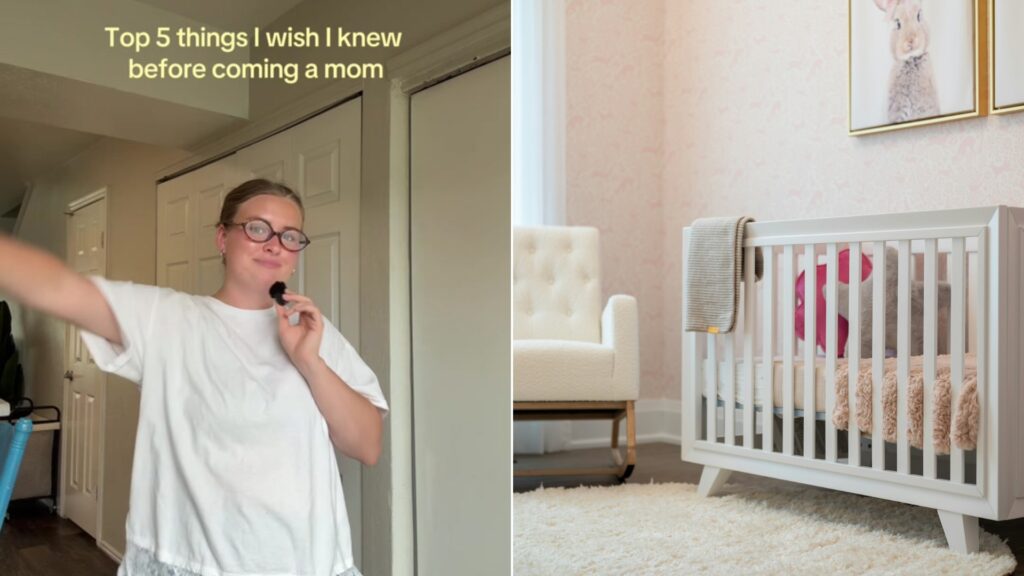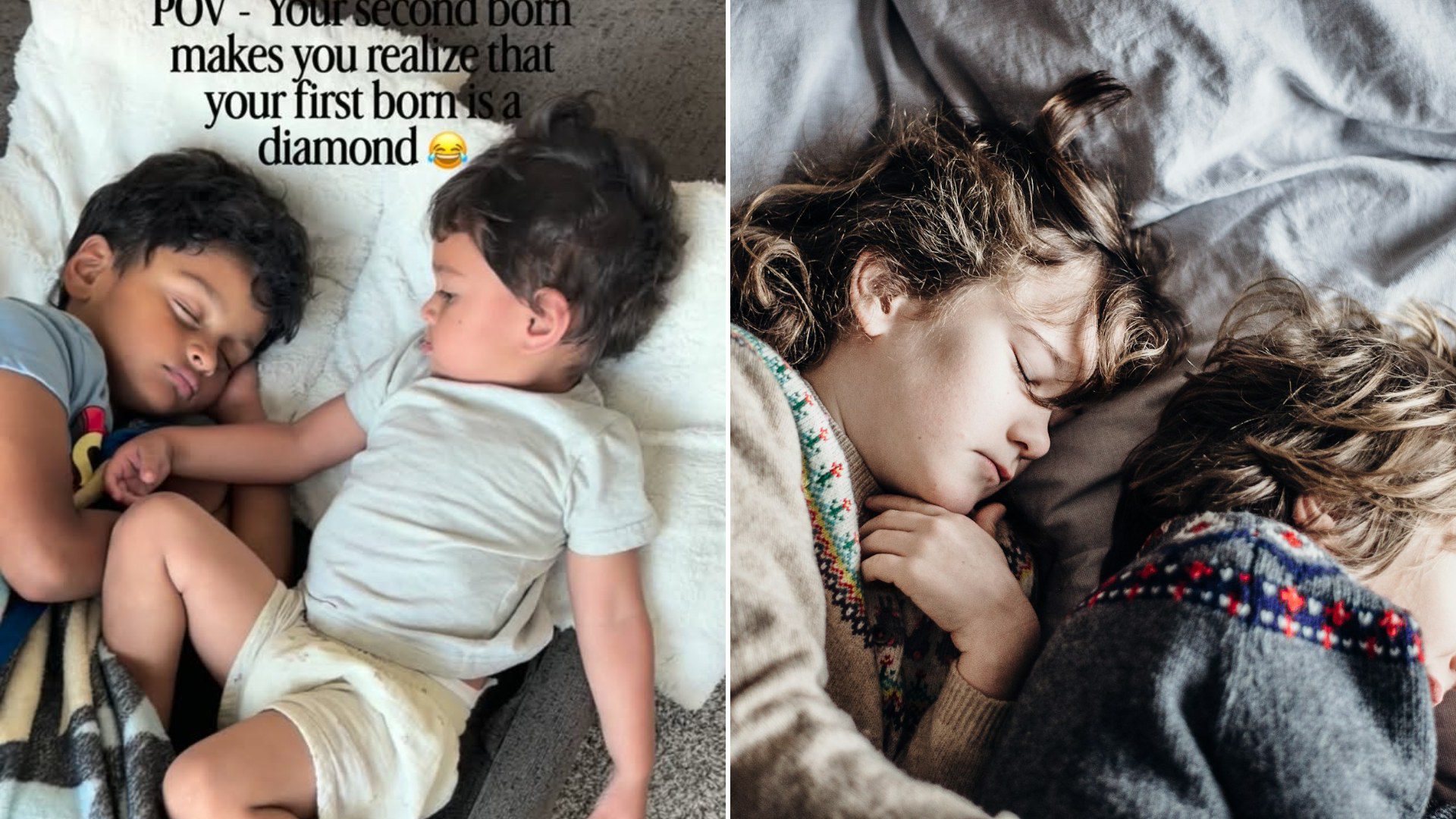
There’s a reason “second kid energy” has become such a widely recognized phrase among parents, and creator @keepingupwiththekadris captured it perfectly with a simple, knowing caption: “Second kid energy is something different.” No lengthy explanation needed, just four words and a video that any parent of two or more children will immediately recognize, because the shift in personality, pace, and general chaos that arrives with baby number two is one of the most universally acknowledged truths of family life.
Ask nearly any parent of multiple children, and they’ll tell you some version of the same story: the firstborn arrived into a world of careful preparation, cautious routines, and parents who read every milestone chart available. By the time the second child arrives, that same level of vigilance simply isn’t sustainable, not because parents care less, but because there’s objectively less time, less energy, and a toddler already demanding attention. The result is often a second child who seems to arrive with a fundamentally different temperament, more fearless, more independent, sometimes louder and more demanding of attention simply because they’ve had to compete for it from day one.
There’s actual developmental logic behind this pattern, not just anecdote. Firstborns typically receive more one-on-one adult attention in their earliest years, since there isn’t yet a sibling to divide a parent’s focus. That concentrated attention can shape a firstborn toward more cautious, rule-following behavior, partly because they’re more attuned to adult expectations and partly because they haven’t had to develop the scrappiness that comes from sharing resources and attention with a sibling from birth. Second children, by contrast, grow up watching an older sibling navigate the world first, often learning to push boundaries, assert themselves, and move faster simply to keep pace.
Parenting style also shifts significantly by the time a second child arrives, usually without parents even consciously deciding to change anything. The anxious, by-the-book approach to a first baby’s sleep schedule, feeding windows, and developmental milestones tends to relax considerably by the second time around, partly out of necessity and partly out of hard-won wisdom that most of those milestones work themselves out regardless of how carefully they’re tracked. That relaxed parenting style can, ironically, produce a child who seems more relaxed and confident navigating the world, since they’re not absorbing quite the same intensity of parental anxiety that a firstborn often does.
The hashtags accompanying this post, #firstkidvssecondkid and #iykyk, point directly to a thriving online community built entirely around comparing birth order experiences. Birth order content consistently performs well across parenting social media because it offers something relatively rare in the genre: a shared joke that transcends individual family circumstances. Whether a parent is raising two kids eighteen months apart or has a decade-long gap between their children, the “second kid energy” phenomenon tends to show up in some recognizable form, which makes the humor instantly transferable across wildly different family situations.
There’s also a quieter, more reassuring message embedded in content like this for parents currently expecting their second child and anxious about how they’ll manage. The implicit message of “second kid energy” humor is that lowered vigilance isn’t parental failure, it’s simply adaptation, and that children raised with a more relaxed, less hyper-monitored approach often turn out just fine, frequently even more resilient and self-sufficient than their more closely supervised older siblings. That reassurance matters enormously for parents drowning in guilt about not applying the same intensive attention to their second child that they gave their first.
It’s also worth noting how much of this phenomenon is really about parental bandwidth rather than any inherent difference in the children themselves. A parent simply has finite attention to distribute, and once that attention is split between two or more children, a second child’s more intense, independent, or chaotic behavior may partly reflect their own personality, but it also reflects the reality that nobody is hovering over their every move the way they might have for an only child. Recognizing that dynamic can help parents extend themselves a little grace rather than worrying they’re somehow shortchanging their younger kids.
This kind of content also captures something valuable about sibling dynamics more broadly: how much a family’s second, third, or subsequent children are shaped not just by their parents, but by the older siblings already in the household. A second child doesn’t grow up in a vacuum; they grow up studying an older sibling’s behavior, testing which rules are actually enforced, and often developing a personality specifically in relation to, sometimes in direct contrast to, the sibling who came before them.
Ultimately, the appeal of “second kid energy” content lies in its simplicity and universality. It doesn’t require elaborate explanation because nearly every parent of multiple children has lived some version of this exact realization, watching their younger child barrel through the world with a confidence and chaos that their firstborn never quite displayed, and wondering, with a mix of exhaustion and admiration, where exactly that energy came from.