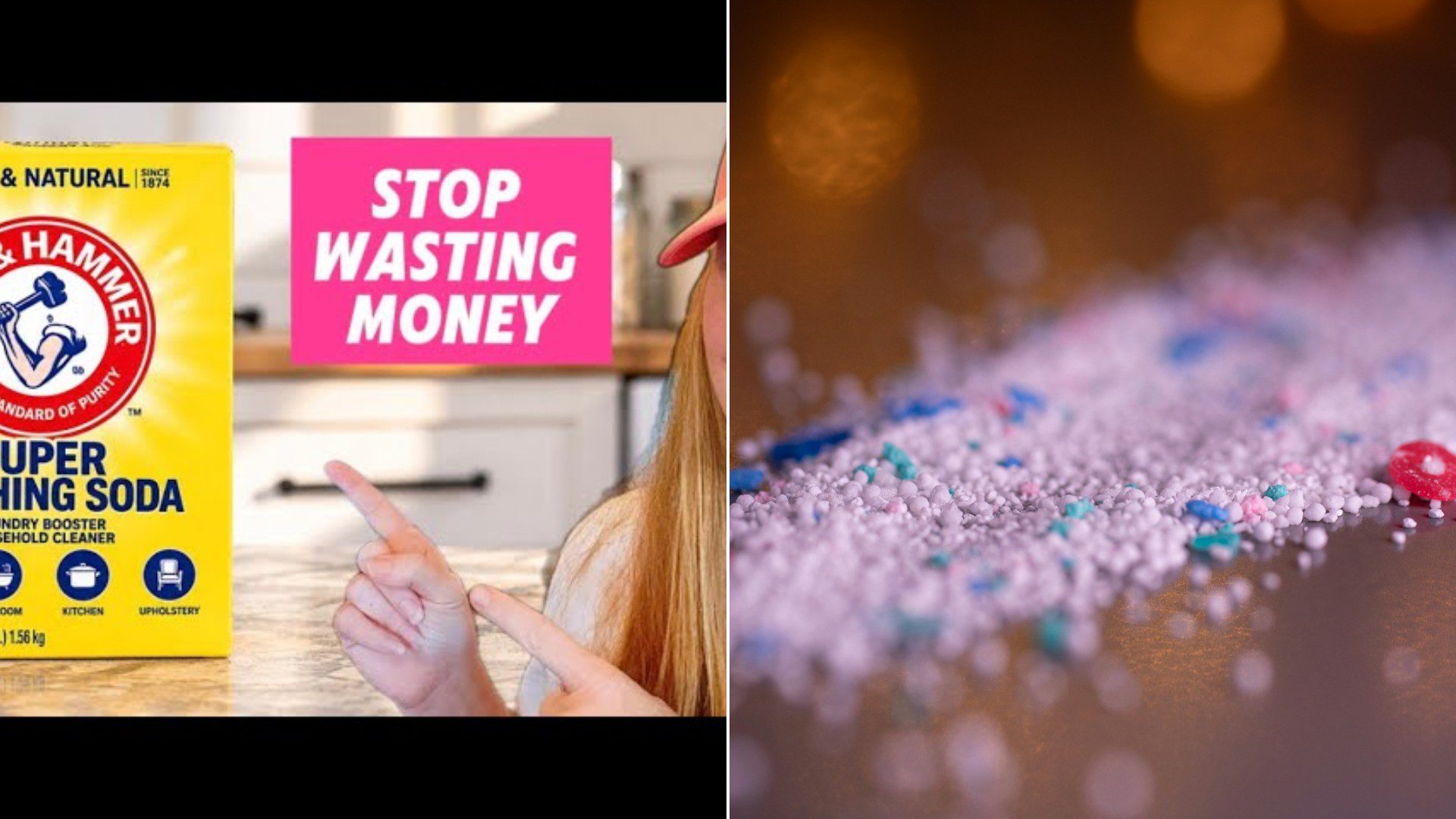
Turn a tub of OxiClean around and read the label, and the very first ingredient is sodium carbonate. That is washing soda, and according to the creator behind @TheGoodStewardMoney, it is the same stuff you will find in Cascade dishwasher pods, Tide and countless other products.
The difference, the creator says, is the price tag. “They just charge you a whole lot more for it.”
Washing soda has been around for more than 150 years. Your grandmother probably used it, and her mother probably used it too, but somewhere along the way most of us forgot it existed.
Today it sits on the store shelf in a plain box that most people walk right past. The creator calls that a mistake, because the stuff can replace products you are spending far more on, and counts down 16 uses.
Homemade Dishwasher Powder Costs About 10 Cents A Load Instead Of 30 To 50
Dishwasher pods have gotten so expensive that Cascade or Finish can easily run 30 to 50 cents every load. The creator’s recipe calls for one cup of washing soda, one cup of borax, half a cup of citric acid and half a cup of coarse salt, mixed well and stored in an airtight container.
Use one tablespoon in the detergent cup per load. One batch makes around 32 loads, which the creator says saves up to 80% on every wash.
A Musty Washing Machine Gets Cleaned For Pennies
A six-pack of washing machine cleaner tablets costs around 10 to 15 dollars, the creator says. Washing soda does the job for pennies.
Run the machine empty on the hottest, longest cycle with half a cup of washing soda poured into the drum. Leave the door open afterward so the inside can dry out completely.
Smelly Garbage Disposals And Slow Drains Get The Heavy-Duty Treatment
Greasy film coats the inside of a disposal where you cannot see it, and that is usually where the smell comes from. With the disposal off, sprinkle 2 tablespoons of washing soda down the drain, let it sit for 15 minutes, then run hot water and turn the disposal on.
For a slow kitchen drain, pour in 1 cup of washing soda, follow it with about 4 cups of the hottest tap water, wait 15 minutes, then flush with more hot water. If the drain already runs slow, the creator says to do it today, and if it is fine, to repeat it once a month.
Oil Stains On The Driveway And Soot On The Fireplace Come Right Up
Wet an oil drip on the driveway or garage floor, sprinkle a good layer of washing soda on top, and pour a little hot water over it. Scrub with a stiff brush, wait about 15 minutes, then hose it off.
Fresh spots come up quickly, while older stains may take two or three rounds. For a sooty fireplace, wait until it is completely cold and scrub the brick with half a cup of washing soda mixed into a gallon of warm water.
Yellow Pillows, Mildewed Liners And Ruined Whites Get A Second Life
To get the yellow out of pillows, wash two at a time on hot with regular detergent and half a cup of washing soda, add an extra rinse, and dry on low heat with dryer balls or a tennis ball. A mildewed shower curtain liner goes in the machine with a couple of old towels, regular detergent and half a cup of washing soda, then hangs back on the rod to dry. Skip the dryer, because heat can melt or wrinkle the plastic.
For badly stained clothes, stir half a cup into a gallon of warm water and soak overnight before washing normally. The creator says this works best on whites and light colors, since long soaks can lighten darks, and warns not to use it on wool or silk.
Tarnished Silver Shines Again Without Any Scrubbing
Line a glass baking dish with aluminum foil, sprinkle in 2 tablespoons of washing soda and pour in hot water. Lay the silver on the foil so each piece touches it, and the tarnish starts disappearing without scrubbing.
A slight rotten egg smell is normal. Avoid this trick on pearl stones, glued pieces or antique silver with darkened detail.
The One Thing Almost Nobody Mentions About Washing Soda
Washing soda may look like baking soda, but the creator says it is a whole lot stronger. It is highly alkaline, which is why it cleans so well, and also why it can irritate skin and eyes.
Wear gloves, keep it away from kids and pets, and never cook with it. Do not mix it with vinegar either, since one is acidic and the other alkaline, so they cancel each other out and waste both.
You Can Even Bake Your Own Washing Soda From Baking Soda
The creator’s number one tip needs only an oven. Spread baking soda in a glass baking dish or stainless steel pan and bake it at 400 degrees for about an hour, stirring halfway through.
The texture changes from soft and powdery to noticeably grainier. Let it cool completely, store it in an airtight container, and label it clearly, because once baked it is no longer baking soda and you do not want anyone using it in a recipe.
Hard Water And Carpet Stains Are On The List Too
If glasses come out of the dishwasher cloudy or clothes never seem clean, hard water may be the problem. Add half a cup of washing soda to the washer with your regular detergent, or a tablespoon in the bottom of the dishwasher, to soften the water so the detergent can work better.
For carpet and upholstery stains, mix 1 teaspoon into two cups of warm water, test a hidden spot first, then dab and blot without rubbing. Go back over the area with plain water afterward, because leftover washing soda can attract dirt.
The creator ends with a challenge: one box, 16 uses, so which one will you try first?
More Stories You May Like
- Shopper Spends $150 At Estate Sales And Comes Home With A Trivet, A Key Holder, A Soup Cookbook And A Bag Of Matchbooks Including One From A 1974 Wedding
- Americans Reported $15.9 Billion Lost To Fraud In 2025, And Imposter Scams Have Been The Most Reported Type Every Year Since 2020, So Know The Signs
- Halloween 2026 Spending Is Forecast At $13.5 Billion With $1.5 Billion Going To Kids Costumes That Will Soon Be Clutter, So Plan Before You Buy