Most homeowners pay $168 on average to have their gutters cleaned, according to 2026 cost data from Angi, with typical jobs falling between $119 and $234. That number sounds almost trivial next to what professionals say happens when homeowners skip it: water pooling against the foundation, ice dams forming under the eaves, and roof damage that can run into the thousands. With fall leaf drop underway and freezing temperatures not far behind in much of the country, the gap between that $168 and what neglect actually costs is worth understanding now, not in January when the damage is already done.

What It Costs
Angi’s national data pegs the average gutter cleaning visit at $168, with a typical range of $119 to $234 depending on home size, gutter condition, and region. Pricing usually comes down to linear footage: expect roughly $0.95 to $1.25 per linear foot for a single-story home, $1.00 to $1.85 for a two-story home, and $1.25 to $2.25 for a three-story home, since taller homes require more equipment and time. Gutter type matters too: seamless gutters typically run $120 to $175 to clean, while seamed gutters, which trap more debris at the joints, run $165 to $250.
A few factors reliably push the price up. A steeply pitched roof adds about 15% to the job because of the added difficulty and safety gear involved. Gutters that have been neglected for a year or more, packed with compacted leaves, twigs, and standing muck rather than loose debris, can add a surcharge of 10% to 50%. And booking during peak fall season, when every crew in town is backed up, can tack on a similar 10% to 50% premium. If you’re adding gutter guards at the same time, budget an additional $6 to $8 per linear foot.
Why It Matters Now
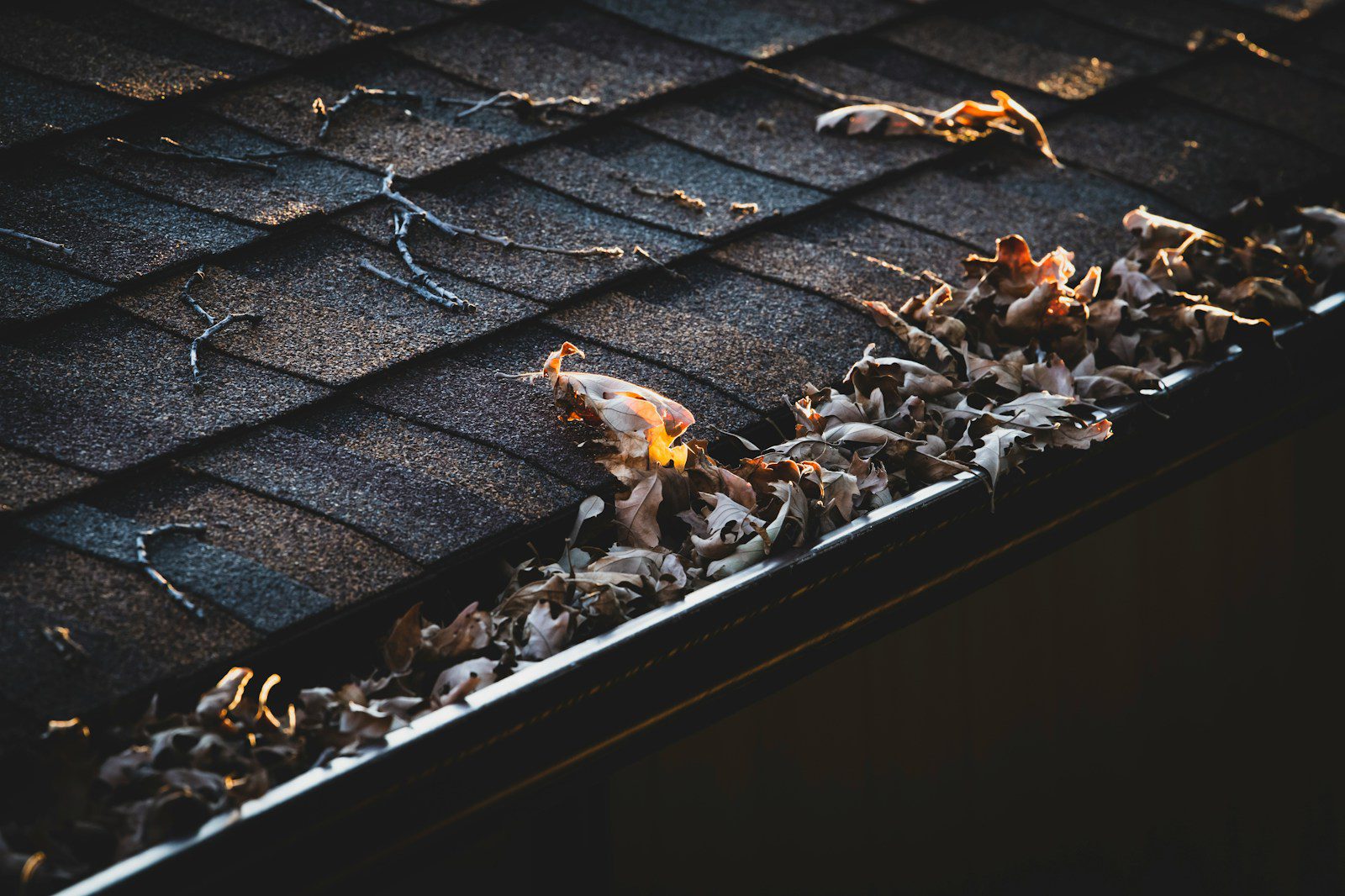
The reason professionals keep hammering on this every fall isn’t upsell pressure. It’s physics. When gutters clog with wet leaves and debris, water has nowhere to go but over the edge and straight down next to your foundation. Angi’s own guidance warns this leads to “water pooling around your home’s foundation, causing basement flooding and structural damage”, which is a far more expensive problem than a cleaning bill. Once temperatures drop, that trapped water freezes. Melted snow from the warmer roof surface runs down into the clogged gutter, refreezes at the cold edge, and builds into an ice dam: a ridge of ice that backs water up under your shingles and into your attic, walls, or ceiling. According to AAA’s guidance on ice dam prevention, backed-up meltwater seeping through shingles is the most serious consequence, and water damage from freezing is among the most common homeowners insurance claims in cold-climate regions. Ice dam damage routinely runs into the thousands of dollars in roof, insulation, and drywall repair, dwarfing the cost of the cleaning that would have prevented it.
Beyond flooding and ice, clogged gutters that stay wet and heavy for months invite their own secondary problems: sagging or pulling gutters that damage fascia boards, mold and mildew growth from standing moisture, and pest infestations from insects and rodents drawn to the debris and damp wood.
Regional and Seasonal Variance
Where you live affects both the price and the urgency. Homes in the Northeast, Midwest, and parts of the Mountain West face genuine ice dam risk every winter and benefit most from getting gutters cleared before the first hard freeze. Homes surrounded by mature deciduous trees, oaks, maples, sycamores, tend to need cleaning twice a year rather than once, since leaf volume alone can overwhelm even well-maintained gutters. In drier, warmer climates with fewer trees, the math shifts more toward preventing debris buildup than ice specifically, but pooling and foundation risk still apply everywhere it rains.
What To Do About It
The most cost-effective approach is scheduling before the seasonal crunch hits, rather than after the first freeze warning goes out, when demand, and pricing, spikes. If you can safely reach your gutters yourself with a ladder and a garden hose, a DIY clean-out costs essentially nothing but a Saturday afternoon; just be cautious on steep or high rooflines, where a fall risk isn’t worth the savings. For anyone hiring a pro, getting two or three quotes helps you catch the neglected-gutter and peak-season surcharges before they show up on the final bill. And if your home routinely fights ice dams, pairing a fall cleaning with gutter guards can cut future maintenance costs even though it raises the upfront price this time around.
Either way, the math is straightforward: $168 now is a rounding error compared to what a foundation repair, an ice dam, or a soaked attic costs later. Professionals aren’t warning homeowners for no reason. They’re the ones who see what the “I’ll get to it” gutters look like by February.