

You probably scrubbed your shower until it sparkled only to find the same chalky film back within days. That happens because soap scum forms when fatty acids in soap react with minerals in your water and bond to grime on surfaces, so simple surface wiping often just shifts the buildup instead of removing its roots. Stop treating the symptom—target the cause by changing products, improving ventilation, and using the right cleaners for each surface to keep scum from returning.
You’ll learn why scum comes back so quickly, which everyday habits make it worse, and practical fixes that work on glass, tile, grout, and natural stone. Use those small habit changes and targeted cleaning methods to cut down on scrubbing and keep your bathroom genuinely cleaner for longer.

Why Soap Scum Returns After Cleaning
You’ll learn what actually forms soap scum, which cleaning choices feed it, and the exact trouble spots that let it hide and rebuild quickly.
Understanding the Cause: Hard Water and Soap
Hard water contains dissolved calcium and magnesium. When those minerals meet fatty acids from bar soap, they form insoluble salts — the gray-white film you call soap scum.
That reaction happens every time water and soap mix, so even after you scrub, fresh showers keep producing more residue.
Liquid body washes usually leave fewer insoluble residues than traditional bar soaps. Switching to low-residue cleansers cuts the raw material for soap scum formation at the source.
Also consider a water softener or a filtered showerhead if your area has high mineral content; reducing minerals reduces new soap scum.
Common Cleaning Mistakes That Make Soap Scum Worse
Using plain water or a mild cleaner on thick scum only moves the film around, so residue remains in grout lines and corners. Scrubbing with abrasive pads can scratch glass or tile, creating micro-roughness that grabs soap scum faster.
Overusing oily or waxy products (some conditioners, bath oils, or heavy cleansers) leaves a thin film that binds minerals and soap residues together, accelerating buildup.
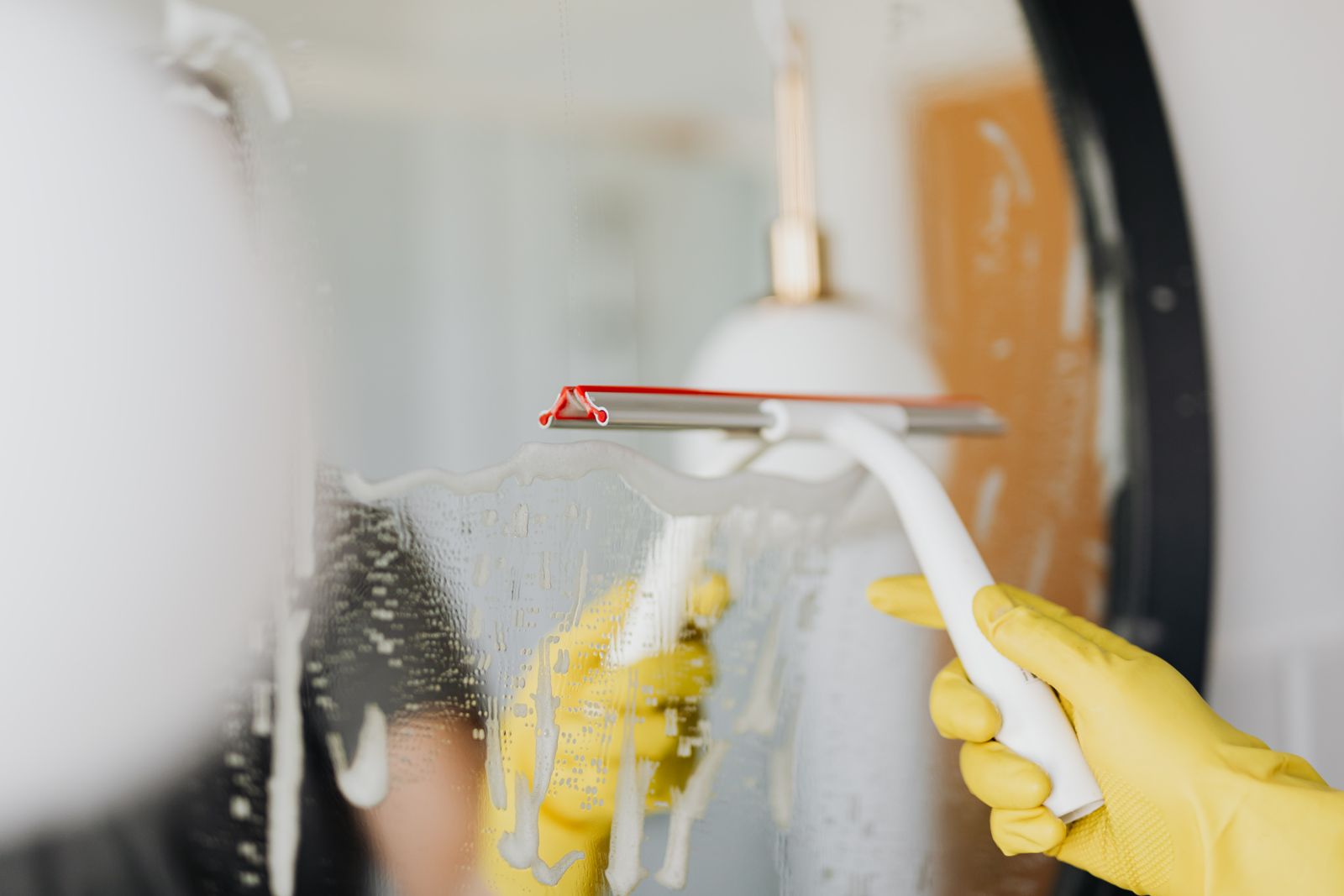
Rinsing poorly after cleaning leaves cleaner residues that react with hard water. Drying the surface after every shower — even a quick squeegee pass — prevents mineral deposits from drying into hard, bonded soap scum.
Hard Water Minerals: Calcium Stearate and Magnesium Stearate
Calcium stearate and magnesium stearate form when calcium and magnesium react with stearic acid (a common fatty acid in soap). These compounds are insoluble and adhere strongly to smooth surfaces like glass and glazed tile.
Once bonded, they resist simple rinsing; they need acidic or alkaline action or physical abrasion to break the bond and lift the film.
You can often remove them with vinegar-based sprays for light deposits or a baking-soda paste for scrubbing thicker patches. For frequent recurrence, installing a water softener or using synthetic liquid soaps reduces the formation of calcium and magnesium stearates.
Hidden Trouble Spots: Grout, Fixtures, and Glass
Grout and textured tile trap tiny particles and soap residues, turning them into persistent hotspots. Even if the visible glass looks clean, grout can hold enough residue to reseed scum on adjacent surfaces.
Metal fixtures, faucet bases, and soap dishes collect both mineral scale and leftover soap, which then flakes off and spreads during showers.
Pay special attention to the shower track, the bottom edge of glass doors, and silicone seals. Clean those areas with a small brush and the appropriate cleaner, then dry them. Regularly treating glass with a water-repellent product or a thin coating of car wax can make residues easier to wipe away and reduce how fast soap scum returns.
Effective Solutions to Prevent and Remove Soap Scum
You can both remove stubborn soap scum and reduce how quickly it returns by changing products, using correct cleaners for each surface, and adding simple daily habits. Focus on replacing bar soap, using targeted cleaners, and applying short maintenance steps after each shower.
Switching to Liquid Soap and Other Product Upgrades
Switching from bar soap to liquid body wash or shower gel cuts the fatty acids that form soap scum with hard water minerals. Choose sulfate-free liquid cleansers or unscented body washes if you want lower residue; look for “sulfate-free” on the label.
Also review other bathroom products. Swap shampoo bars and conditioning bars for bottled versions if they leave a waxy film. Use a pump-bottle dish detergent or drop of liquid dish soap in your cleaning paste to boost grease-cutting power when you scrub.
Consider hardware upgrades: a handheld showerhead and a coated glass door reduce water spots and make rinsing easier. If you have hard water, evaluate installing a whole-house water softener to slow mineral-driven soap scum formation.
How to Remove Soap Scum: DIY and Commercial Methods
For routine buildup, make a paste of baking soda and liquid dish soap or water, apply to the film, let sit 5–10 minutes, then scrub with a non-abrasive sponge or magic eraser. Use circular motions and rinse well.
For grout and heavy stains, mix baking soda with 3% hydrogen peroxide into a paste; the bubbling helps lift grime. Apply, wait a few minutes, scrub with a soft toothbrush, then rinse. Avoid peroxide on colored grout frequently to prevent fading.
For glass doors and tougher scum, spray a 1:1 solution of distilled white vinegar and water, let sit 5 minutes, then scrub with a non-scratch sponge. If you prefer ready-made products, pick a commercial soap scum remover labeled for your surface and follow the manufacturer’s dwell time and safety steps.
Prevention: Daily Shower Sprays, Squeegees, and Water Softeners
Use a daily shower spray—homemade (vinegar and water with a few drops of dish detergent) or commercial—to break surface film after each use. Spray walls and glass, then let air dry; no heavy scrubbing needed.
Squeegee glass and tile after every shower to remove water and dissolved soap before it bonds with minerals. Store a small squeegee within easy reach on a hook. Wipe high-use fixtures weekly with a microfiber cloth to prevent buildup around drains and faucets.
If you have hard water, installing a water softener markedly reduces mineral buildup that combines with soap to form scum. A softener is a larger investment but improves soap performance and lowers cleaning frequency.
Surface-Specific Tips: Glass, Tiles, and Grout
Glass: Avoid abrasive pads. Use a vinegar-and-water spray or a baking soda paste for streaky scum, then squeegee and dry with a microfiber towel to stop spots. For sealed glass coatings, check manufacturer guidance before using vinegar.
Tile: Smooth glazed tile tolerates baking soda paste or commercial cleaners. Rinse thoroughly and dry to avoid mineral rings. For textured tile, scrub with a soft-bristled brush to reach crevices.
Grout: Use a baking soda and hydrogen peroxide paste for grout stains; let it sit, then scrub gently with an old toothbrush. Avoid acidic cleaners like straight vinegar on unsealed natural stone or soft grout. Reseal grout periodically if it’s meant to be sealed to prevent moisture and soap absorption.
Use a non-scratch sponge or magic eraser on most surfaces; reserve harsher powders or metal scouring pads for porcelain edges only, never on glass or sealed natural stone.