

Imagine losing your home to a fire, with nothing left but the clothes on your back, and then fitting your whole family into one room of someone else’s house. Audrey of the Organized Chaos channel lived it, and says it taught a lesson that has nothing to do with square footage: you can find a home for everything you own.

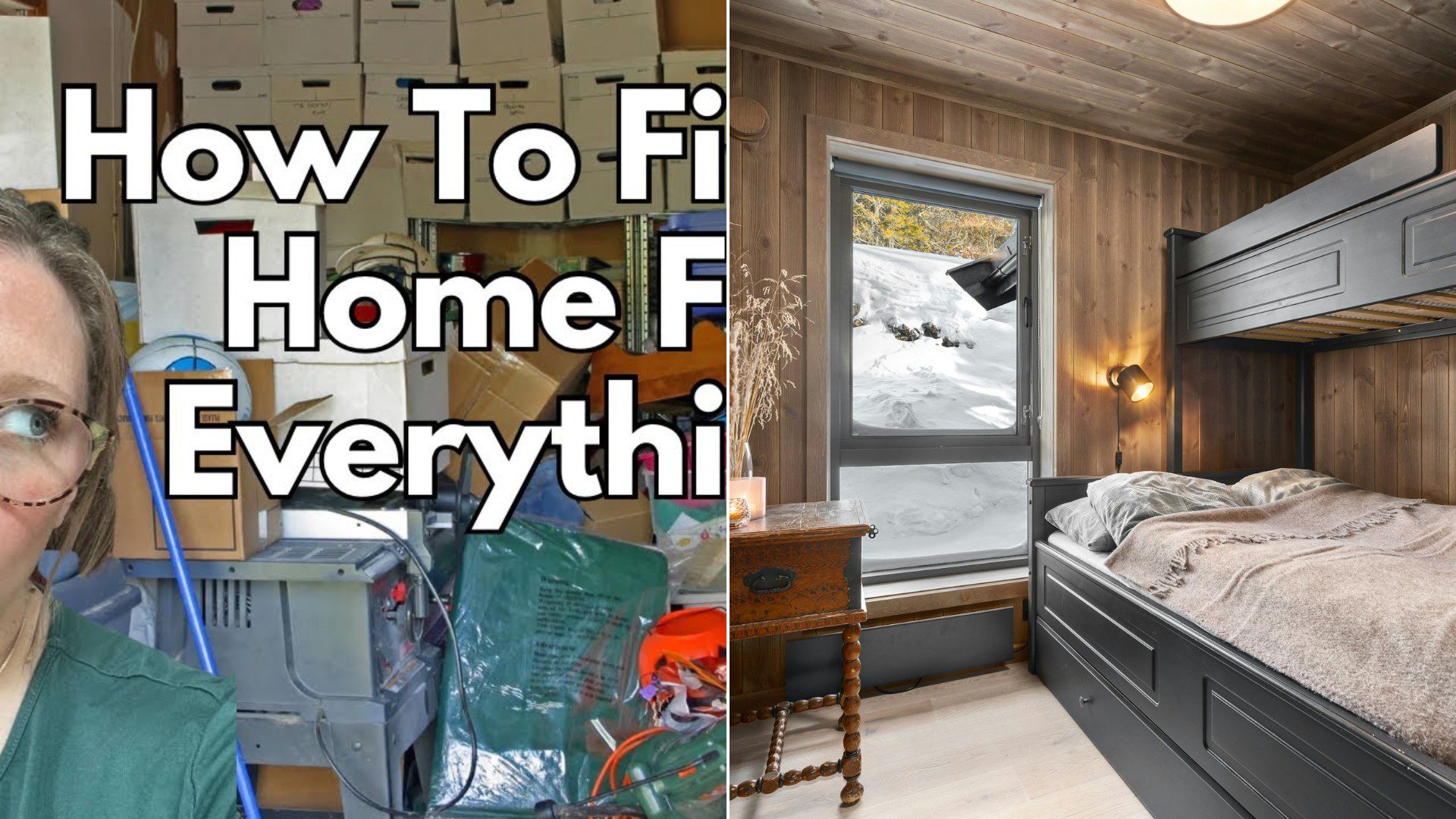
“It doesn’t matter how big or how small your house is,” Audrey says. “It doesn’t matter if your house is 100 square feet or 5,000 square feet.” It is a bold claim, and Audrey is ready for the people who push back on it.

It is not the size of the house
Audrey admits that some viewers hear this and think, you have a decent sized house. Audrey’s reply is that it is not the size of the home but how much stuff is inside it. Audrey also says, “I’ve lived a lot of life in my 36 years.”
About three and a half years before making the video, Audrey’s house burned down and the family had to move into Audrey’s parents’ home. Audrey puts it at maybe 1,000 square feet, with three bedrooms, two bathrooms, a kitchen, a living room and a dining room. Audrey’s family moved into one of those rooms.
When they first moved in, all they had was the clothes on their backs. Even so, Audrey says it worked really well, because the family kept things minimal. So when Audrey talks about making do with less, it is not theory. As Audrey puts it, “I do understand.”
Idea one is friction
The first idea Audrey wants everyone to know is a term called friction. It matters most when one person builds the system and the rest of the family has to follow it. The more steps it takes for them, the less likely they are to do it.
Think of the dishes by the sink or the jacket on the floor. Most of the time it is not that people are lazy. The hook is too far away, or the lid takes too many tries. Cut out a step and the habit often follows.
Audrey gives a personal example. Audrey no longer uses a mouthwash container or reusable cotton pads, and does something different instead. Fewer items to store means fewer steps to put things away.
Idea two is called SOS
The next idea Audrey calls SOS. The point is about boundaries. If you do not set boundaries for where your stuff lives and where your neighbor’s stuff lives, your stuff will migrate. In other words, things drift into every empty spot.
You cannot just say all of this will fit in one drawer and toss it in. That does not work, Audrey says, because there are no four walls around anything. Chances are, nine times out of ten, you need to declutter first.
That means accepting that there are sacrifices to be made. Audrey uses a punch bowl as the example. People do not like it, because they ask what to do when they need a punch bowl. Audrey says the punch bowl is just an example, and that you have to sacrifice, which does not mean you get your own way.
Keep everyday items close
Audrey also says to keep high-frequency items at the point of use, and calls that the first rule. In the video, Audrey shows a drawer with eight dividers. Bigger and bulkier things live there, such as baking soda, a vac mop and cleaning solution, because they do not need to be carried around the house.
It is a sensible idea whatever size your home is. The things you reach for every day should be easy to grab and easy to put back. The things you use once a year can live farther away.
Try it at home
Here is how you might put these ideas to work in your own house, one small spot at a time.
- Pick one drawer or shelf and decide what belongs there, and what does not.
- If everything will not fit, declutter first instead of squeezing it in.
- Store daily items where you use them.
- Look for steps you can cut out, so the whole family can follow the system.
It also helps to be honest about the “just in case” items. If something takes up a whole shelf and comes out once in a blue moon, ask whether a borrowed one would do. That is the sacrifice Audrey is talking about, and for many families it frees up real room.
The real lesson
What stands out is that this advice comes from someone who had no choice. After a fire, a family shared one room, and Audrey says it worked because they kept things minimal. Most of us will never face that, but we can all stand in a closet or a garage and ask the same question: do we own the stuff, or does the stuff own us?
Whether you live in a tiny apartment or a big house, the idea is the same. Fewer things, clear boundaries and easy steps make a home that runs smoothly. Start with one drawer this weekend and see how it feels.
More Stories You May Like
- Declutter a Small Space in Under Ten Minutes with Steps a Stay at Home Mom Uses Every Day
- Mom Deep Cleans the House She Already Knows She Will Not Get to Keep After Her Divorce and Explains Why She Is Choosing a Fresh Start for Her Kids
- Woman Decluttering Her House Before Downsizing Draws a Number From One Bucket and a Room From Another to Decide Exactly What to Throw Away Each Day for Thirty Days