


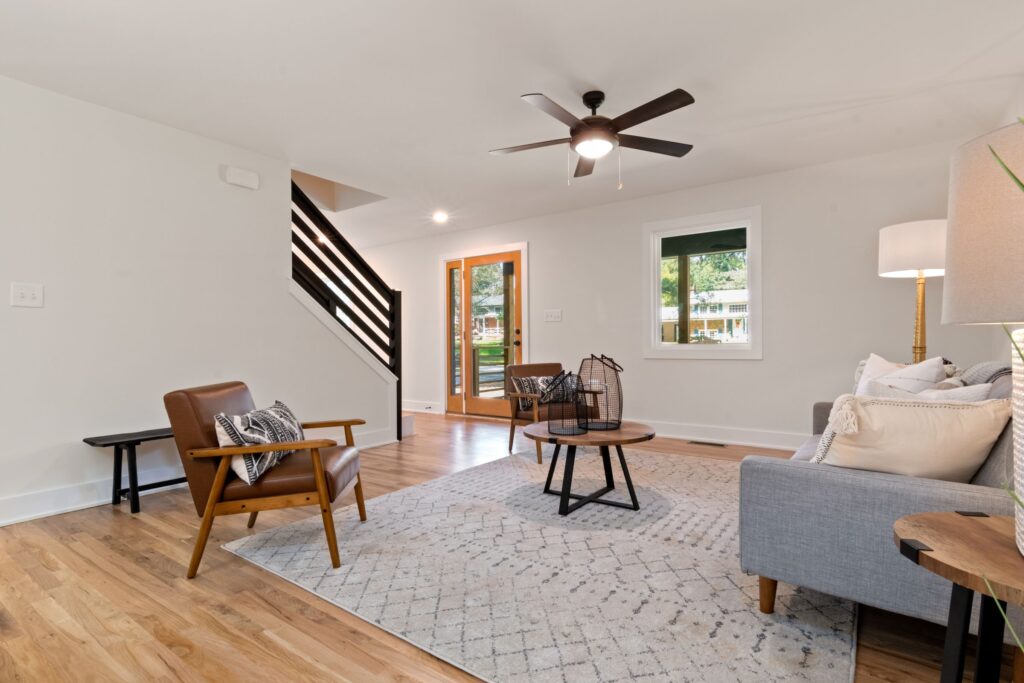
If you’ve ever stood in your living room wondering whether all that pillow-fluffing and closet-purging before a showing actually changes anything, the National Association of Realtors just answered that question with real numbers instead of a stager’s sales pitch. Twenty-nine percent of agents say staged homes bring in offers that land one to ten percent higher than they would have otherwise, and nearly half of seller’s agents report that staging measurably shortens how long a home sits on the market. Buyer’s agents feel even more strongly about it: the vast majority say staging is what finally lets a stranger walk through someone else’s house and picture their own coffee mug on that counter. This isn’t a hunch passed around at open houses. It’s what agents who watch offers come in, or fail to come in, week after week are telling their own trade association. And once you know which rooms are actually doing the work, it gets a lot easier to spend your energy where it counts instead of scrubbing baseboards that no buyer will remember.
What the Data Actually Shows
NAR’s 2025 Profile of Home Staging found that among agents whose sellers staged their homes, 29% saw offers come in one to ten percent higher in dollar value than an unstaged comparable would have fetched. On the time side, 49% of seller’s agents said staging decreased how long a home sat on the market, with 30% calling the effect slight and 19% calling it significant. A separate survey of 900 top-performing agents backs this up from another angle: 67% said staging helps sellers walk away with more money, and 83% said staged homes simply sell faster than ones left as-is, according to agent-reported data compiled independently of NAR. As NAR Deputy Chief Economist Jessica Lautz put it, “By staging a home, agents who are Realtors® strategically highlight the best features, ensuring sellers receive the most-competitive offers.” That’s the whole game in one sentence. Staging doesn’t invent value that isn’t there. It just makes sure buyers actually see the value your home already has.
Why Buyers Fall for a Staged Home
Here’s the part that tends to surprise people: staging matters less because it impresses buyers and more because it helps them stop noticing the house at all and start imagining their own life in it. According to NAR, 83% of buyer’s agents said staging made it easier for buyers to visualize the property as their own future home, with 26% saying it swayed most buyers and another 60% saying it moved at least some of them. Only 12% of buyer’s agents said it made no difference at all. Think about the last time you walked into a house crowded with someone else’s family photos, mismatched furniture, and a closet stuffed to the ceiling. You were probably too busy processing their life to imagine yours. A well-staged room quiets all that noise so a buyer’s brain can do what it’s there to do: fall in love.

The Rooms That Do the Heavy Lifting
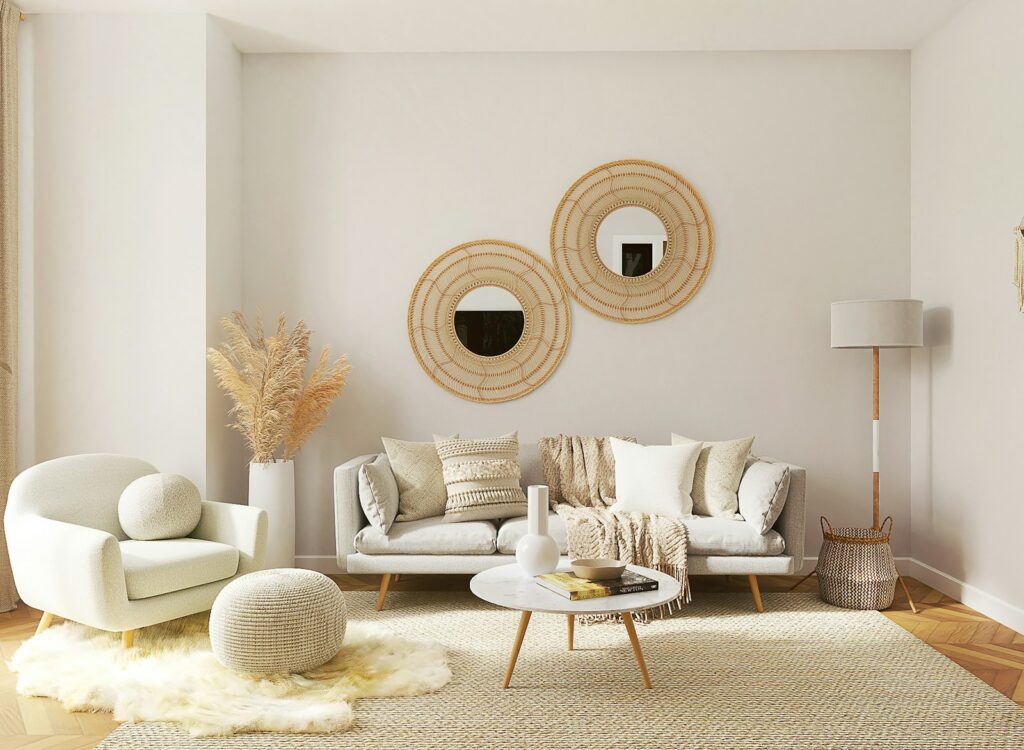
Not every room pulls its weight equally, and this is genuinely useful if your time or budget is limited. NAR’s buyer’s agents ranked the living room as the single most important space to stage, cited by 37%, followed by the primary bedroom at 34% and the kitchen at 23%. Sellers’ agents mirror that priority in practice: 91% of them said the living room gets staged most often, followed by the primary bedroom at 83% and the kitchen at 68%. The 900-agent survey landed in almost the exact same order, with 84% of agents naming the living room as the top priority, 75% pointing to the primary bedroom, and 66% to the kitchen. That consistency across two separate surveys tells you something real is going on, not a fluke.
The logic tracks with how people actually shop for a house. The living room is usually the first full room a buyer steps into after the entry, so it sets the emotional tone for everything that follows. The primary bedroom is where buyers picture the most personal, restorative part of daily life, which makes it disproportionately persuasive even though it’s just one room among many. And the kitchen, while it ranks third here, is often the room buyers linger in longest, so a cluttered counter or dated cabinet hardware can undo a lot of goodwill built elsewhere. Guest bedrooms and home offices, by contrast, barely register with buyers, so they’re the first place to skip if your time is short.
Budget-Conscious Staging That Actually Works
You do not need a stager on retainer to get most of this benefit. In fact, the 900-agent survey found that 50% of sellers spend under $1,000 on staging and 14% spend nothing at all, opting for a purely DIY approach, per the same agent-reported data. Start with decluttering, and be more ruthless than feels natural. A good rule stagers use is to remove about a third of what’s in every room and pack away anything that reveals too much of your personal life, from family photos to a bathroom counter’s worth of products. Empty surfaces read as spacious; full ones read as small, no matter the square footage.
Next, address the palette. You don’t have to repaint the whole house, but a coat of warm, neutral gray or greige on the most visible walls goes a long way toward letting buyers project their own taste onto the space instead of reacting to yours; “Agreeable Gray” by Sherwin-Williams was the single most-recommended paint color among surveyed agents, with Revere Pewter and Repose Gray close behind. Lighting is the cheapest transformation available to you: swap mismatched bulbs for a consistent warm-white temperature throughout the main living spaces, open every curtain before a showing, and add a lamp to any corner that photographs dark. Finally, think about flow rather than just tidiness. Pull furniture a few inches away from the walls to create defined seating areas, remove any piece that blocks a clear walking path between rooms, and take out at least one extra chair or table from any room that feels crowded. Buyers subconsciously register how easily they can move through a space, and a house that flows feels bigger and better cared for than one that’s simply clean.
It Comes Down to Seeing Your Home the Way a Stranger Will
What ties all of this together is that staging isn’t really about décor at all. It’s about temporarily stepping outside your own relationship with your house and looking at it the way someone with no memories attached to it will. That’s a genuinely hard thing to do in a home you’ve lived in for years, which is exactly why the data shows such a consistent gap between staged and unstaged results. Neal Weichel, a top-1% agent surveyed for the independent report, said it plainly: “Whatever the cost is, home staging will pay for itself, by a factor of at least two or three.” You don’t need to chase every trend or spend a fortune to get there. You just need to declutter honestly, let the light in, choose colors that get out of the way, and arrange your furniture so a stranger can imagine walking through it as theirs. Do that in the living room, the primary bedroom, and the kitchen first, and the rest of the house will follow.