


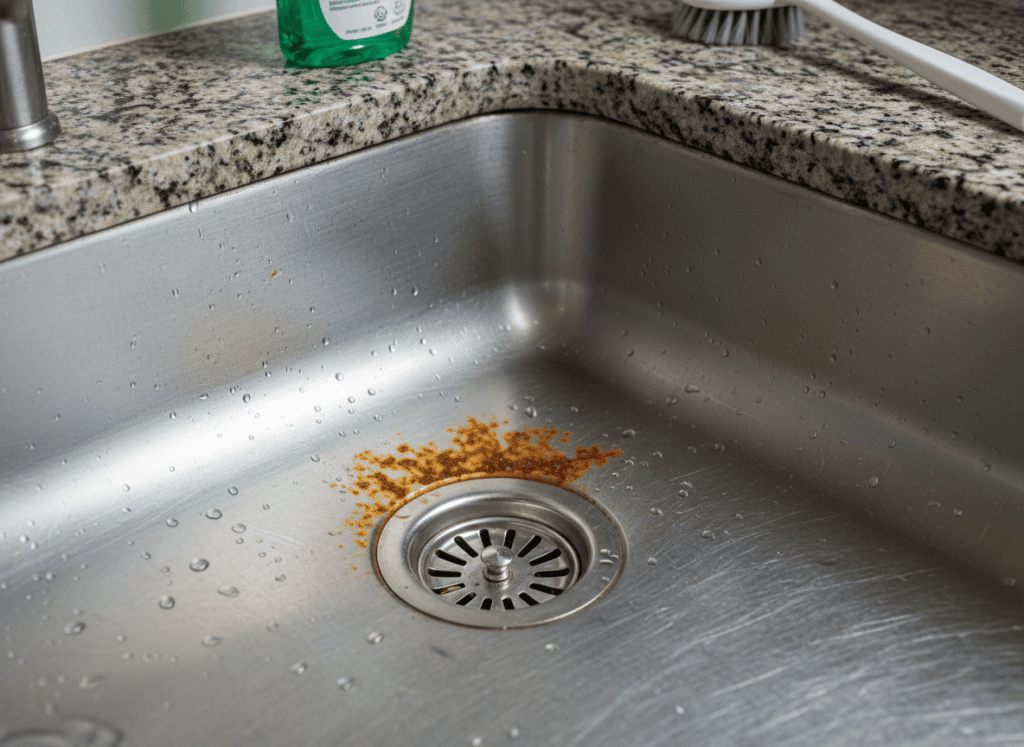
Stainless steel only earns the “stainless” part of its name once it contains at least 10.5% chromium, the threshold that lets the metal form a thin, self-healing oxide layer on its surface that keeps oxygen and moisture from reaching the iron underneath. That layer is why a stainless sink can handle decades of dishwater without corroding on its own. It’s also why the rust rings that do show up on stainless sinks are rarely a manufacturing flaw. According to care guidance from Moen and Kohler, two of the largest sink and fixture manufacturers in the country, that kind of localized rust almost always traces back to a specific mistake at the sink, not a defect in the steel.
A Rust That Isn’t Coming From the Sink Itself
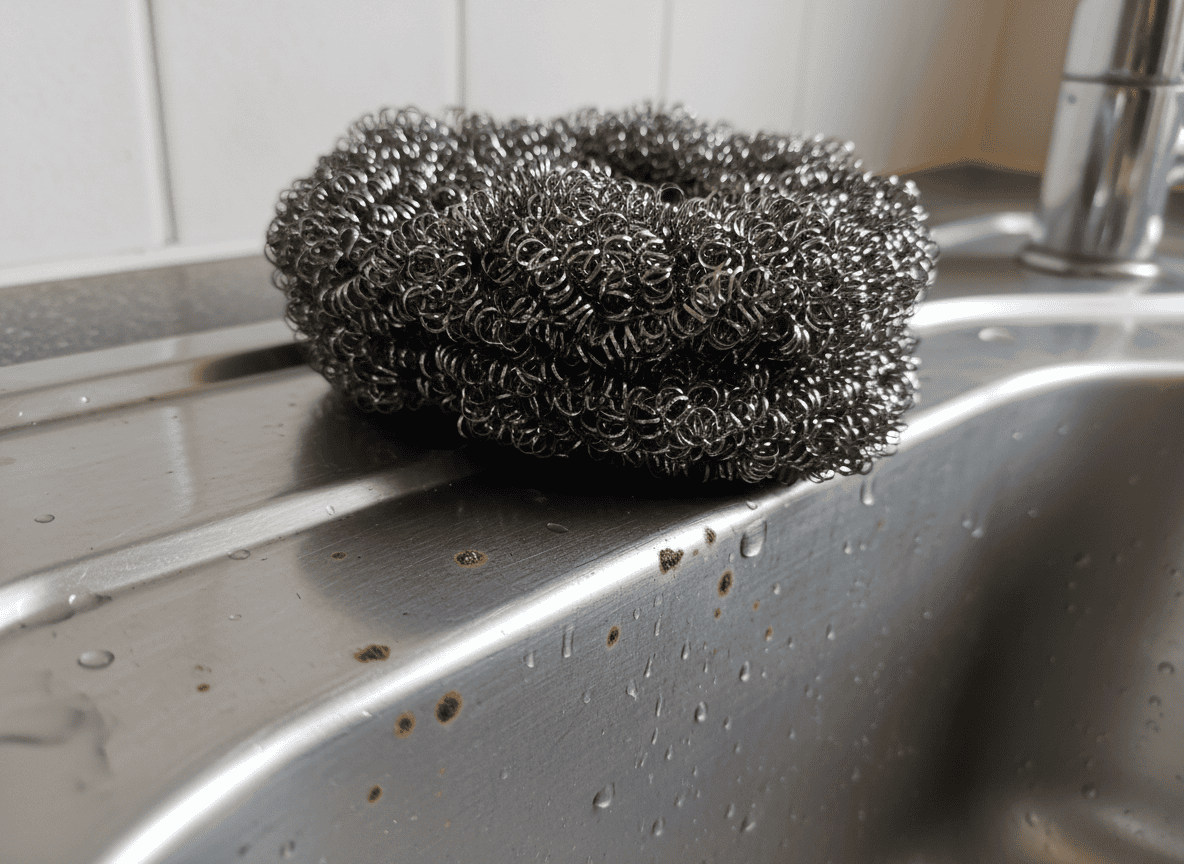
Kohler’s own troubleshooting guide states that rust on a stainless sink is “never a manufacturing defect” and instead results from how the sink is used day to day. The most common cause the company names is abrasive pads: “The use of abrasive pads, even sparingly, will allow rust to get into the grain of a sink.” Moen’s care and cleaning guide is more direct about the specific culprit, instructing owners: “DO NOT USE: Steel wool pads to clean your sink. This can cause rust or pitting of the sink surface.” Both companies are describing the same failure from slightly different angles, and both land on the same tool as the trigger.
How a Few Metal Fibers Cause So Much Damage
Steel wool and many low-cost scouring pads are made from carbon steel, not stainless steel, and carbon steel rusts on contact with water and air within hours. When those pads scrub a sink, microscopic fragments break off and embed themselves in the sink’s grain, the fine directional lines pressed into the metal during manufacturing. Those embedded fragments rust in place, and because they’re lodged into the surface rather than sitting on top of it, ordinary dish soap, degreasers, and general-purpose cleaners can’t reach them. The rust ring people scrub at for weeks isn’t the stainless steel corroding; it’s someone else’s carbon steel corroding inside grooves that are barely visible to the eye.

The Everyday Habits That Make It Worse
Kohler’s guidance names several habits beyond scouring pads that compound the problem. Leaving a wet rubber mat, sponge, or dish rag sitting in the sink traps moisture and hard-water deposits against the surface, giving any embedded particles a longer window to oxidize. Bleach-based cleaners used on a nearby countertop can drift onto the sink through overspray and accelerate corrosion on contact, and fumes from chemicals stored in the cabinet below the sink have been known to cause rust from underneath the basin. None of these require a mistake as obvious as scrubbing with steel wool. A damp sponge left in the corner overnight, repeated for months, produces a version of the same result.
Why the Grade of Steel Matters Too
Not all stainless sinks are equally resistant to this problem in the first place. Sinks made from 304-grade stainless typically contain around 18% chromium and 8% nickel, giving them a thicker, more stable oxide layer than the cheaper 430-grade steel used in some budget sinks, which contains chromium but little to no nickel. A 430-grade sink sits closer to that 10.5% chromium floor, so it takes less embedded contamination or less exposure to salt and moisture before the oxide layer gets overwhelmed and a rust ring forms. That’s part of why two sinks that look identical in a showroom can behave very differently after a few years of the exact same cleaning habits.
Removing Rust Without Making It Worse
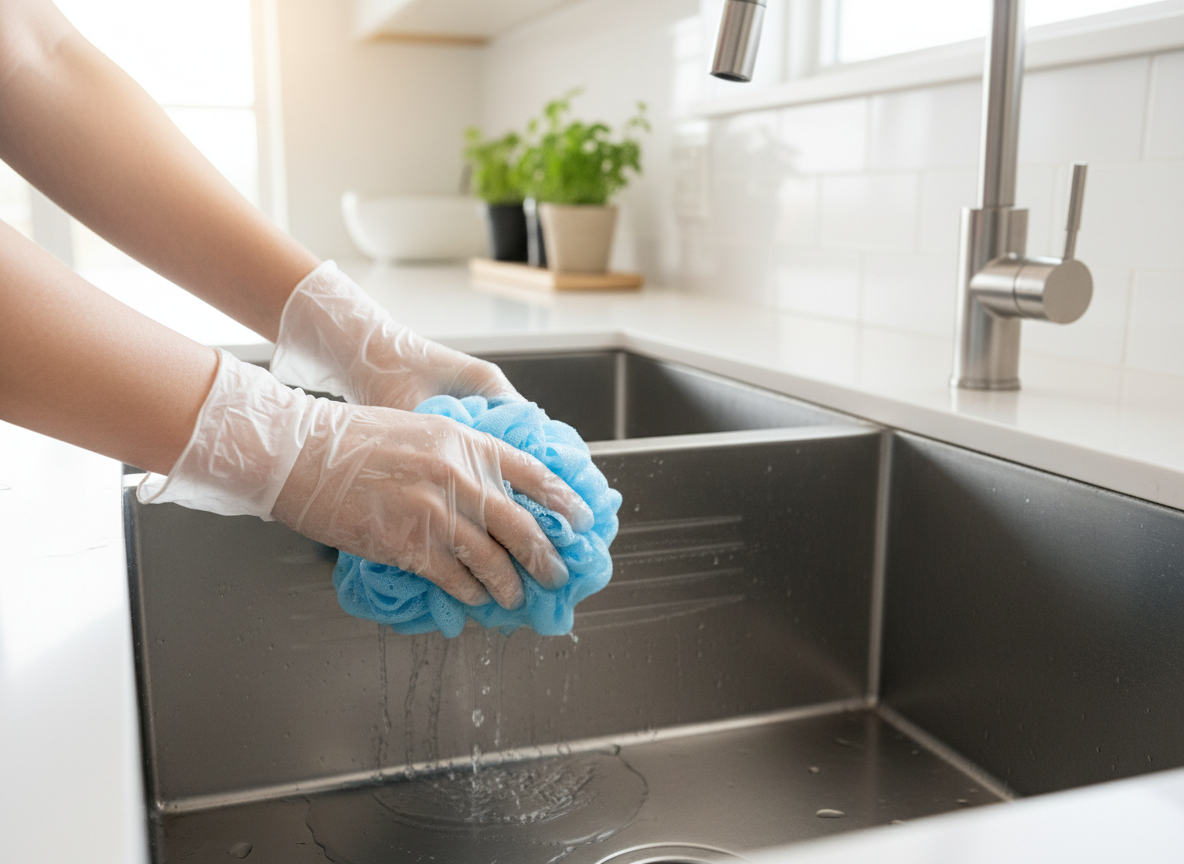
Because the rust sits in the grain rather than on the surface, standard multi-purpose cleaners largely fail to touch it, which is why the rings tend to spread rather than fade with routine cleaning. Manufacturer guidance generally points toward gentle, non-chlorine cleaning pastes applied with a soft cloth or nylon pad, worked in the same direction as the sink’s brushed grain rather than across it, followed by a full rinse and dry to prevent new moisture from settling into the same grooves. Scrubbing harder or switching to a stronger abrasive pad to fight an existing rust stain tends to backfire, since it introduces more embedded metal fragments into a surface that already has a rust problem.
The sink was never the weak point. The habit of reaching for whatever scouring pad happens to be under the counter is, and it’s an easy one to break once the actual mechanism behind the rust ring is clear.