


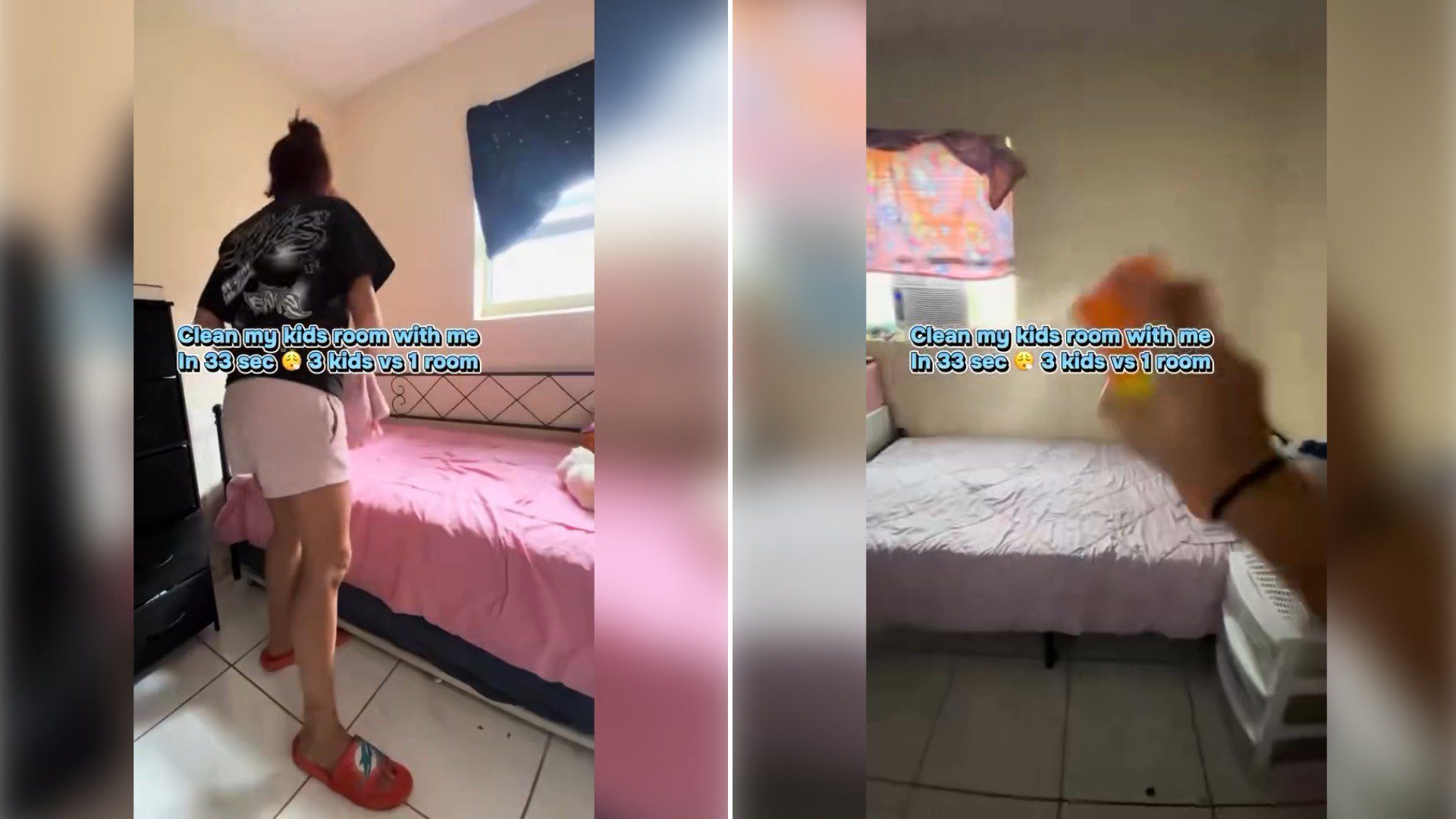
Cleaning doesn’t always start as a mental health strategy — sometimes it just starts because the room genuinely needs it. But for one stay-at-home mom, a rapid-fire time-lapse cleanup of her children’s bedroom ended up becoming something closer to an unplanned therapy session, complete with candid voiceover thoughts shared over the footage as she worked her way through the mess at speed.
The video moves fast, cutting through the cleaning process in quick, energetic time-lapse segments that make the whole task feel almost cinematic. But underneath the visual efficiency, the real substance of the video comes from what she chose to share while doing it — personal reflections layered over the footage, turning a simple bedroom cleanup into something considerably more vulnerable and honest than a typical cleaning video. It’s a format that works precisely because the physical task and the emotional processing happen simultaneously, each one feeding into the other.
Her caption offered a small but telling glimpse into her broader circumstances: “Posting till we make it out the hood yall 🗣️ #momlife #clean #fyp #blowthisup.” That single line reframes the entire video, suggesting that content creation itself is tied to bigger goals and hopes for her family’s future, not just a hobby or aesthetic pursuit. The video reached roughly 1.1 million views from an account with about 8,000 followers, an enormous multiplier that speaks to how deeply her honesty and determination resonated with an audience well beyond her existing following. As @yourfavpplx3 shared in her post, there’s real power in being transparent about both the daily grind of motherhood and the bigger aspirations driving it forward.
The idea of cleaning as an accidental form of therapy is one that shows up repeatedly in conversations about mental health and household labor, and for good reason. Physical, repetitive tasks like tidying and organizing have long been associated with a sense of control and calm, particularly during periods of stress or emotional overwhelm. For a stay-at-home mom managing the near-constant demands of caregiving, a fast-paced cleaning session can double as one of the few windows in a day where she’s able to process her thoughts out loud, even if only to a camera rather than another person physically present in the room.
There’s also something worth acknowledging about the financial honesty baked directly into her caption. Referencing the broader goal of “making it out the hood” places the cleaning video within a larger, ongoing story about ambition and hard work, rather than treating it as an isolated moment. That context likely deepened the connection viewers felt with her, transforming a simple bedroom cleanup into a small chapter in a much bigger, more personal narrative that many people found themselves rooting for.
There’s also something worth noting about the specific combination of speed and vulnerability in this video. A slow, meditative cleaning video might invite a different kind of emotional tone, but the rapid time-lapse pacing here mirrors the actual rhythm of a busy mom’s daily life — quick, efficient, squeezed into whatever pockets of time are available between other responsibilities. The voiceover thoughts shared during that fast-moving footage feel less like a planned monologue and more like genuine, real-time processing, which likely contributed significantly to how relatable and authentic the video felt to viewers scrolling past it.
For readers who find themselves using cleaning as an unintentional emotional outlet of their own, there’s real validity in leaning into that instinct rather than dismissing it. Turning on music or simply narrating your own thoughts, even without recording anything, while tackling a task like organizing a bedroom or clearing a cluttered surface can create a similar kind of low-pressure space for reflection. Setting a specific, contained task — one room, one drawer, one corner — rather than an open-ended deep clean, also tends to make the process feel more manageable, giving your mind room to wander productively rather than becoming overwhelmed by the scope of an entire home. And recognizing cleaning as a legitimate coping tool, rather than just a chore to check off a list, can shift how it’s approached entirely, turning a mundane task into something genuinely restorative on the harder days.
It’s also worth recognizing how the fast time-lapse pacing does more than just make for engaging viewing — it mirrors the compressed, high-pressure reality many stay-at-home parents live in daily, where reflection and physical labor rarely happen in separate, dedicated blocks of time. Sharing both at once, rather than editing one out in favor of the other, offers a more accurate picture of what a busy parent’s inner life often looks like: thoughtful, emotional, and constantly happening in the background of whatever task is currently at hand.
What makes this video memorable isn’t the bedroom cleanup itself, tidy as the end result surely was. It’s the honesty layered underneath it — a mother processing real emotions and real goals while doing something as ordinary as picking up toys, and finding, in that combination, a version of therapy that fit into a day that otherwise had no time to spare for it.