


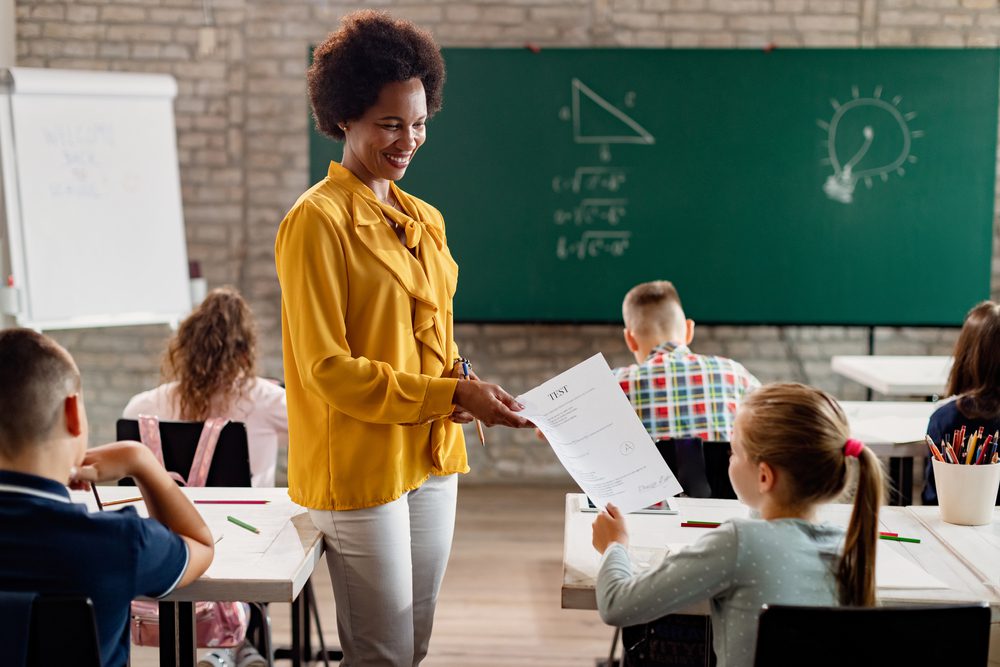
The teacher stood in front of her class, frustration bubbling under the surface. Despite her best efforts, it became painfully clear that her students simply didn’t care about grades or consequences anymore. This wasn’t just a random day; it was a repeated pattern that left her questioning the very foundations of her teaching. She was tired, overwhelmed, and ultimately fed up with what felt like an exhausting charade.
In a candid Reddit discussion, she expressed her bewilderment at the current educational landscape. One of her key points was an unsettling realization: students are no longer responsive to traditional forms of motivation. With the restrictions on punitive measures and a shift in societal values, consequences that once had an impact seemed to have faded into irrelevance. She observed that many educators continue to operate under the illusion that they can compel students to behave or care with the right approach.


Historically, teachers maintained authority through a series of increasingly severe measures. In earlier times, the threat of physical punishment loomed large, but as society evolved, so did the methods. Now, options like detention and suspension have become less common and, in many cases, ineffective. The teacher pointed out that with diminished consequences, students appear indifferent. Grades, which once served as a motivator, hold little weight for many students who seem uninterested in the end results of their efforts, or lack thereof.
As she reflected on her daily experiences, she noted that the noise level in her classroom often surged during lessons because of the collective misbehavior of students. Instead of addressing individual issues, the teacher found herself making difficult choices between giving attention to one student or attempting to teach the class as a whole. More often than not, the choice to teach meant allowing the disruption to continue. It created an exhausting cycle where no one truly benefited.
In the comments section of her post, people had very different reactions. Some sympathized with her plight, recalling their own frustrations in the classroom. They noted how pervasive apathy has become and discussed how the education system tends to overlook the real needs of students. They expressed concerns about the lack of guidance and support teachers receive, leaving them unprepared to handle the complexities of today’s classrooms.
Others pointed out that the shift in student behavior might stem from outside influences. Some reflected on how technology, entertainment, and social media have reshaped students’ priorities. With distractions readily available, students might be more inclined to focus on their phones or online interactions than on their academic responsibilities. It raised questions about how to redirect their attention in a meaningful way.
Additionally, some commenters suggested that fostering a deeper emotional connection with students could help reignite their interest in learning. They proposed that engagement strategies focused on personal relevance might drive students to care about their education once more. This idea sparked further discussion about the role of educators in creating a stimulating and relatable classroom environment.
Not everyone agreed, however. Some argued that expecting students to be intrinsically motivated under the current conditions is unrealistic. “They don’t care about grades because they know they’ll be passed regardless of effort,” one commenter noted, echoing the teacher’s frustrations. This perspective underscored a broader issue within the educational system that leaves many feeling disillusioned.
This encounter left the teacher pondering the implications for her career and the future of education. She wasn’t alone in her thoughts; many educators share similar sentiments across various platforms. The conversation about students’ motivations and the effectiveness of current teaching methods is ongoing and complex, with no clear solution in sight.
As the discussion unfolded, it became evident that there is no simple fix. The challenge remains: how can educators capture the attention and motivation of students who seem disengaged? Can traditional structures of education adapt to meet the needs of a new generation, or are teachers simply stuck in a cycle of frustration, left to navigate a shifting landscape with few tools at their disposal?
More from Decluttering Mom: