

“This job is exhausting.” That is how @.carolgiselle, an elementary teacher who goes by Carol, begins a raw, honest video recorded on what she calls “one of the hardest days of the school year so far.” She was not feeling well, her class had just taken a sight word test, and the results left her heartbroken.

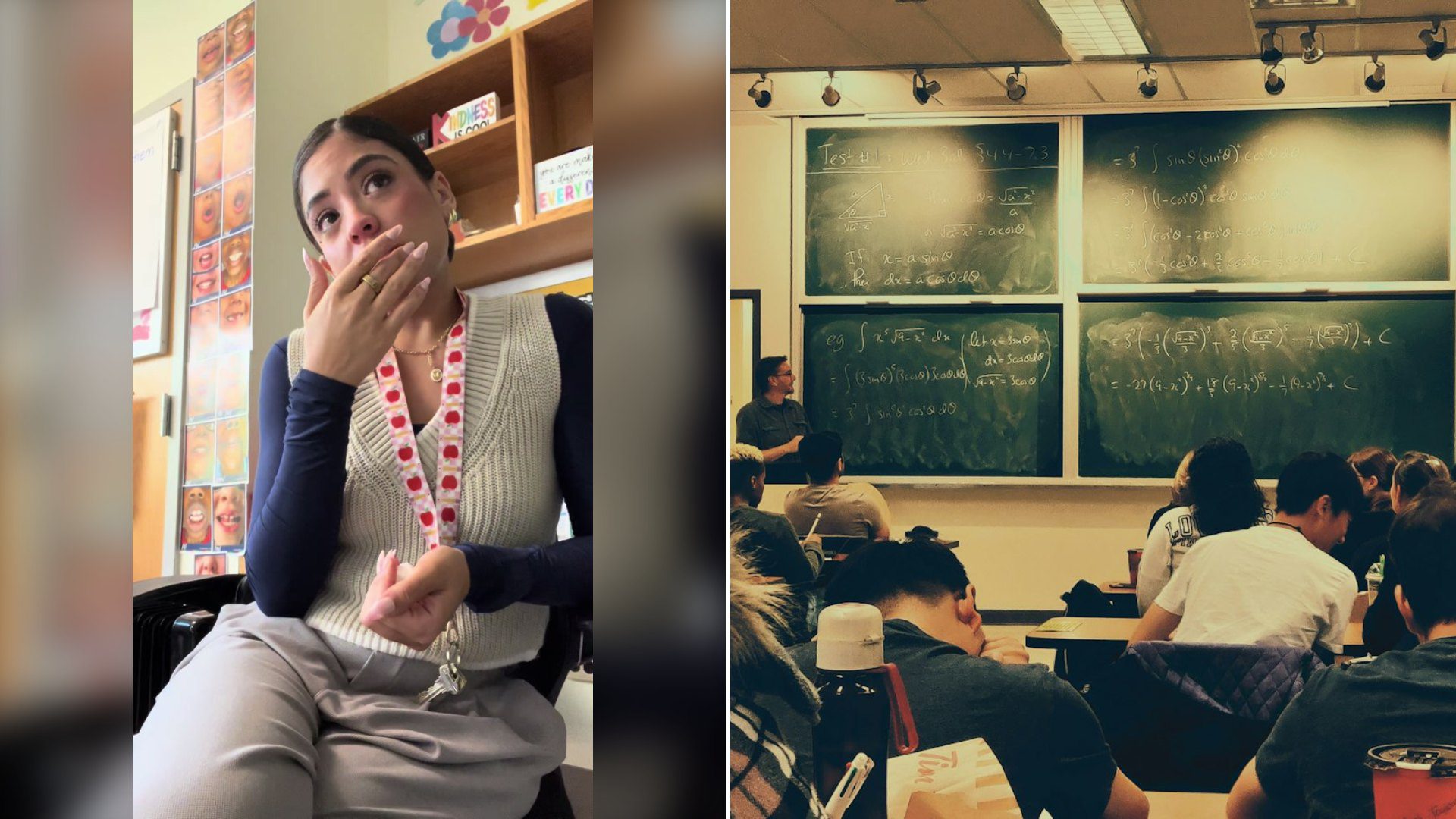
Carol has 34 students. The sight word they were tested on was “everyone.” She says she has centers and reviews the words every single day. Even so, “One girl passed,” she says. “One girl out of 34 kids.”
What hurt most was what happened during class. “I literally put the word on the board,” she says. “I write it on the board and I say copy, and they’re copying it wrong.”
She points to what she sees as the missing piece: practice at home. “Clearly they’re not studying at home,” she says. “I review every day. And parents are not studying with them at home. And the data comes back and they’re failing.”
Then she turns the question on herself, the way caring teachers often do. “You start questioning yourself,” she says. “You’re like, is it me?”
She describes having to set her own problems aside to “pour into these kids,” day after day, whether she feels well or not. “For the last two months, I’ve been like, go, go, go,” she says. “And today, like my body’s like, Carol, you need to stop.”
She also answered a couple of comments she had received. One person asked why she was so tired when she sits down in her videos. “You think I’m just rolling around in my chair?” she replied, explaining that she sits for part of her lesson. Another said she was too loud. “Do you know how hard it is to keep 34 little kids engaged?” she asked, describing how she has to project, move around and change her voice all day long.
In her caption, she makes clear she is not giving up. “I love being a teacher. I truly believe this is my calling,” she writes. “I love my students. I love what I do. And I can be grateful for this calling while also admitting that some days are really, really hard.”
@.carolgiselle
What Sight Words Are and Why They Matter
Sight words are common words children are taught to recognize instantly, without sounding them out. Many are high-frequency words such as “the,” “said,” “was” and “everyone” that appear constantly in books. Some do not follow regular spelling patterns, which is why repetition matters so much. Two widely used lists, the Dolch and Fry word lists, have guided early reading lessons for decades.
When a child knows these words on sight, reading becomes smoother and less frustrating. When they don’t, every sentence turns into a slow puzzle, and that struggle can follow them through the grades.
Five Minutes a Day at Home Makes a Difference
Parents and grandparents do not need teaching degrees to help. Short, regular practice is what counts most.
Ask for the list. Most teachers are glad to share the sight words the class is working on. Write each one on an index card.
Work on a few at a time. Practice three to five words until they come easily, then add more. A pile of fifty cards is overwhelming for a young child.
Turn it into a game. Lay cards face down for a matching game, play “go fish” with pairs of word cards, or hide cards around the room for a scavenger hunt. Children will practice far longer when it feels like play.
Use their hands. Let them trace words in sand, salt on a tray, or shaving cream on the kitchen table. Writing the word while saying it out loud helps it stick.
Read together every day. Ten minutes of reading aloud, with the child pointing to words they know, may be the single best habit a family can build. Grandparents reading over a video call count, too.
Spot words in the wild. Cereal boxes, street signs and restaurant menus are full of sight words. Make it a challenge to find them.
Keep it positive. Celebrate every word a child masters, and stop before they get frustrated. A cheerful five minutes every evening does far more good than a tearful hour once a week, and it keeps reading something children look forward to instead of dread.
How Families Can Back Up a Tired Teacher
Carol shares the hard days, she says in her caption, because she wants other teachers “to feel less alone” and wants people to understand “what teaching really looks like.” Families can make those days a little lighter.
Check the take-home folder and answer notes. Send a short email when a lesson clearly helped your child. If you have time, offer to volunteer, cut out materials, or read with small groups. And if you have concerns, start the conversation as a partner rather than a critic.
As Carol puts it, “If you’re a teacher having one of those days, I hope you know you’re not alone.” A little help at the kitchen table can make sure fewer of those days come at all.
More From Decluttering Mom
- Mom shows how to turn old broken crayons into Halloween shaped crayons and fill two trick or treat buckets with budget friendly boo basket surprises for her kids
- Young girl with sensory processing disorder froze up mid performance in front of her entire school and what her classmates did next instead of leaving her behind is why this clip has millions of views
- Mom Collapsed Flat on the Floor the Moment Someone Told Her Parenting Older Kids Must Be So Much Easier Now and Her Description of Secretly Running a Twenty Four Seven Prayer Ministry and an ATM Is Painfully Accurate