


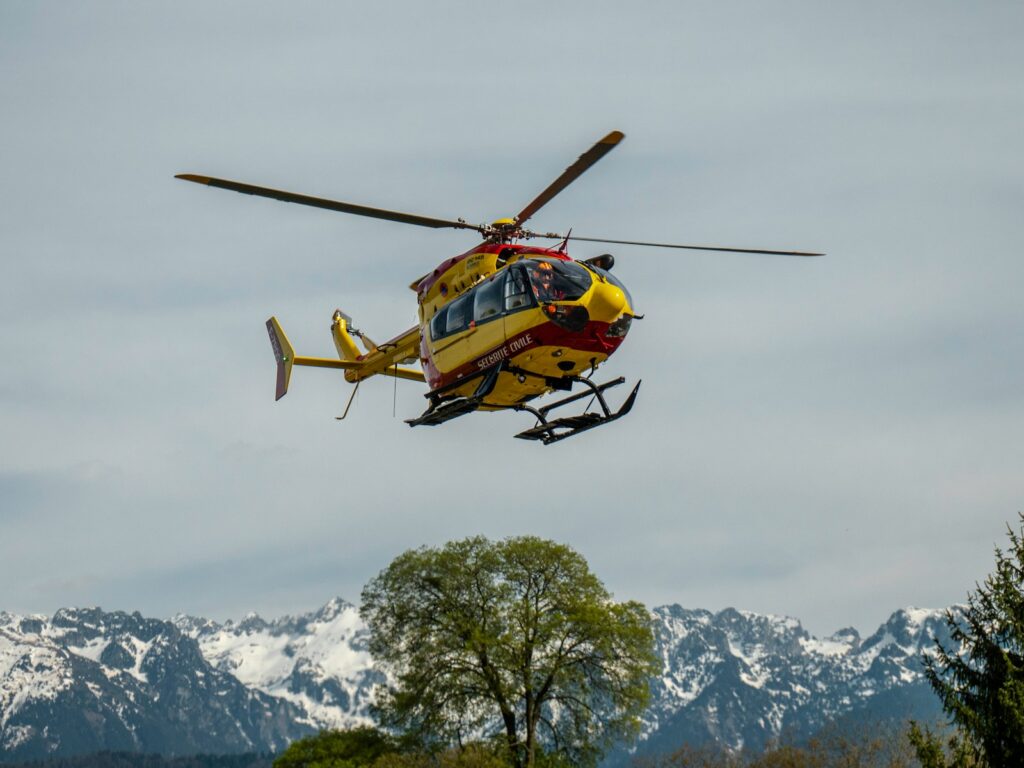
A weekend walk at a much loved Derbyshire beauty spot turned into a terrifying emergency when a teenager fell an estimated 65 feet down a steep slope. The youngster was airlifted to hospital after the plunge, as rescue teams and an air ambulance scrambled to reach the scene and stabilise the injured walker.
What began as a simple outing in the countryside quickly became a complex rescue operation involving specialist mountain crews, paramedics and a helicopter evacuation. The incident has left regular visitors rattled, and it has sharpened the focus on how quickly things can go wrong on terrain that looks friendly enough from the car park.


The fall that stunned a busy valley
Witnesses described a normal day out in the hills suddenly snapping into crisis when the teenager slipped and tumbled roughly 20 metres down a steep drop at a Derbyshire valley near Derby. Reports put the fall at around 65 feet, a height that turns any misstep into a potentially life changing event, especially on exposed rock and loose ground. People enjoying the same trail watched emergency crews race in, as the quiet of the countryside gave way to sirens and the thump of helicopter blades overhead, underscoring how fragile that sense of safety can be once a path skirts the edge of a drop.
Local reporting on the injured teenager describes how the walk had taken the group into one of the county’s most popular scenic spots, a place that draws families, dog walkers and visiting hikers in large numbers. The teenager’s fall, estimated at 20 metres, left them badly hurt and in need of urgent treatment that could not wait for a standard road ambulance. That combination of a busy trail, a sudden accident and a dramatic airlift has shaken regulars who know the paths well and thought they had seen every kind of mishap the valley could throw at them.
Rapid response and a race against the terrain
Once the alarm was raised, the response moved quickly from routine to full scale rescue. Paramedics and local crews were joined by specialist volunteers from Derby Mountain Rescue, who were called in to deal with the kind of steep, uneven ground that regular ambulances simply cannot handle. Their teams worked across the valley to reach the teenager, assess injuries and prepare a safe evacuation route, all while managing crowds and keeping other walkers away from the edge.
At the same time, an air ambulance was scrambled so the teenager could be flown directly to hospital once stabilised on the hillside. The helicopter landing in the valley, then lifting off with the patient on board, became the defining image of the day for many onlookers. According to accounts of the airlifted teenager, the decision to fly rather than drive reflected both the seriousness of the fall and the difficulty of moving a stretcher over rough ground without risking further harm. For the crews involved, it was a textbook example of how mountain rescue and air ambulance services mesh together when minutes matter.
A second search unfolding in the shadows
While the teenager’s fall grabbed the attention of people in the valley, rescue teams were quietly juggling another urgent task. As they worked the steep slope, members of Derby Mountain Rescue were also helping to locate a missing walker in the same general area. That meant splitting resources, coordinating searches and making sure one emergency did not overshadow another, all while daylight and energy were running down.
Coverage of the incident notes that the team’s efforts were overseen by experienced coordinators, with details later set out by Zena Hawley Agenda in her role as an agenda editor following the rescue work. The fact that crews could manage a complex technical evacuation and a missing person search at the same time speaks to how often these volunteers train for overlapping crises. For people watching from the sidelines, it was a reminder that the calm surface of a beauty spot can hide a lot of moving parts when something goes wrong.
Global echoes and a harsher worst case
As dramatic as the Derbyshire fall was, it was not the only serious incident involving a teenager in rugged scenery in recent months. In a separate case, a young person died after a tragic accident at a waterfall in a national park, where Search and rescue teams had to rope down to the base of the falls and send another group along the river to look for any sign of the missing teenager. That operation, which ended in the worst possible outcome, shows the other side of the coin when a fall in a wild setting is just a little higher, the water a little stronger or the landing spot a little less forgiving.
Comparing the two incidents is uncomfortable, but it underlines why crews in Derbyshire moved so fast once they heard a teenager had gone over a 65 foot drop. In the waterfall case, rescuers had to fight both the terrain and the current, with teams working along the river and at the base of the falls to recover the victim. In the Derbyshire valley, the absence of deep water and the relatively direct access for the helicopter gave the injured walker a better chance once the airlift to hospital was under way. The contrast is stark, and it is exactly why mountain rescue teams treat every fall as potentially life threatening from the first call.
Why familiar paths still demand respect
For many people who head out to the countryside at weekends, the Derbyshire incident will feel uncomfortably close to home. The teenager was not scaling a remote peak or tackling a technical climb, but walking in a valley that thousands of people visit each year for a relaxed day out. Reports on the Valley near Derby describe a scene that will be familiar to anyone who has laced up boots for a casual stroll, which is exactly why the 65 foot fall has rattled so many regulars. It is a sharp reminder that even well trodden paths can hide loose edges, slippery grass and sudden drops that do not look half as serious in photos.
Safety advice for these spots often sounds repetitive, but the details of this case give it fresh weight. Simple habits like checking the forecast, sticking to marked paths and keeping a few metres back from the edge of any obvious drop can make the difference between a scare and a stretcher. Parents of teenagers, in particular, may look again at how much freedom they give on exposed sections of trail after hearing how a single misstep led to a teenage being flown out by helicopter. The valley will still be there for future walks, but the story of this fall is likely to travel with those who saw it, a quiet nudge to treat even the prettiest views with a bit more caution.
More from Decluttering Mom: