


Termites cause an estimated $6.8 billion in property damage every year in the United States, and standard homeowners insurance policies almost universally exclude that damage from coverage, according to data released by PestWorld, the public education arm of the National Pest Management Association. Much of that damage traces back to swarm season, the short window each year when winged termites leave an established colony to start new ones. Spring gets most of the public attention. Right now, in September, a second wave of activity is quietly unfolding across much of the South and West, arriving well after most homeowners have stopped thinking about termites for the year.
Subterranean termites, the species responsible for the bulk of structural damage nationwide, typically swarm on warm days after rain, mostly in spring. Drywood termites work on a different calendar. In warmer regions, colonies commonly send out winged swarmers, known as alates, from midsummer into fall, often around dusk, once the year’s heat has had time to build. That second wave is the one many homeowners never connect to termites at all, since it doesn’t match the spring timing they’ve heard about.

Confusion is part of the problem. A winged termite and a winged ant look similar enough at a glance that a cluster of them near a porch light tends to get waved off as an ant issue, if it gets noticed at all. The gap in actual awareness is wide. In a Harris Poll survey of 2,087 U.S. adults conducted in late January and early February 2026, cited in the PestWorld release, only 36% of respondents could correctly identify common termite warning signs, and fewer than 45% believed prevention was more cost-effective than paying for repairs after an infestation is already found.
Only 58% of those surveyed said they were even aware termites pose a real risk to a home’s structure in the first place, according to the same poll, which carried a margin of error of about 2.5 percentage points. That awareness gap matters because termite colonies are built to stay hidden by nature. A colony can feed inside wall framing, subfloors, and support beams for years before the damage becomes visible from the outside, since the insects avoid exposing themselves to open air and light whenever they can help it. Termites as a lineage have existed for more than 120 million years, and the biology that lets a colony go unnoticed hasn’t changed much in that time.
Termite pressure also isn’t distributed evenly across the country. States along the Gulf Coast, the Southeast, and much of California and the Southwest see far more termite activity year-round than the Midwest or Northeast, largely because warmer, more humid climates support both subterranean and drywood colonies for a longer stretch of the calendar. Homeowners in those regions get less of a true off-season, which makes a fall swarm easier to miss simply because pest pressure never fully disappears the way it does further north.
What an early warning sign actually looks like
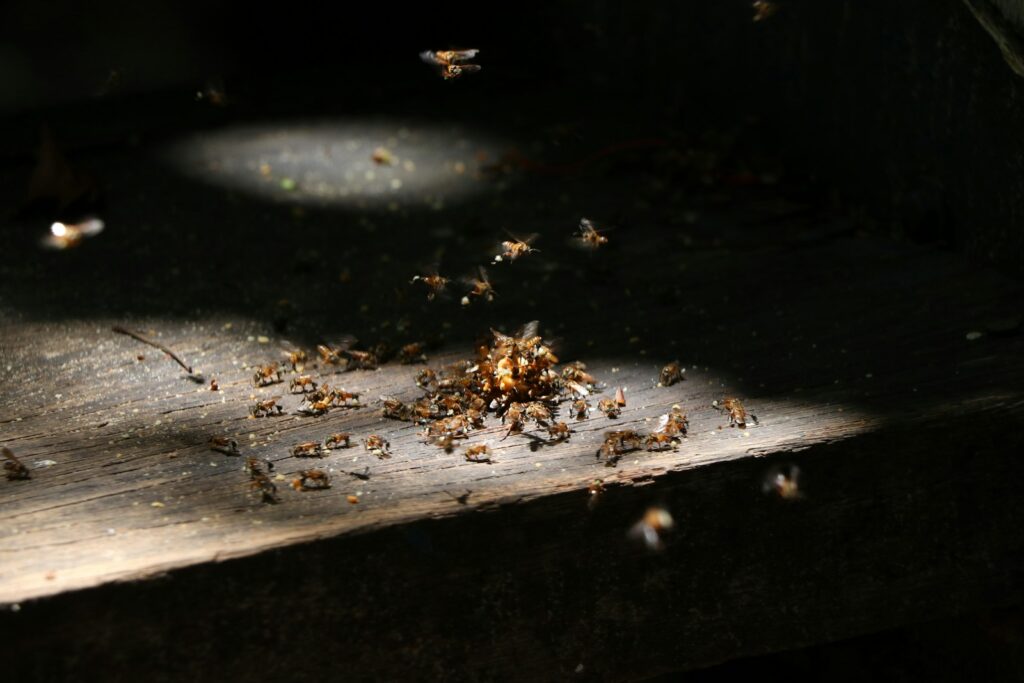
Homeowners waiting to see visible wood damage are usually looking too late. Pest control professionals point to a handful of earlier signs instead. Pencil-width mud tubes running along a foundation are one, built by subterranean termites so they can travel between soil and wood while staying out of open air. Discarded wings shed near windowsills, doors, or light fixtures right after a swarm are another, and often the most overlooked, since they get swept away or vacuumed up within a day or two. Small, pellet-shaped droppings, called frass, are a third sign specific to drywood termites, pushed out of tiny holes in infested wood as the colony feeds and clears space.
Hollow-sounding or slightly warped wood, especially around baseboards, window frames, or deck posts, is worth tapping and checking rather than ignoring, particularly in a house that hasn’t had a pest inspection in several years. None of these signs require a professional visit to notice. They require actually looking, which is exactly what most homeowners stop doing once the more talked-about spring swarm season has passed.
Because homeowners insurance treats termite damage as a maintenance issue rather than a covered peril, the financial risk sits entirely with the homeowner no matter which season the swarm happens in. A fall swarm that goes unnoticed doesn’t end up costing less than a spring one. It just gets a longer head start before anyone thinks to look for it.