


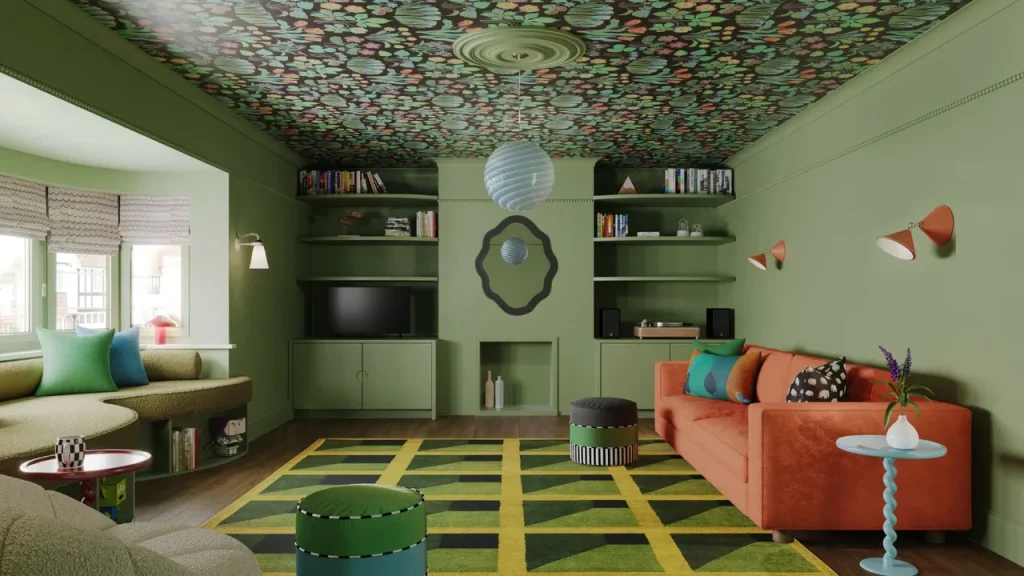
Decor in 2025 is no longer about playing it safe. After years of gray-on-gray minimalism, you are being nudged toward richer color, bolder pattern, and a more personal mix of old and new that feels lived in rather than staged. The big comeback story is a nostalgic, color-forward look that borrows freely from the 1970s through the 1990s, then tempers it with the warmth and practicality you expect from a modern home.
Instead of chasing fleeting fads, designers are steering you toward a style that feels grounded, expressive, and surprisingly forgiving. The comeback trend is less about a single “look” and more about a mindset: you layer earthy hues, retro silhouettes, and playful pattern in a way that reflects how you actually live, not how a catalog says you should.
From All-White to Warm and Lived-In
The first shift you notice in this resurgence is the move away from stark, gallery-like interiors toward rooms that feel warm and inhabited. Designers are increasingly blunt that all-white spaces, once treated as the default for “good taste,” now read as cold and impractical when you are trying to create a home that supports daily life. Earlier this year, multiple experts described all-white interiors as being firmly on the way out, with one report noting that the answer to what is fading was “nearly unanimous,” especially when you look at how often clients now request color and texture instead of blank walls and pale sofas, a sentiment captured in the phrase As for what is next.
At the same time, you are being urged to leave behind the more generic decorating habits that made homes feel interchangeable. Designers have started to call out specific “trends to leave,” from formulaic accent walls to overused finishes that flatten a room’s character, and they are especially critical of decor that looks good only in photos but not in person. One widely shared critique singled out the habit of buying entire matching sets and leaning on quick-fix accessories instead of investing in pieces with personality, a shift summed up in a list of decorating choices that Oct designers want you to drop, including the kind of one-note styling that appears in When you purchase decor purely for trends rather than longevity.
The Real Comeback: Color, Comfort, and Character
What replaces those stripped-back rooms is a look that feels both nostalgic and refreshingly human. Instead of a single “it” color, you are seeing a broader embrace of earthy palettes, layered neutrals, and saturated accents that echo the natural world. Designers describe this as a return to warmth and comfort, with one trend report highlighting how earthy tones and organic colors are now central to new projects, even influencing major paint brands that have named nature-inspired shades as their Color of the Year, a shift that aligns with the way Launch into the new year is framed around richer palettes.
Color is not the only element making a comeback. You are also being encouraged to bring back curves, texture, and a mix of vintage and contemporary pieces that tell a story about your life. Reports on 2025 interiors highlight how English Style influences, such as skirted furniture and patterned upholstery, are being reinterpreted in modern fabrics and lighter silhouettes, giving you a way to add character without feeling stuck in the past. The overall message is clear: the comeback trend is about rooms that feel collected and personal, not staged, and that means you can finally lean into the pieces and palettes you genuinely love instead of chasing a single, rigid aesthetic.
Goodbye Gray-on-Gray, Hello Warm Neutrals
Nowhere is the shift more visible than in the way you use neutrals. The gray-on-gray aesthetic that dominated the last decade is being called out as one of the clearest signs that a home looks dated. Designer Lauren Gilberthorpe has been explicit that this monochrome approach “has had its moment” and now feels flat and uninspired, a verdict that reflects a broader consensus that your rooms need more depth and nuance than a single cool tone can provide, as highlighted when Lauren Gilberthorpe described the look as tired.
Real estate data backs up that instinct. One 2025 trend breakdown aimed at sellers notes that buyers are responding far more positively to warm neutrals and earthy hues than to cold grays, framing the change as “Embracing Color: Goodbye Gray, Hello Warmth.” The same report explains that this pivot is not just aesthetic, it is strategic, because homes styled with warmer palettes and natural textures tend to feel more inviting and can help listings move faster, a point captured in the section titled Embracing Color and its focus on earthy hues that evoke coziness.
Seventies Spirit: Earth Tones, Wood, and Retro Shapes
The backbone of the comeback trend is a renewed affection for the 1970s, but with a more edited, livable twist. Instead of copying shag carpets and avocado appliances, you are seeing designers borrow the decade’s love of earth tones, natural materials, and low-slung silhouettes, then pair them with cleaner lines and better lighting. A detailed breakdown of Five 70s looks returning in 2025 points to neutral colors, warm woods, and layered textures as the most adaptable elements, explaining how you can, for example, mix a wood island in a kitchen with painted cabinets elsewhere to keep the space from feeling heavy, an approach described in a guide to Five 70s Trends Making a Comeback.
Designers also note that this retro influence is not about strict historical accuracy, it is about the mood. You are encouraged to bring in curved sofas, chunky coffee tables, and woven accents that echo the 1970s without turning your living room into a time capsule. Reports on 2025 interiors emphasize that these elements work especially well when you balance them with modern lighting and streamlined storage, so the overall effect is cozy rather than cluttered. The result is a home that feels grounded and nostalgic but still functions for your current routines, from remote work to family movie nights.
Eighties and Nineties: Playful Pattern and Statement Pieces
Alongside the softer seventies palette, you are also seeing a confident return of 1980s and 1990s flair, especially in smaller doses. Designers point to “’80s-inspired design elements” as a key part of the 2025 mix, recommending that you experiment with sculptural side chairs, unique lamps, and bold art rather than trying to recreate an entire decade. One report on retro decor explains that homeowners are drawn to these pieces because they deliver a sense of fun and individuality, suggesting that a single angular side chair or neon-accented lamp can shift the energy of a room, a strategy highlighted in coverage of Mar retro decor trends.
Broader trend roundups echo that idea, noting that styles from the 1970s through the 1990s are resurfacing with bold patterns and earthy tones that feel surprisingly current. One analysis of eight design trends returning in 2025 notes that you can Expect a revival of these decades, with designers like Colleen Bute Bennett emphasizing how pattern and color inspired by nature can keep even the loudest prints feeling grounded. The same report encourages you to lean into nostalgic details like checkerboard floors or graphic textiles in moderation, framing them as accents rather than the entire story, a balance captured in the section labeled Key Takeaways that urges you to Expect a revival of ‘70s to ‘90s styles.
Pattern Play as the New Neutral
One of the most striking parts of the 2025 comeback is how pattern has shifted from a risky move to a core design tool. Instead of treating prints as something to be used sparingly, designers are talking about “pattern play” as a way to build depth and luxury into a room. When you layer stripes with florals or geometrics in a controlled palette, the result can feel more polished than a room filled with plain solids, a concept explained in detail in a guide that asks What Is Pattern Play and Why Is It So Popular in Home Design and answers As the name implies, pattern play involves styling different motifs together.
Designers suggest that you start small, perhaps with a patterned rug, a printed armchair, and a contrasting throw pillow, then build from there as you get more comfortable. The key is to repeat colors rather than patterns, so your eye reads the room as cohesive rather than chaotic. Experts quoted in pattern-focused reporting note that this approach can actually make a space feel more expensive, because it mimics the layered look you see in high-end hotels and historic homes. For you, that means the comeback trend is not just about bringing back old motifs, it is about using them in smarter, more intentional ways.
Why Nostalgia Feels So Right Now
Underneath the surface-level style shifts, there is a deeper reason this retro-inflected, color-rich look resonates so strongly. After years of uncertainty and a heavy focus on utility, you are craving spaces that feel comforting and familiar. One analysis of retro decor trends notes that homeowners have a “deep yearning for the nostalgia and comfort represented by past decades,” and that the magnitude and variety of these throwback influences reflect how strongly people want their homes to feel like sanctuaries rather than showrooms, a point emphasized when Mar coverage of retro decor described that yearning as a driving force behind the comeback.
At the same time, designers are careful to keep this nostalgia grounded in present-day needs. Reports on 2025 interiors stress that the most successful spaces combine vintage-inspired shapes and colors with modern functionality, from better storage to durable performance fabrics. A forward-looking trend piece even frames this as “designing the future,” arguing that you can Explore the balance between classic craftsmanship and contemporary practicality by pairing ornate detailing with streamlined layouts, a philosophy captured in a guide that urges you to Explore the top interior design trends that merge intricate detailing with modern practicality.
What You Should Leave Behind to Make Room for the Comeback
To fully embrace this warmer, more expressive direction, you need to clear out the elements that are holding your rooms back. Designers are increasingly direct about which furniture and finishes are making spaces feel stuck in the last decade. One widely cited list of outdated furniture trends singles out “Monochrome Gray Everything” as a habit to drop, urging you to move away from all-neutral palettes, gray sectionals, and carbon-colored rugs that drain energy from a room, advice summed up in the warning about Monochrome Gray Everything Monochrome gray furniture and all-neutral palettes that should be left behind in 2025.
Broader decor roundups echo that message, adding other habits to the “let go” list. You are being encouraged to rethink mass-produced wall art, overly coordinated furniture sets, and quick-fix accessories that do not reflect your personality. One guide to decorating trends to leave behind notes that when you purchase decor solely because it is trending on social media, you risk ending up with a home that feels generic rather than tailored to you. By phasing out these elements, you create space for the comeback trend’s hallmarks: richer color, layered pattern, and a mix of old and new that feels authentically yours.
How to Bring the Comeback Home, Room by Room
Translating this big-picture shift into your own rooms starts with a few targeted moves rather than a full renovation. In the living room, you might swap a gray rug for one in a warm terracotta or olive, then add a patterned armchair that nods to the 1970s or 1980s without overwhelming the space. In the bedroom, you can trade crisp white bedding for a mix of linen textures and muted prints, echoing the earthy tones and organic colors that trend reports say will define 2025, the same palette that underpins the English Style inspired rooms highlighted in the English Style section of that trend overview.
In the kitchen and dining areas, you can lean into wood tones, vintage-inspired lighting, and a mix of cabinet finishes that recall the 1970s without sacrificing modern convenience. A wood island paired with painted perimeter cabinets, for example, gives you warmth and contrast while still feeling current, a combination that 70s-focused guides highlight as especially effective. Throughout your home, the key is to treat this comeback trend as a flexible toolkit rather than a strict rulebook: choose the colors, patterns, and retro references that genuinely appeal to you, then layer them with the practical pieces you already own. The result is a space that feels both of-the-moment and deeply personal, which is exactly why this 2025 decor revival has so much staying power.
More from Decluttering Mom: