



American families are on track to spend a record $43.3 billion on K-12 back-to-school shopping this year, with the average household laying out $863.86 per student on everything from backpacks to laptops, according to the National Retail Federation’s annual survey. That number is climbing even as budgets tighten: Deloitte’s 2026 Back-to-School Survey found that 57% of parents expect the economy to worsen over the next six months, and nearly a third now qualify as “hyper-value seekers,” meaning they’re stacking four or more different cost-saving strategies just to get through the season. So you have two things happening at once. Families are spending more than ever, and they’re doing it more carefully than ever. That combination is exactly why the stuff piling up in your entryway right now deserves an actual system, not just a place to land. When you’ve thought hard about a purchase, planned around a sale, or waited for a specific deal, the last thing you want is for that item to get buried, lost, or ruined within the first month of school.

Why This Season Rewards Systems Over More Stuff
It’s worth sitting with what the spending data is really telling you. Per the NRF survey, 46% of shoppers are still waiting for deals to finish their lists, 23% are spreading purchases across multiple trips, and 47% say they’re buying only the essentials this year. That’s not impulse shopping. That’s deliberate, budgeted purchasing, which means every backpack, binder, and pair of sneakers that comes into your house has already been vetted for necessity. The problem most families run into isn’t a lack of intention at the register. It’s what happens after checkout, when a season’s worth of carefully chosen items gets absorbed into a house that has no dedicated place for any of it. A system doesn’t need to be elaborate or expensive to fix that. It just needs to give every category of new stuff a specific, repeatable home so the thought you already put into buying it doesn’t evaporate by the second week of September.
The Entryway Landing Zone: Solving the Backpack-and-Shoe Pileup
Shoes are one of the single biggest line items in back-to-school budgets, averaging $174.01 per family and adding up to $8.7 billion nationally this year, so it’s worth protecting that investment with a spot where they actually stay put. You don’t need a full mudroom renovation for this to work. A shallow bin or a boot tray by the door, one per child if you have more than one kid tracking through the house, keeps shoes from migrating under the couch or getting left in the car. Pair that with a hook at each child’s height for the backpack, and you’ve solved the two objects that cause the most morning friction in one small footprint. The trick is putting the landing zone directly in the path kids already walk, not somewhere tidier but out of the way, because a system only works if using it is easier than not using it.
A Homework and Study Zone That Doesn’t Move
School supplies account for $146.45 per family on average and $7.3 billion overall, and a striking share of that spend quietly disappears into junk drawers, backpack bottoms, and random kitchen shelves within a few weeks. A fixed study spot solves this two ways. First, it gives kids a consistent place to actually do the work, which matters more for younger students than most parents expect. Second, it gives you a single caddy or drawer where pencils, index cards, glue sticks, and calculators live when they’re not in a backpack, so you’re not rebuying the same three-dollar item every month because nobody can find the first one. It doesn’t need to be a dedicated room. A corner of the kitchen table with a rolling cart underneath does the job, as long as the location stays the same night after night.
The Family Command Center for Schedules and Paperwork
With more than half of families now using major sales events and spreading purchases across trips to manage the budget, the logistics of the school year are already more complex than a single trip to the store. That same complexity shows up in the paperwork that floods in once classes start: permission slips, sports schedules, lunch account reminders, picture day forms. A command center doesn’t have to be Pinterest-worthy. A wall calendar, a small file sorted by child, and a landing tray for anything that needs a signature will catch ninety percent of what would otherwise get lost in a stack of mail. The goal is one glance, one spot, so you’re not digging through a backpack at 7:45 in the morning trying to remember whether today is the early dismissal.
The Pantry Reset for Faster Lunch-Packing Mornings
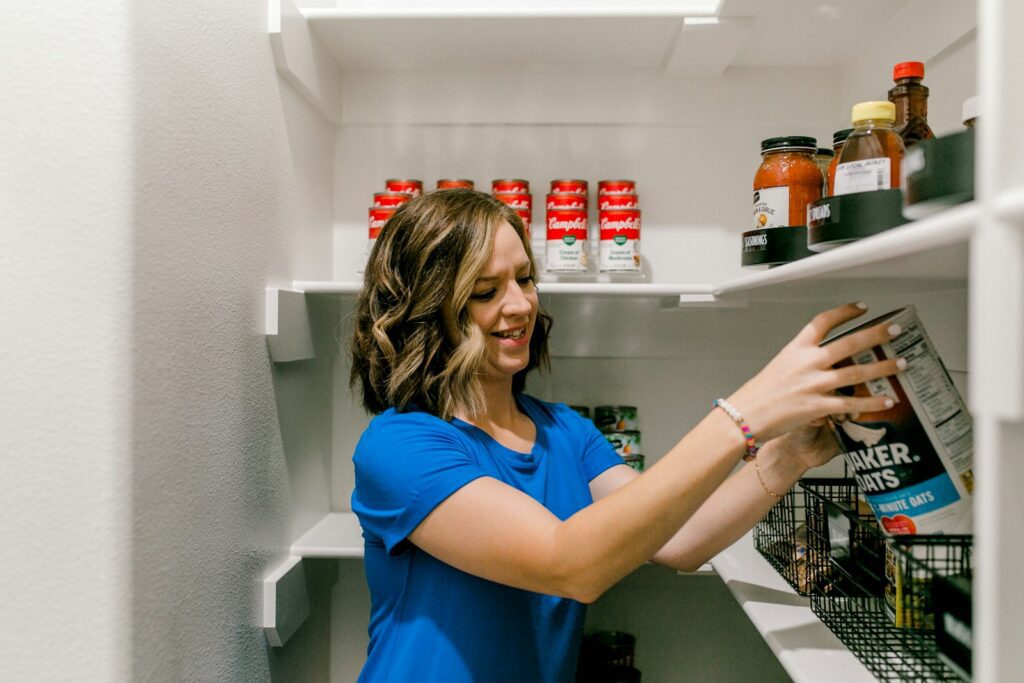
Value-conscious shopping doesn’t stop at school supplies. It extends into how families feed their kids day to day, and a disorganized pantry works directly against the budgeting habits driving this year’s spending. Grouping food by category rather than by whoever unloaded the groceries last, and carving out a low, kid-accessible shelf for approved snacks and lunch items, cuts morning packing time down dramatically. Clear bins labeled by type, one for grab-and-go proteins, one for fruit, one for the occasional treat, mean a lunch can get packed in under two minutes instead of becoming a scavenger hunt through three different cabinets. It also curbs the quiet food waste that happens when items get pushed to the back of a shelf and forgotten, which matters when every grocery dollar is already stretched.
The Closet Edit That Matches Where the Money Is Going
Clothing and accessories are the single largest back-to-school category this year at $250.29 per family and $12.5 billion overall, and Deloitte’s research found parents planning a 22% increase in clothing spend even as they pull back 16% on technology. That shift toward apparel makes closet organization more valuable than usual, not less. Before anything new comes in, pull everything out, sort by what still fits and what’s outgrown, and donate or hand down the rest. Bins or labeled shelves by size and season keep the closet from becoming a place where a brand-new pair of jeans and a pair from two years ago sit in the same undifferentiated pile. This step also prevents the most expensive kind of clutter: buying a duplicate of something you already own because you couldn’t find it or couldn’t tell it still fit.
Where This Actually Leads
None of these five systems are about achieving a picture-perfect house. They’re about protecting decisions you’ve already made carefully, in a year when the data says families are shopping with more intention and more financial pressure than they have in a long time. A landing zone keeps a $174 pair of shoes from getting lost in week two. A command center keeps you from missing the form that determines whether your kid gets picked up on time. A pantry system keeps grocery money from quietly going to waste on the back shelf. What starts as an August weekend project becomes, almost without you noticing, the quiet infrastructure that gets your family through October, February, and May without a repeat of the same scramble. That’s the real return on the effort: not a tidier house in the moment, but a home that keeps working the way you built it to, long after the new backpacks stop smelling new.