


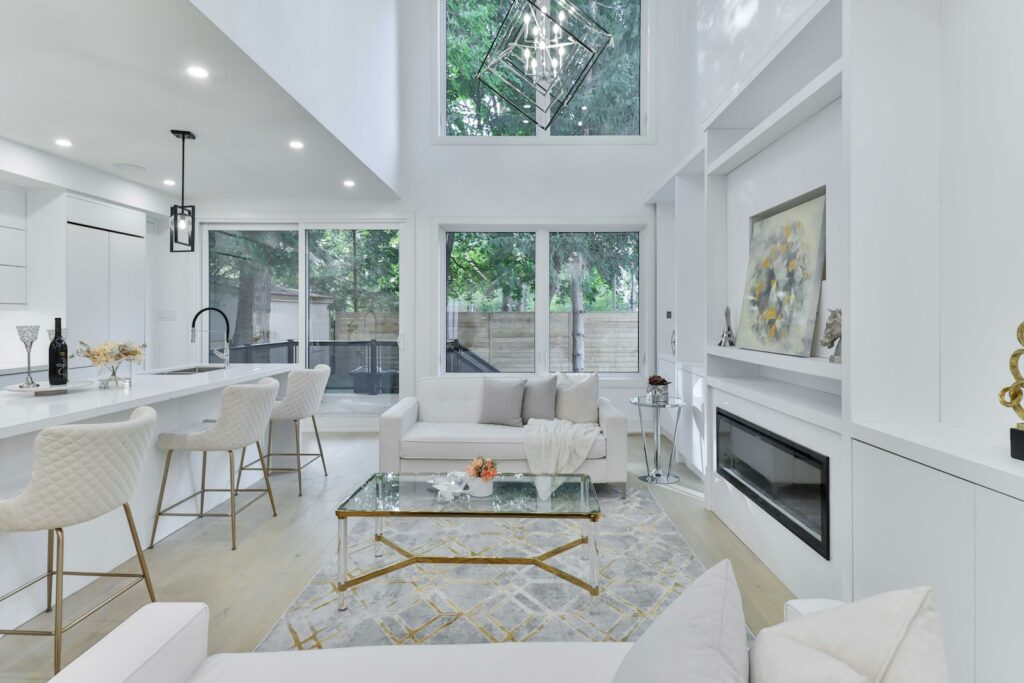
Thirty-nine percent of interior designers now name maximalism as the style their clients request most, up from 34% just two years ago, according to 1stDibs’ 2026 Interior Design Trend survey of 468 design professionals. Eclecticism isn’t far behind at 38%. For years, quiet luxury dominated home design the same way it dominated closets: neutral palettes, invisible logos, rooms so restrained they barely announced themselves. That restraint is losing its grip. Designers surveyed by 1stDibs, along with color and material specialists tracked by Houzz’s 2026 trend report, describe a home aesthetic built on layers, color, and personal history rather than polish. If your living room still looks like a hotel lobby, the people who decorate for a living say that look is on its way out.

The Survey Data Behind the Shift
1stDibs runs its trend survey every year through the research firm Surveys & Forecasts, polling designers who belong to its trade program between July and August. The 2026 edition found maximalism cited by 39% of respondents as the style clients ask for most, its highest share since the survey began tracking the category and a five-point jump from 2023. Eclecticism, a related but distinct approach that mixes eras and origins rather than piling on pattern, sits at 38%. Chocolate brown was named the top trending color by a third of designers, roughly double the 17% who said so in 2022, and burgundy jumped from 7% to 21% in a single year. None of that reads like restraint. It reads like a profession watching its clients ask for rooms with more presence, not less.
What’s Actually Replacing Quiet Luxury
The successor isn’t a return to maximalism as it looked a decade ago, with clashing prints stacked for shock value. It’s closer to what several designers interviewed by Homes & Gardens describe as a more lived-in, collected version of luxury, one built from vintage finds, estate-sale pieces, and objects with some history attached rather than a showroom’s worth of matching new furniture. The distinction matters. Quiet luxury prized things looking expensive but anonymous. What’s replacing it prizes things looking specific to the person who owns them, even when that means mismatched eras sitting in the same room. Antique and vintage sourcing backs this up in hard numbers too: 36% of everything designers bought for clients in 2025 was vintage or antique, per the same 1stDibs data, evidence that the shift isn’t just aesthetic preference but a real change in what’s getting purchased.
Why the Pendulum Swung This Fast
Quiet luxury peaked as an aesthetic right as it peaked as a punchline, a look so associated with a specific kind of expensive blandness that it became easy to parody. Houzz’s color specialists point to a related fatigue with the all-white, icy-gray interiors that defined the past several years, noting that homeowners are now gravitating toward richer, warmer materials like natural stone, handmade tile, and textured plaster finishes. There’s also a practical driver: tariffs and import costs pushed 92% of 1stDibs-surveyed designers to report negative business effects in 2025, and domestic sourcing rose to 72% from 68% the year before. When designers lean on local antique dealers and estate sales instead of overseas showrooms, the resulting rooms naturally end up more varied and less uniform than a quiet-luxury look built on matching imported pieces.
What This Means If You’re Redecorating
You don’t need to gut a room to follow where this is heading. Start by resisting the urge to match everything, a wood tone, a metal finish, a single “vibe.” Mix a piece with real age or wear into a room of newer furniture, whether that’s a hand-me-down side table or something picked up secondhand. Let color back in, especially warmer, deeper tones like the chocolate brown and burgundy the survey data shows climbing fastest, rather than defaulting to another round of greige. And treat your local consignment shop or estate sale the way quiet luxury treated a minimalist furniture catalog: as the default first stop, not the backup plan. None of this requires a full renovation budget. A single vintage rug, an inherited lamp kept instead of replaced, or a wall painted in a genuinely saturated color can shift a room from showroom-neutral toward the layered look designers say clients are now chasing. The data suggests that’s genuinely where the market, and the money, is moving, and it rewards patience and a good eye over a big single purchase.
Quiet luxury asked rooms to disappear into good taste. What’s replacing it asks them to say something specific about the person living there, and the designers doing the work are the ones telling us so.