

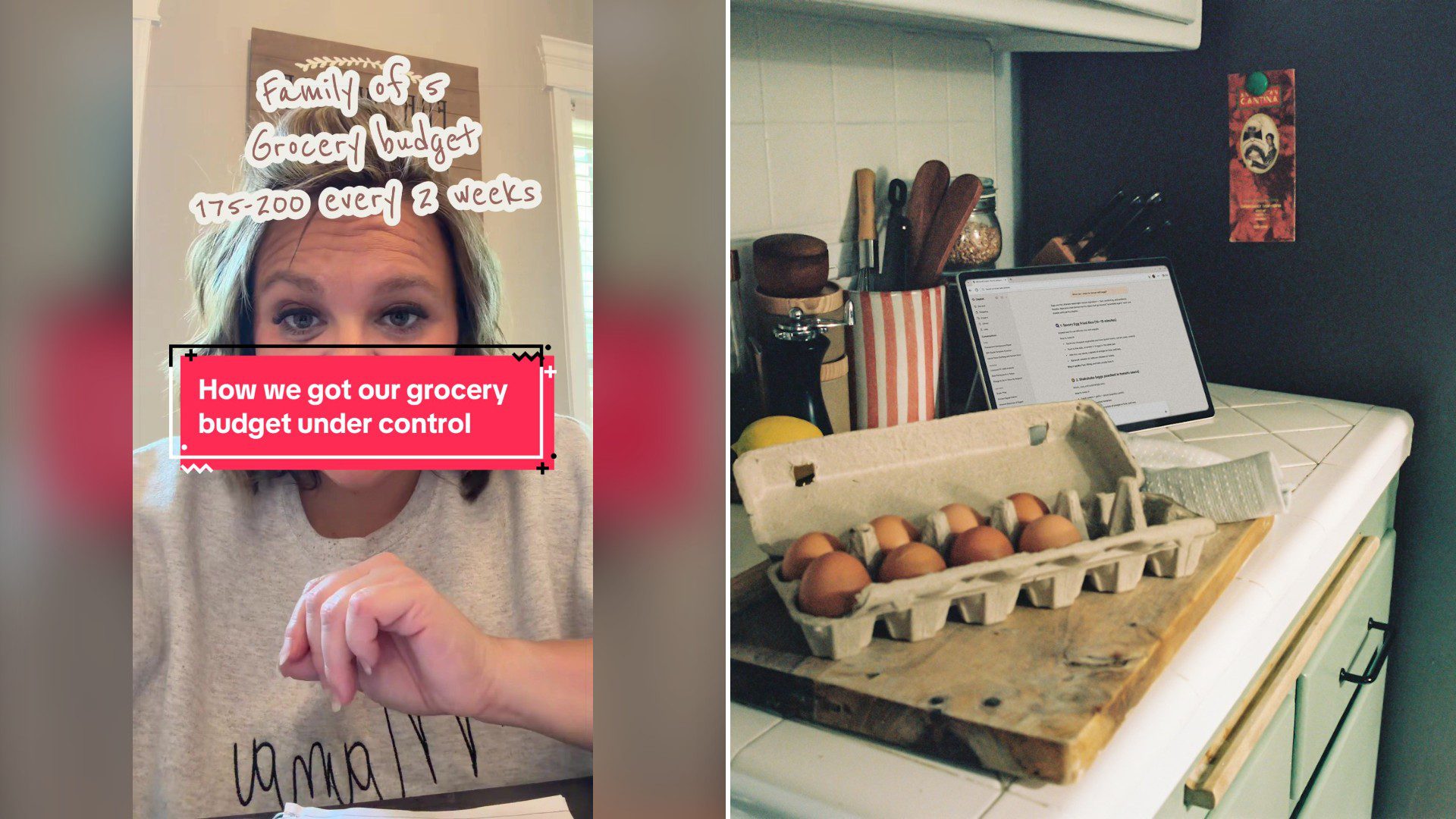
There is a moment many families know well. You stand at the checkout, see the total climb, and realize the groceries cost far more than you planned. For @kim_and_travis, that moment came with a four hundred dollar bill for just one week of food for a family of five, and it changed how they shop.

@kim_and_travis
In a detailed post shared on social media, she explains how they got groceries down to between 175 and 200 dollars every two weeks. She says that over a year ago, a rushed week cost 400 dollars, and she and her husband Travis decided they were done.
Shopping Every Two Weeks
Her first big change was to shop only once every two weeks. Fewer trips to the store, she explains, means less spending, because every visit is a chance to pick up extras. She plans roughly ten to eleven meals to cover the two weeks, leaving some room for leftovers and flexible nights.
She also plans by energy level. The easiest meals land on Monday through Wednesday, the busy days, and the more involved dinners are saved for Thursday and Friday.
The Planning Method
She writes each meal and its ingredients in its own square. Before buying anything, she checks the pantry and refrigerator. She admits that she once bought four cans of cream of chicken soup that she already had, a mistake that taught her to look first. Only then does she check the Publix buy one get one deals and build around them.
Here is the example week she shares. Monday is sloppy joes with homemade sauce, where only ground beef and buns need to be bought, at about nine dollars to feed five. Tuesday is lasagna soup in the Crock Pot, with pasta and sauce found on a buy one get one offer. Wednesday is tacos. Thursday is pork chops. Friday is Cajun chicken and rice, which she says is Travis’s favorite, and for that meal she only bought cheese and heavy cream.
Bulk Buying and Making Things From Scratch
Beyond planning, she uses several money saving habits. She buys meat in bulk at Costco, and she splits big pork chop packs by cutting the chops in half, which she says gives her 16 from a single pack. She bakes her own sandwich bread and mills her own flour. She also makes pizza dough at home.
She price checks the websites of Aldi, Walmart, Costco, and Publix before choosing where to shop, and she stocks up on freezer items when they go on sale. She also mentions picking up Dr Pepper Zero deals with coupons. Fruit is the main purchase she makes in the off week between big shops. Her summary of the whole system is honest: it is a lot of work, but worth it.
Ideas You Can Borrow
Not everyone wants to mill flour, and that is fine. Many of her strategies can be adapted at any level of effort.
Try a longer shopping cycle. If you now shop twice a week, try once a week first. Then see whether stretching to two weeks is realistic for your household. Keep fresh produce and dairy as a smaller top up trip.
Check before you buy. Spend five minutes in the pantry and freezer before writing your list. It prevents duplicate purchases and uses up older items first.
Plan around sales. Look at the weekly flyer or store app, then choose meals that use the discounted items. Buy one get one offers are especially helpful for pasta, sauce, and canned goods.
Make easy meals for busy days. Tacos, sloppy joes, and slow cooker meals take little effort. Save the more involved recipes for days with more time.
Buy meat in larger packs. Splitting a family pack into smaller portions and freezing them can lower the price per pound. Label each bag with the date.
Cook one pot meals. Soups and rice dishes stretch ingredients across many servings and make tasty leftovers.
Try one scratch item. Pizza dough and basic bread are the easiest places to start, and a single loaf can cost much less than a store version.
What a Two Week Meal Plan Looks Like on Paper
If you want to try this yourself, grab a sheet of paper and draw ten or eleven squares, one for each planned dinner. In each square, write the meal name and the ingredients it needs. Next, circle the items already in your kitchen. What is left uncircled is your shopping list. Cross off anything that does not appear on sale, or swap it for something similar that does. This simple page becomes both your menu and your list, and it keeps impulse purchases in check because every item has a job.
It also helps to leave one or two flexible nights open for leftovers, a freezer meal, or a family event. Plans fall apart when they are too rigid, and a little breathing room makes the system easier to keep up for months.
Keeping Expectations Realistic
It is worth remembering that the figures she gives come from her own household, her own stores, and her own prices. Food costs vary widely by region, by family size, and by the ages of the kids. A family with teenagers will likely spend more than one with younger children. Dietary needs can also change the math.
Still, the core message stands out. A big, painful grocery bill can become a turning point. By planning ahead, checking what you already own, and using sales and bulk purchases wisely, she cut her spending to a level that works for her family. Even if you start with one small change, such as a single two week meal plan, you may find your own bill moving in the right direction.