


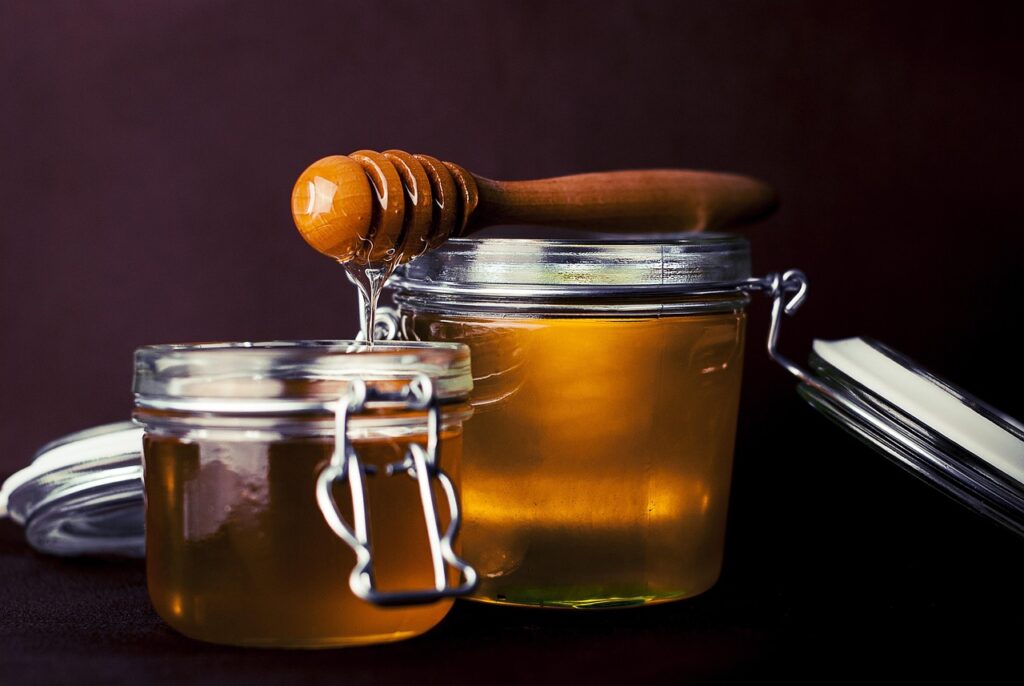
If the fridge door is crammed with half-used sauces, you are not alone. A lot of those bottles are perfectly happy at room temperature, and the labels plus food science back that up. Here are seven condiments that, according to Recipes Featured in an Article and other reporting, can safely move from the chill zone to the pantry without risking food safety.
1) Honey

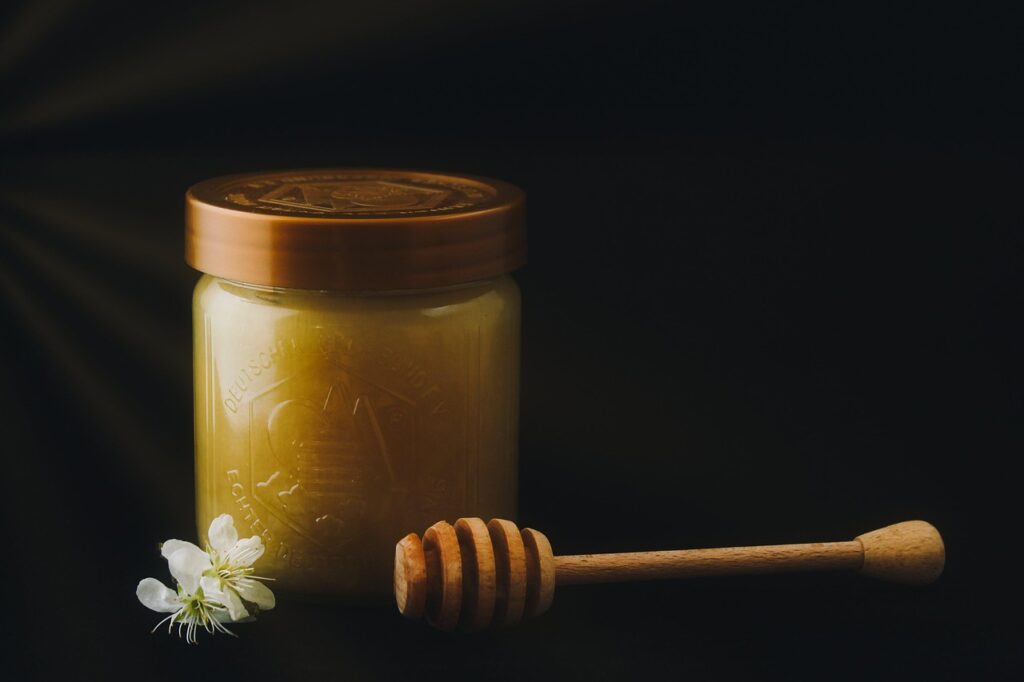
Honey is the classic example of a condiment that does not belong in the refrigerator. One guide on where to store condiments notes that Honey should “Definitely” live in the pantry, because it solidifies in the cold. Its low moisture and natural antibacterial properties keep microbes in check, which is why jars can sit out for months without spoiling.
Keeping honey at room temperature also protects its texture and flavor, which matters for bakers and tea drinkers who rely on that easy drizzle. When people stash it in the fridge “just to be safe,” they often end up throwing it out once it crystallizes, even though it is still fine. Leaving it in a dark cupboard instead cuts waste and frees up refrigerator space for foods that truly need chilling.
2) Ketchup
Ketchup is another condiment that does not actually require refrigeration for safety, even though many households default to the fridge. Recipes Featured in an Article explain that its high acidity makes it naturally resistant to spoilage at room temperature. Another analysis of leftover sauces notes that vinegar based Condiments like ketchup do not need the “chill of the refrigerator” to stay fresh.
That is why restaurants leave bottles on tables all day without concern. For home cooks, the choice is more about taste than safety, since cooler temperatures can slightly mute flavor and thicken the texture. Leaving ketchup in the pantry keeps it pourable and frees up shelf space, which matters in smaller kitchens. It also nudges people to pay attention to “best by” dates and use what they have instead of letting forgotten bottles linger in the back of the fridge.
3) Prepared mustard
Prepared mustard, whether classic yellow or Dijon, is another vinegar heavy sauce that can sit out. Food waste experts point out that vinegar based condiments such as mustard do not require refrigeration to avoid spoiling, grouping them with ketchup as pantry safe. One detailed breakdown of leftover sauces adds that Not every condiment needs to be refrigerated, even if the fridge can extend quality.
For mustard, that means the pantry is fine for everyday use, especially if the bottle is used up within a few months. The acidity and salt keep bacteria at bay, so the main risk is flavor fading, not foodborne illness. That trade off matters for shoppers trying to stretch grocery budgets, because understanding that mustard is safe at room temperature lets them buy larger bottles without worrying about cramming them into limited refrigerator real estate.
4) Soy sauce
Soy sauce is often shelved in the fridge out of habit, but its salty, fermented base is built to last at room temperature. One guide on long lasting condiments notes that the short answer is no, soy sauce does not need refrigeration before or after opening, because the high salt content acts as a natural preservative. Another explainer even says to Move Soy sauce from pantry to fridge only if someone wants to slow subtle flavor changes.
For most households, that means the bottle can live right next to the cooking oil and vinegar without safety worries. Room temperature storage also keeps the flavor more consistent for stir fries and marinades, since cold soy sauce can taste slightly dull until it warms up. Understanding that it is “another condiment that technically does not need to be kept cool” helps home cooks prioritize fridge space for perishable sauces like mayonnaise or dairy based dressings instead.
5) Hot sauce
Hot sauce fans can also reclaim some refrigerator space. A social media guide to pantry staples notes that Certain items are at their prime at room temperature, listing Hot Sauce as a condiment that can live happily in the pantry for up to three years when kept away from direct sunlight. Another rundown of non refrigerated foods explains that Most commercial hot sauces do not need the fridge because Bacteria struggle in the combination of chili, vinegar and relatively high salt.
Leaving hot sauce out keeps it ready to splash on eggs or tacos without the chill that can mute heat and flavor. For small producers and restaurant owners, that long shelf life at room temperature is a big deal, since it simplifies storage and display. At home, it means people can comfortably keep a small collection of different brands on the counter, using them more often instead of letting half empty bottles languish unseen in the back of the refrigerator.
6) Fish sauce
Fish sauce, a staple in Southeast Asian cooking, smells like something that should be refrigerated, but its production process makes it very stable. A guide to Condiments That Don Need Be Refrigerated, Plus That Do, explains that the long fermentation and high salt content act as powerful preservatives. Once opened, the bottle can sit in a cool, dark pantry without spoiling, even if the aroma intensifies slightly over time.
For home cooks experimenting with pad Thai or Vietnamese nuoc cham, that means they can buy a full size bottle instead of tiny refrigerated portions. Storing it outside the fridge also keeps the liquid thin and easy to pour, which matters when recipes call for precise splashes. On a broader level, understanding how traditional sauces like fish sauce were designed for room temperature storage helps people trust pantry staples instead of over relying on refrigeration as a safety blanket.
7) Shelf stable peanut butter
Shelf stable peanut butter, the kind made with added oils and stabilizers, is another spread that does not actually need refrigeration. A detailed guide from Recipes Featured in an Recipes Featured Article notes that refrigeration is not needed for this style, and that it hardens below room temperature. The low water content and added stabilizers keep it from spoiling quickly on the shelf.
Leaving peanut butter in the pantry keeps it spreadable for sandwiches and snacks, which is especially helpful for families with kids making their own lunches. It also means jars can be stored with other dry goods instead of competing for fridge space with produce and dairy. For manufacturers and retailers, the fact that these jars are designed as shelf stable condiments simplifies shipping and display, reinforcing how modern processing reduces the need for constant refrigeration in everyday foods.
More from Decluttering Mom: