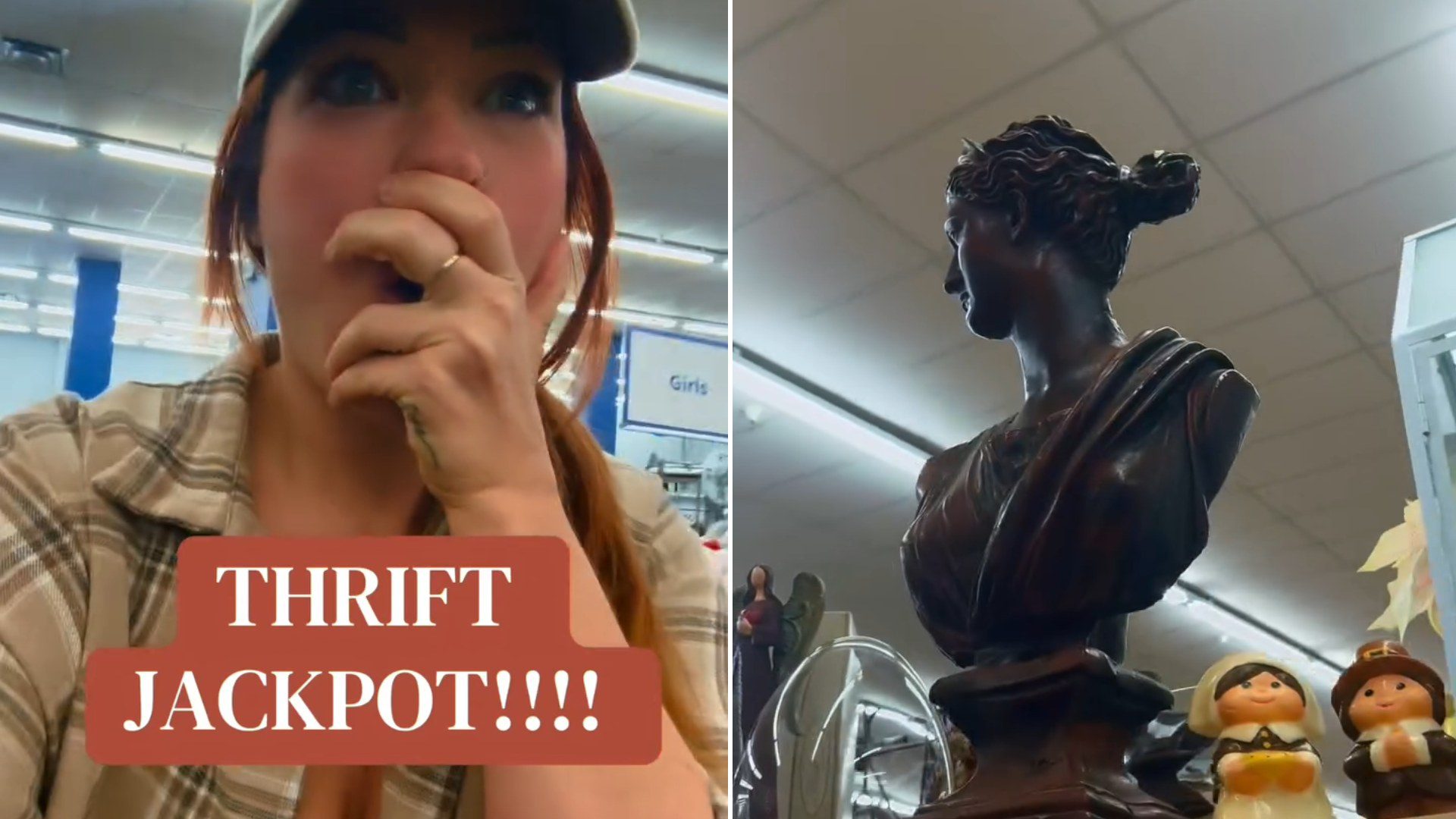
A heavy statue marked at a few dollars on a random Goodwill shelf is exactly the kind of find that makes a thrifting reel worth 269,100 views, nearly 32 times what a typical post from that account pulls in. The creator behind the reel picked the piece up mostly because of its weight, a rough signal that it wasn’t cheap resin or plastic, then took it home to actually research what it was before deciding whether to keep it or resell it. That second step is the part worth paying attention to. The internet is full of thrift-store luck stories that stop at the moment of discovery. The ones that hold up are the ones where somebody does the unglamorous work of figuring out what the thing actually is.
Weight Is the First Real Clue
Experienced thrifters treat heft as a filter before they even look for a maker’s mark. Cast bronze, solid brass, and carved marble all weigh noticeably more than the resin and chalkware reproductions that fill most donation bins, and that density difference is usually the first thing that separates a genuine antique from a decorative knockoff. It’s not proof of value on its own, plenty of heavy objects are worthless, but it’s the detail that tells someone a piece is worth the extra ten minutes of research instead of a quick pass.
What Actually Makes a Statue Valuable
Once you’re past the weight test, value comes down to a handful of specific things appraisers check every time. Foundry marks, signatures, and casting seams tell you whether a bronze was produced by a known maker or mass-produced later as a tourist reproduction, according to guidance from antique bronze identification resources cataloged at Antique Identifier Online. Numbered limited editions, visible foundry stamps, and the quality of surface patina all factor into whether a piece is worth a few hundred dollars or considerably more once it reaches an actual buyer. Marble pieces get evaluated similarly, with tool marks, base construction, and material quality separating hand-carved originals from cast composite look-alikes.
Thrift Finds That Turned Into Real Money
This kind of story isn’t a one-off. A Cincinnati gallery recently helped a woman confirm that a $3 painting she’d picked up at a thrift shop was actually worth close to $3,000, according to local reporting from Local 12 in Cincinnati, after she had it examined by people who could identify the artist and period. The pattern repeats across categories, not just paintings: a piece that looks unremarkable to a donation-bin sorter can look completely different to someone who knows what specific details to check. That gap between donation price and appraised value is exactly what keeps people scanning thrift store shelves for heavy, unusual objects in the first place.
Getting a Real Number Before You Sell
Once a piece clears the weight and marking checks, the next step is putting an actual dollar figure on it, and that’s where a lot of thrifters undersell themselves. Online appraisal services like ValueMyStuff offer expert sculpture appraisals within roughly 24 hours, which is fast enough to get a real number before listing anything. Selling through a general marketplace without that step tends to leave money on the table, since buyers who specialize in bronze and marble sculpture are willing to pay more for a documented, verified piece than for one listed with a guess at its origin. Antique dealers who specialize in bronze sculpture specifically tend to pay closer to fair market value than a general resale platform would, according to buyer guidance from Antique Appraisers Auctioneers, precisely because they can verify a foundry mark or casting style on sight.
Why the Research Step Matters More Than the Find
Finding something heavy and old-looking on a shelf takes no skill at all. Anyone can get lucky standing in the right aisle. What actually separates a real resale windfall from a shelf-warmer nobody wants is doing the legwork afterward: checking for a signature, comparing casting quality against known reproductions, and getting a second opinion before assuming a price. The reels that go viral for the discovery moment are fun. The ones worth learning from are the ones that show the unglamorous research that comes right after, because that’s the part that actually determines whether a few-dollar find is junk or a genuine payday.