

In the clip from creator @krysandkareem, a toddler perches on the kitchen counter and launches into a long, animated stream of babbling, complete with hand gestures, pauses, and the unmistakable cadence of someone mid-complaint. She is clearly venting about something, possibly her siblings, possibly the general injustice of being a toddler, and none of it is in words anyone else can understand. What sells the whole bit is her dad, who stands across from her nodding along, murmuring agreeable sounds at exactly the right moments, playing the part of a fully engaged listener without cracking a smile.

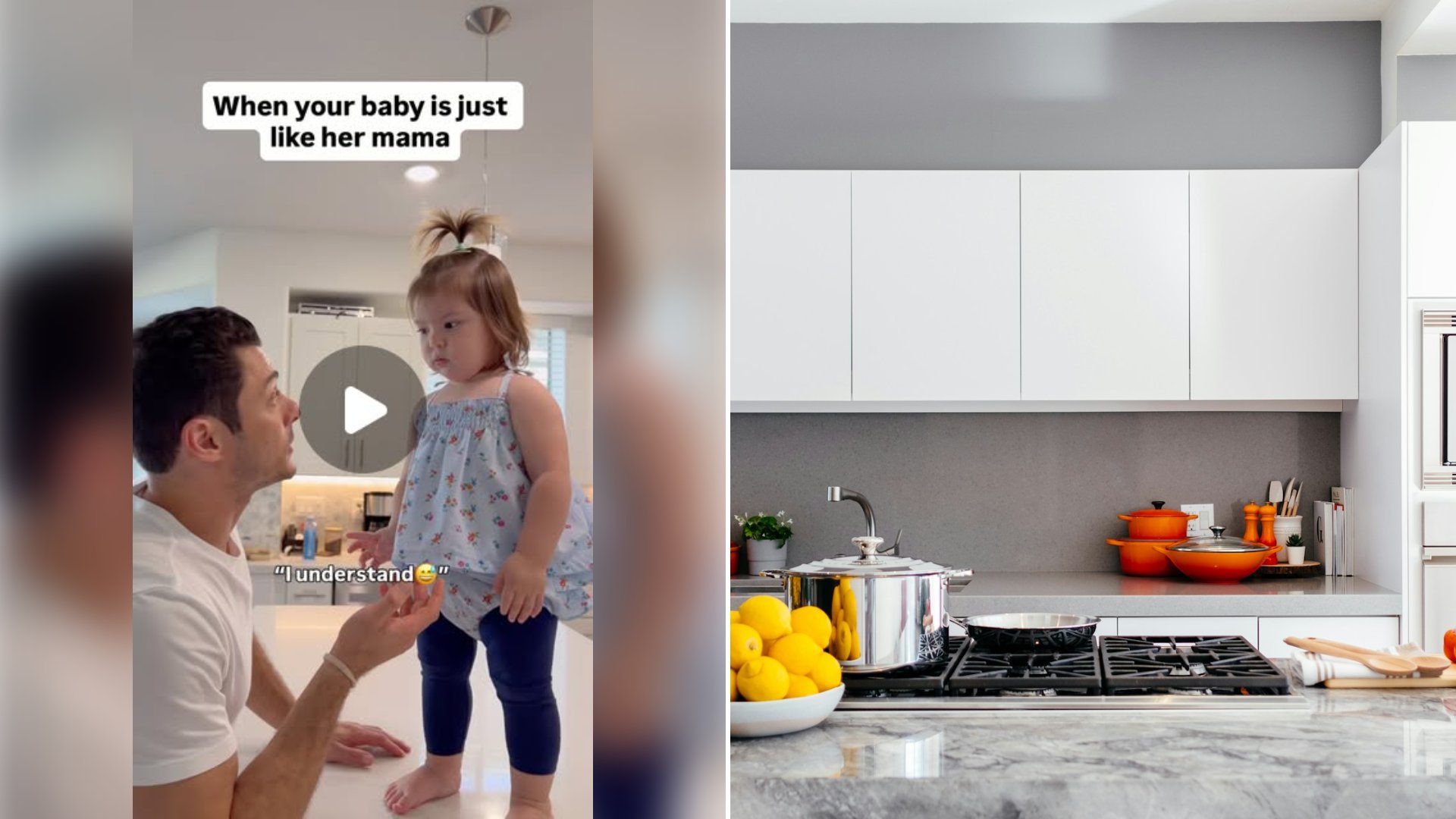
The reason this clip has resonated with so many parents is that the babbling rant is not nonsense to a toddler, it is a real conversation attempt, and the dad’s response treats it that way. He does not laugh at her, correct her, or try to talk over her. He just listens, the same way he presumably would for an older child or an adult, and that choice is what gives the moment its charm. It is comedy built entirely on taking a toddler completely seriously.
Developmentally, what the toddler is doing has a name: it is sometimes called pretend conversation or jargon babbling, and it is a well-documented and healthy stage of language development. Somewhere between roughly eighteen months and three years old, many toddlers begin stringing together strings of babble with the rhythm, pitch, and emotional tone of real sentences, even before they have the actual vocabulary to fill them in. Speech-language specialists view this stage as evidence that a child has absorbed the music of conversational speech, the rise and fall, the pauses for response, well before they have mastered its words.
That gap between understanding the shape of conversation and having the words to fill it matters because it shows a toddler is actively rehearsing social communication, not just making noise. Responding to that babble as though it is meaningful, the way this dad does, is something language development specialists generally encourage. Treating a toddler’s jargon speech as a real back and forth, complete with eye contact, nodding, and verbal responses, reinforces the back and forth rhythm of conversation long before actual words are reliably in place, and it can support a child’s confidence in communicating as real vocabulary catches up.
There is also something quietly moving under the comedy. A toddler standing on a counter venting in gibberish and a parent choosing to engage with total sincerity is, in miniature, exactly the kind of attention small children need to feel heard. The internet loved the bit because it is funny. Parents loved it because it is also, without being preachy about it, a pretty good model of what listening to a toddler can look like.
More from Decluttering Mom
- Mom Working From Home Gets a Spontaneous Metal Concert When Her 12 Year Old Son Walks In Shredding a Purple Bullseye Guitar and the Family Dog Climbs Up Beside Her
- Mom Baking With Her 6 Year Old Daughter Who Has Down Syndrome Gets Banana Peel for an Answer, a Face Full of Dry Cake Mix and Giggles That Stop Her Lesson Cold
- Mom Takes Her Bonnet Off So Her Kids Can See Her New Haircut a Second Time and Her Little Girl Reaches Up to Feel It, Calling It So Pretty and Glossy