

Every parent knows the balancing act. You want your child to try something new and brave, but you do not want to push too hard. One family at a gymnastics gym shows how a small step down in height can turn a frightened toddler into a boy asking to go higher and higher.

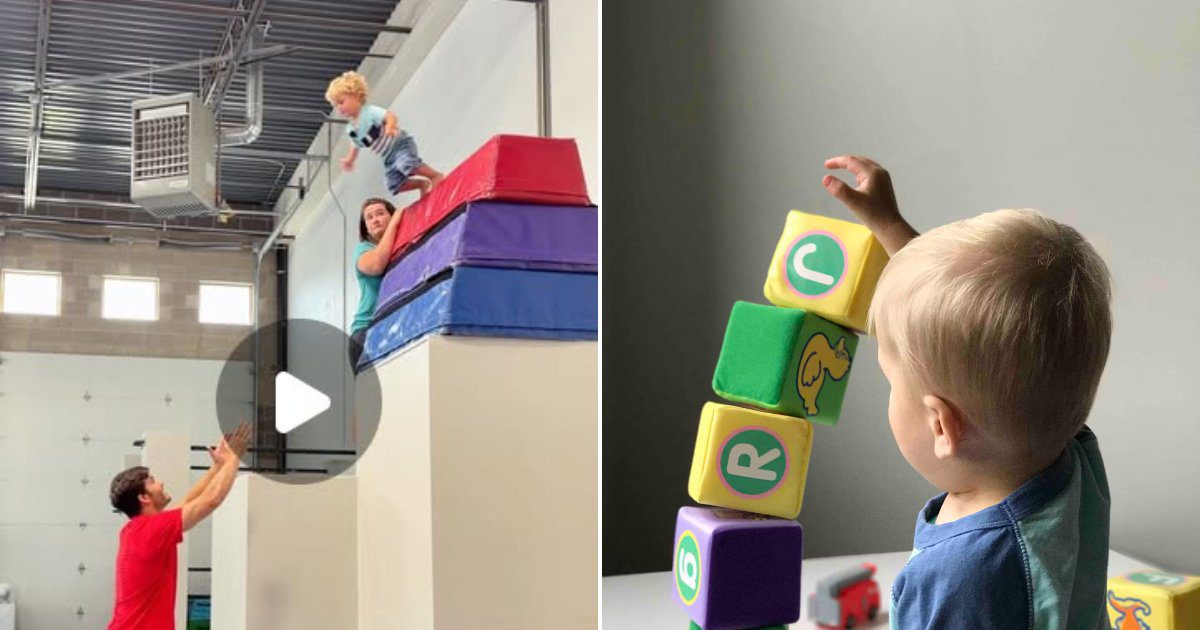
The story comes from @calen_chan, where a dad and mom work together to help their little boy face his fear.
The first attempt at eleven feet
The setting is a gym with a tall stack of foam blocks, about eleven feet high. A dad stands below on a blue landing mat with his arms raised. At the top, the mom stands with their toddler, who is supposed to jump into his dad’s arms.
Dad calls out the height, “Eleven feet!” and asks if he is ready. The little boy looks nervous. He crouches back down toward his mom. When his parents ask if he does not want to do it, and whether it is scary, he says it is too scary. Dad answers gently with a simple, “Yes.”
Stepping down to ten feet
Instead of pushing, dad adjusts. He asks if his son would like to try ten feet instead. The toddler agrees, and the family moves to a slightly lower block.
This time, the boy jumps. Dad catches him, and the toddler giggles with excitement. Dad cheers, tells him he is the boss, and calls him an adrenaline junkie. The little guy is clearly proud of himself.
Mom helps him climb back up, checking on him before he takes another leap. He jumps again, laughing with his whole face. His parents joke that they hope people do not think they are forcing him to do this, and that he should stop, because he keeps asking to go again.
Back to the big one
After a few jumps, dad suggests the bigger height again. The toddler is now eager. He stands on the colorful foam pads, counts down with his dad, one, two, three, four, five, and jumps. He is caught safely and shouts happily.
Then he asks to go higher. His mom lifts him to the top tier, and his parents encourage him to say, “I brave!” He says it. Then he says, “I tough!” He takes a final big jump from the top and is caught again, with applause and laughter from both parents.
By the end, the boy who said it was too scary has asked to do it again. The whole change took about a minute, and it came from patience, trust, and one smaller step.
Why the smaller step worked
Child development experts often talk about helping kids stretch just beyond their comfort zone. Too little challenge is boring, and too much can be overwhelming. When a child is nervous, lowering the challenge a little can help them succeed, and success builds confidence.
Notice also that the parents never mocked the fear or forced the jump. They listened, accepted that it was scary, and offered another option. This kind of respect helps a child learn that fear is a feeling they can handle, not something to be ashamed of.
The brave words matter too. Saying “I brave” and “I tough” is a way of telling yourself a story about who you are. Simple phrases like these can help young children feel strong.
How to build courage in your own child
- Listen first. If your child says something is scary, take it seriously.
- Offer a smaller version of the challenge, like a lower height or a shorter step.
- Stay close and make sure the child feels safe and supported.
- Celebrate effort and joy, not just success.
- Let your child decide when to try again. Choice builds confidence.
- Give them a short phrase to say, like “I can do hard things.”
Safety comes first
Any activity with heights needs supervision and the right setup. This family was in a gym with thick landing mats and two adults helping. Parents should always make sure the equipment is designed for the child’s age and that a trained adult is nearby. If your child is nervous or the setup does not feel right, there is no shame in skipping it.
Questions parents often have
Is it okay to encourage a nervous child? Yes, as long as the encouragement is gentle and the child always has a way to say no. The goal is confidence, not compliance.
What if my child never wants to try again? That is fine too. Some children need many visits before they are ready, and others prefer different kinds of challenges. Keep the pressure low and the activity fun, and let them set the pace.
How can I tell the difference between fear and a real safety concern? Trust your instincts. If an activity looks unsafe for your child’s size or skill level, step in no matter what your child says.
The lesson for parents
The most powerful part of this story is not the jump. It is the dad saying yes when his son said it was too scary, and then finding another way. Courage grows in an environment where a child feels understood. When we meet our kids where they are, they often surprise us with how far they are willing to go.
Credit for the original post goes to @calen_chan on Instagram.