


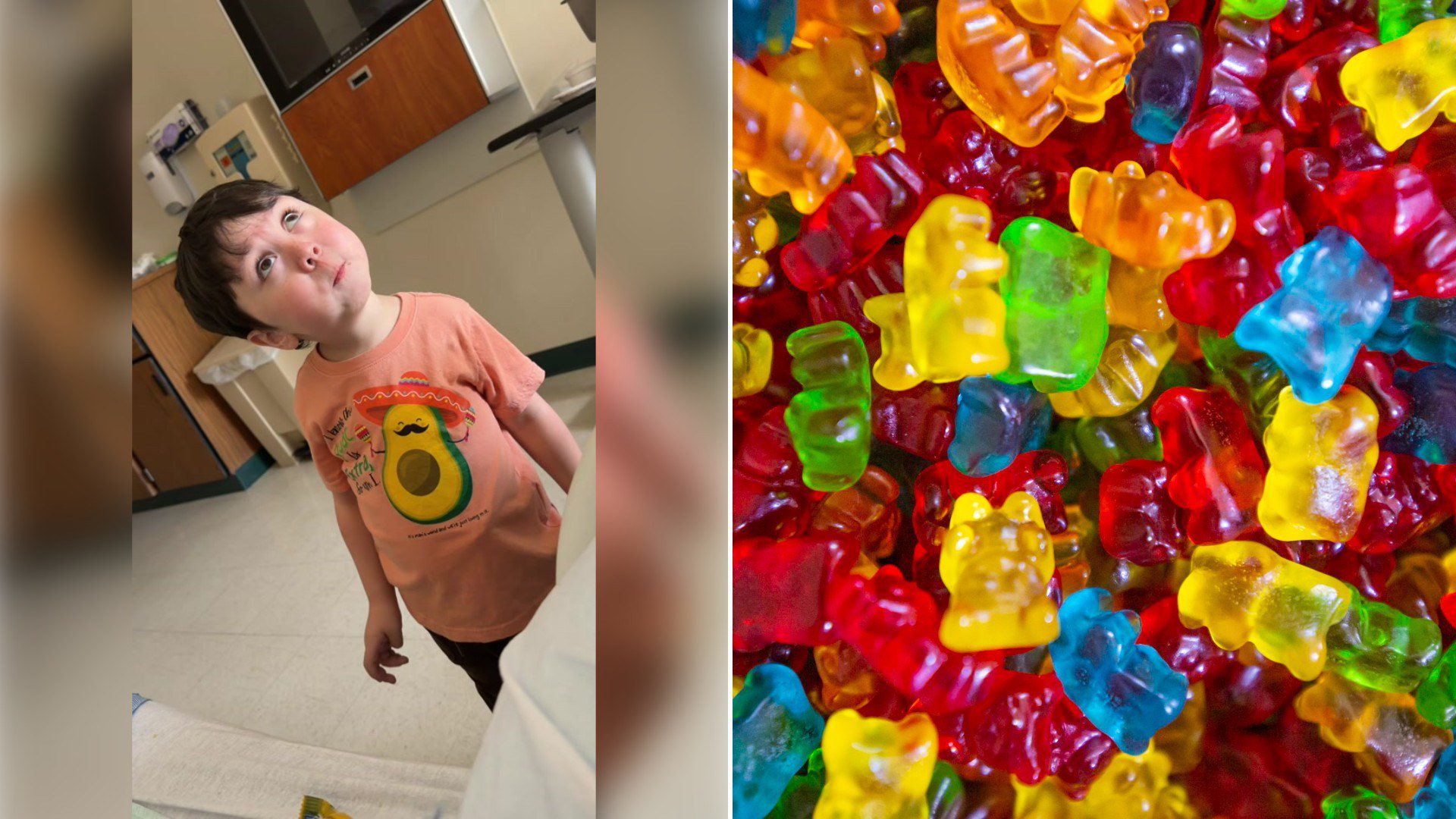
A creator posting under the handle ameliamontgomery08 filmed her toddler trying sour candy for the very first time, capturing a burst of genuine, unfiltered facial expressions and running commentary while chatting with the parent off camera — nothing scripted, just a short, real kid reaction caught on the first try.
@ameliamontgomery08 First time trying sour straws 🤪 #wereback #heyworld #campomelicdysplasia #inclusionmatters
There’s something universally satisfying about a true “first time” reaction, precisely because it can’t be faked or repeated with the same intensity twice. A toddler encountering an intense new taste for the first time has no filter, no bracing themselves in advance, and no idea what’s about to hit their tongue.
Sour candy in particular tends to produce an especially dramatic response in young kids, whose taste sensitivity and lack of self-conscious restraint combine into exactly the kind of big, honest reaction that’s hard to manufacture on cue.
It’s a simple, low-stakes slice of everyday family life, but that’s the appeal — no elaborate setup required, just a small, relatable moment of a kid experiencing something completely new in real time.
There’s a reason “first time trying it” videos are such a durable category online, and it has almost nothing to do with the specific food involved. What makes them work is the total absence of performance. A toddler doesn’t know the camera is rolling in any meaningful sense, doesn’t know what reaction is expected of them, and hasn’t yet developed the instinct to soften a response for an audience. Whatever crosses their face in that first second is simply what’s actually happening inside their mouth and brain, translated directly and instantly into an expression, with none of the filtering most adults apply automatically by the time they’re old enough to know someone is watching.
Sour candy specifically hits kids differently than it hits most adults, and there’s a real physiological reason behind that gap. Children are generally born with a higher density of taste buds than they’ll have later in life, which means intense flavors, sour, bitter, or otherwise, tend to register as more overwhelming to a toddler’s palate than they would to a grown adult who has spent years gradually building up a tolerance to strong tastes. What feels like a mild pucker to a parent can feel, to a toddler, like an entirely unprecedented sensory event.
The specific sequence of expressions that tends to show up in these videos is almost universal once you start watching for it: a brief pause while the taste registers, a scrunch across the eyes and nose, sometimes a full-body shudder, and then, more often than not, a request for another piece anyway. That last part is what tends to surprise parents watching for the first time. The reaction looks like pure rejection, and yet the toddler goes right back in for more, which suggests the overwhelming sensation itself is at least part of the appeal rather than something to be avoided.
Off-camera narration from a parent, chatting casually while the reaction unfolds, does a lot of quiet work in a clip like this. It signals that nothing about the moment was staged or coached in advance, since a scripted reaction would typically come with a scripted setup to match. A parent casually asking “how does it taste?” in real time, genuinely curious about the answer rather than feeding a line, is part of what makes the whole thing read as authentic rather than produced for an audience.
First-taste reactions belong to a broader, well-worn genre of family content that includes first steps, first words, and first haircuts, all of which share the same basic appeal: a milestone that will only ever happen once, captured in the moment it actually occurs rather than reconstructed afterward. Sour candy isn’t a developmental milestone in the same sense, but it carries the same one-shot quality. A toddler can’t un-taste their first sour candy any more than they can un-take their first step, which is exactly what makes the unfiltered version of that reaction so worth capturing.
There’s also a quieter kind of parenting satisfaction embedded in a clip like this one, separate from whatever views or reactions it eventually gets. Introducing a kid to a new experience and watching them process it in real time, whether it’s a new food, a new place, or a new sensation, taps into one of the genuinely fun parts of raising small children: getting to witness the entire world land on someone for the very first time, over and over again, long after it stopped feeling new to the adult standing next to them.
Sour candy makes for a particularly good test case because the reaction is nearly impossible to predict in advance, even for a parent who knows their own kid well. Some toddlers recoil and refuse a second bite entirely. Others power through the initial shock and come back for more within seconds. A few barely react at all, to the mild disappointment of whoever’s filming, having built up the moment as bigger than it turned out to be. That unpredictability is exactly what keeps parents pressing record on these moments in the first place, since there’s no way to know which version of the reaction they’re about to get.
Watching a toddler negotiate an intense, unfamiliar sensation in under ten seconds also offers a small, low-stakes window into how kids process discomfort more generally. The instinct to scrunch up, shudder, and then immediately ask for more mirrors a pattern that shows up constantly in early childhood, a strong initial resistance followed by curiosity winning out anyway. It’s the same basic instinct that eventually gets a toddler through a first pool, a first loud fireworks show, or a first ride on a spinning playground toy: overwhelmed for a second, then hooked.
There’s a specific kind of comedy that only exists in the gap between a face and the words coming out of it, and sour candy reactions tend to live squarely in that gap. A toddler can look utterly betrayed, eyes watering, mouth twisted, and still manage to say “good” through the wreckage of the expression, entirely sincere on both counts at once. That contradiction, a face saying one thing and a mouth saying another, is often the exact moment a clip like this gets rewatched.
Clips like this one also tend to resonate because almost every parent watching has their own version already filed away somewhere on their phone, whether it’s a first taste of a lemon, a bite of something too spicy, or a sip of something fizzy for the first time. The specific candy barely matters. What lands is the recognizable shape of the moment: a kid encountering something new, reacting with total honesty, and a parent standing just off camera, already smiling before the punchline even lands.
By the time the clip ends, the sour straws themselves are almost beside the point. What actually gets captured is a few honest seconds of a small person meeting something entirely new head-on, with no coaching, no second take, and no sense yet that a reaction could be anything other than exactly what it is. That kind of unguarded footage becomes more valuable with time, not less, long after the specific candy brand and the exact flavor have been completely forgotten.