

Most moms do not realize they have a toy problem all at once.
It usually happens slowly. A holiday here, a birthday there, party favors, random restaurant toys, stocking stuffers, impulse buys, hand-me-downs, little “just because” trinkets, and bigger gifts nobody wants to part with because they were expensive or sentimental. Then one day the house feels like it is closing in, and the mess is no longer just annoying. It is constant.
That was exactly the breaking point one parent described recently on Reddit, saying their family needed a decluttering intervention before they “drown in plastic and stuff.” They talked about the mix so many families recognize: useless little junk everywhere, but also the good toys that still take over the house, including Lego sets that had spread into the living room because they felt too special to put away. Their kids were 10 and 12, old enough to understand there was too much stuff, but not quite ready to manage those decisions alone.

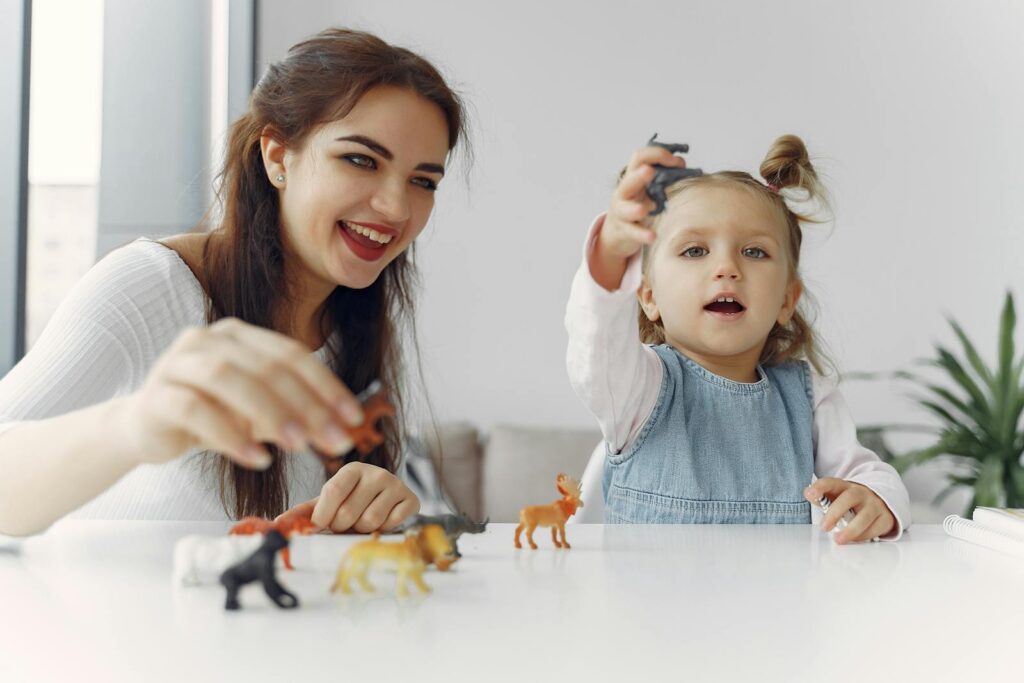
The biggest shift was stopping the house from being open toy storage
What changed the conversation was not some extreme minimalist advice.
The most useful ideas were much simpler: give toys clear limits, stop letting everything stay out at once, and rotate the overflow instead of forcing every item into one dramatic keep-or-trash decision. One parent explained that their kids have defined storage in their rooms, with only a few exceptions elsewhere in the house, and that extra toys sometimes go into a basement bin “kind of like a rotation.” Later, the kids often realize they do not really miss a lot of what was taken out of sight. Another parent said some toys live in the garage unless the kids specifically ask for them, while Lego sets that are not actively being used get boxed up, labeled, and stored higher up in a closet.
That is the part that makes rotation feel different from decluttering the way most families picture it.
Nothing has to be decided forever in one exhausting afternoon. Some things just stop living in the middle of everyday family life.
Why rotation works better than one huge purge
A lot of moms already know the pattern. They try one big cleanup, everyone gets overwhelmed, the kids get emotional, and somehow the house still ends up full.
Rotation helps because it lowers the emotional temperature.
Instead of asking, “Are we getting rid of this forever?” parents can ask, “Does this need to be out right now?” That is a much easier question for both adults and kids. It also exposes how much of the clutter is really just visual noise. Once toys are no longer all competing for attention at the same time, it becomes much easier to notice what children actually return to and what was only being kept out of habit or guilt.
That matters because toy clutter is not always about attachment. Sometimes it is just about volume.
One parent even admitted they had quietly removed toys before and the kids did not care at all, which said a lot about how much had piled up without anyone truly valuing it anymore.
The homes that feel calmer usually have one thing in common
They are not necessarily homes with fewer kids or better-behaved children.
They are usually homes with clearer limits.
Several parents in the discussion kept coming back to the same idea: everything needs a place. Some use labeled boxes. Some use cubbies. Some use bins for categories like Legos, art supplies, Barbies, or stuffed animals. Some allow kids to keep as much as they want only if they can keep their rooms tidy, and once it becomes obvious the room is no longer manageable, the family sorts it together. Others use a three-pile system of keep, donate, and throw away, then keep going until what remains actually fits the space available.
That is what the rotation system seems to fix. It stops the house from being the storage solution for every toy the family has ever owned.
Instead, the house becomes the place where only the currently loved, currently used things stay visible.
It also changes the way kids learn about stuff
Another reason parents liked this approach was that it made kids participants without letting them run the whole system.
One parent said they did not want their kids’ permission so much as their participation. Others talked about modeling decluttering themselves, involving kids in donations, letting them trade toys in for store credit, or allowing one tote for sentimental items so there was still a limit even around the things that felt harder to release.
That may be why this works so well for families with older kids in particular.
It teaches that keeping everything is not realistic, but it also does not make every choice feel harsh. Some items are donated. Some are sold. Some are stored. Some are thrown out because they are broken or incomplete. Over time, kids start to see that more stuff is not always better if they cannot enjoy it, find it, or even notice when it is gone.
The real goal is not less joy. It is less chaos.
That is the piece a lot of overwhelmed moms need to hear.
A rotation system is not about making a home cold or bare. It is about making it livable again. It is about getting shared spaces back, reducing the constant visual stress, and helping kids actually play with what they have instead of losing everything in the pile.
Because toy clutter really does build faster than most moms expect.
And for a lot of families, the thing that finally changes everything is not one giant purge. It is drawing a line around space, putting some toys away on purpose, and realizing the house feels calmer almost immediately once everything is not out at once.
More from Decluttering Mom: