


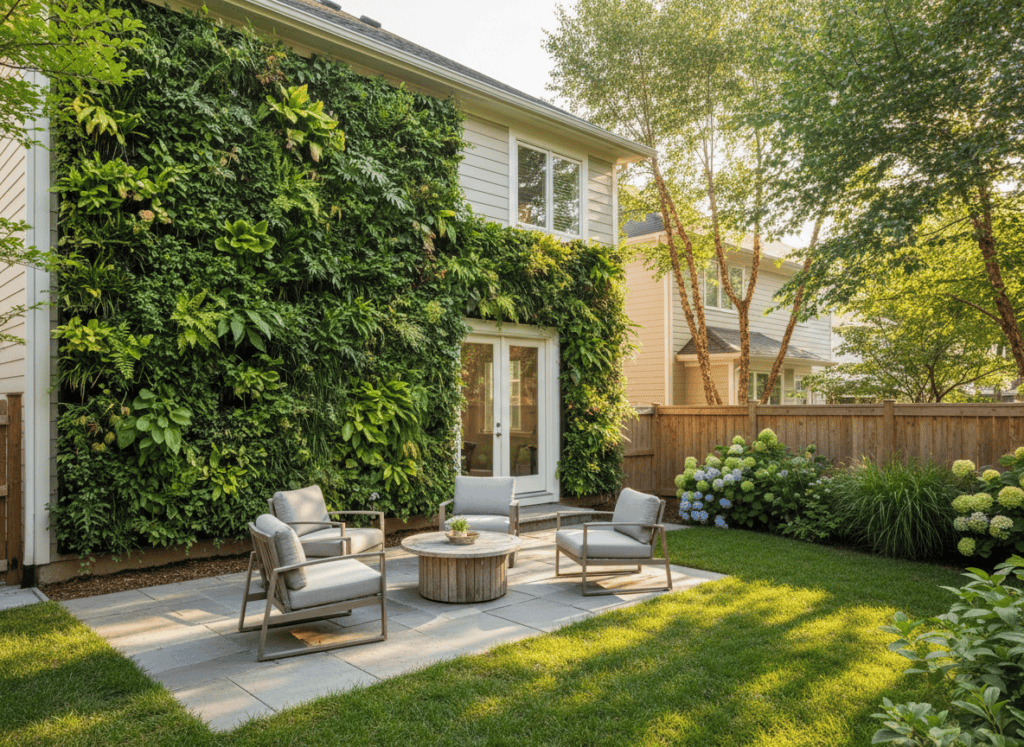
Landscaping crews are hearing a request that would have sounded odd a decade ago: skip the flower bed and put the garden on the wall instead. Vertical gardens — modular panels of living plants mounted to fences, retaining walls, and the exterior siding of the house itself — have moved out of hotel lobbies and botanical gardens and into ordinary backyard consultations, and the people installing them say the shift is real, not just a scroll-stopping photo trend.
What the Survey Data Actually Shows
The clearest signal comes from the American Society of Landscape Architects’ residential trends survey, in which 53% of landscape architects said they expected client demand for plant walls and vertical gardens to be strong or somewhat strong going forward — putting it well ahead of once-trendy add-ons like outdoor kitchens in the same poll of more than 800 professionals. That interest hasn’t cooled; if anything, it has turned into dollars. Market researchers tracking the vertical garden construction industry now project the sector will grow at a compound annual rate of roughly 7.6% through 2033, according to figures compiled by SkyQuest Technology — a pace that outstrips general landscaping spending. Separately, Houzz’s 2026 Outdoor Trends Study found that 71% of homeowners doing outdoor renovations hired a professional to do it, up from 65% just two years earlier, meaning more of these installations are going in through contractors rather than as weekend DIY projects.

Why Small Yards Are Driving the Shift
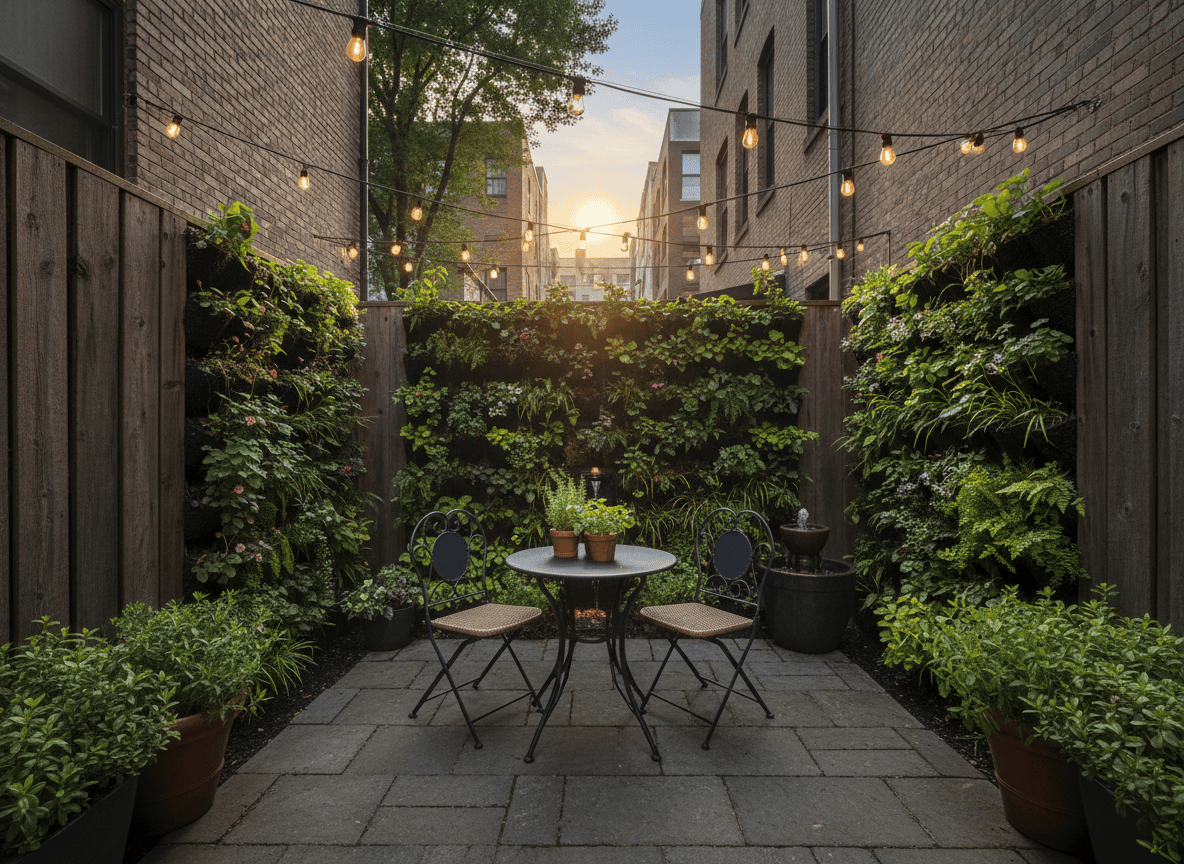
Ask a landscape designer why this is catching on now and the answer usually comes back to square footage. A raised bed, a row of shrubs, even a modest lawn all compete for ground space that a lot of newer homes simply don’t have — builders have been shrinking lot sizes for years to keep new construction affordable. A vertical garden sidesteps that math entirely. It turns a blank fence or an unused side-yard wall into growing space without taking a single square foot away from the patio, the play area, or the dog run. For a townhouse or a starter home on a fraction of an acre, that trade-off is a much easier sell than it is for someone with two acres and room to spare, which is part of why designers report the pull is strongest among exactly the clients who have the least outdoor space to work with.
What Installing One Actually Involves
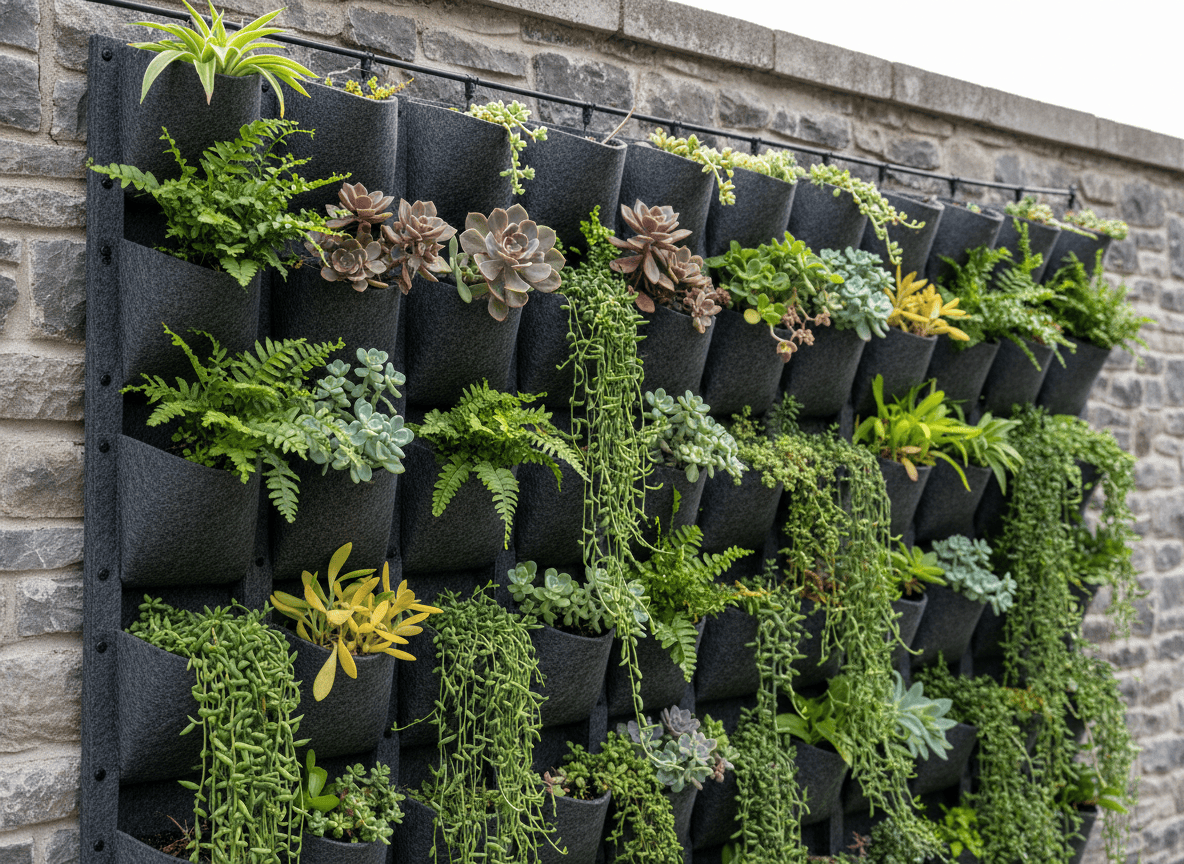
These aren’t just planters stacked on shelves. Most professionally installed systems use modular felt pockets or rigid plastic trays fastened to a mounting frame that holds the whole assembly a few inches off the wall, which protects the underlying siding or masonry from trapped moisture. Built-in drip irrigation lines run behind the panels on a timer, since hand-watering a vertical surface evenly is nearly impossible once it’s more than a few feet tall. Structural weight matters too — a fully saturated living wall can be heavy, so installers check what the mounting surface can actually bear before anything goes up. That extra engineering is one reason these projects tend to be priced and scheduled like a real construction job rather than an afternoon of planting.
The Plants Doing the Heavy Lifting
Not everything tolerates life on a vertical surface, so the plant palette on most jobs is fairly consistent. Ferns and pothos handle shadier exposures and the uneven drainage that comes with a wall-mounted system. Sedum and other low-growing succulents show up constantly on sunnier walls because they store water and can go longer between irrigation cycles if a line clogs. Heuchera, with its layered foliage color, gets specified when a client wants the wall to read as a design feature rather than just greenery. Herbs like thyme and oregano appear too, mostly on kitchen-adjacent walls where a homeowner wants something they can actually harvest. The common thread across all of it is shallow root systems and tolerance for the drier, more exposed conditions a vertical bed creates compared with soil at ground level.
Where This Leaves Homeowners
None of this requires a mansion or a landscape architect on retainer. A vertical garden scales down to a single fence panel as easily as it scales up to an entire wall, which is exactly why it’s showing up on lots where a traditional garden never would have fit in the first place.