


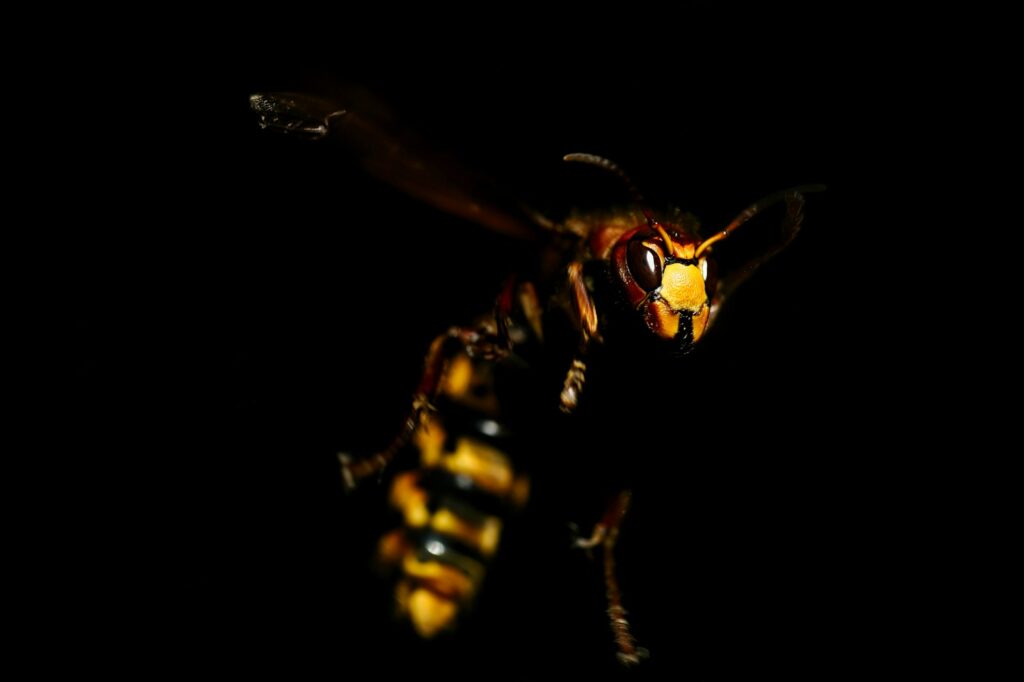
More than half a million people end up in U.S. emergency rooms every year from wasp and other insect stings, according to the National Pest Management Association, and a disproportionate share of those visits cluster in September and October. That’s not a coincidence. By fall, wasp and yellow jacket colonies have grown to their largest size of the year, their normal food supply has just collapsed, and the insects are actively scavenging for anything sweet, which is exactly when they show up at a backyard barbecue, a soda can, or an open trash bin.
The Colony Runs Out of Food Right When It’s Biggest
Wasp queens spend spring and summer laying eggs, and by fall a nest can hold thousands of members. For most of the season, adult wasps rely on a sugary secretion produced by the colony’s larvae for food. Once the queen stops laying eggs in autumn, that larval food source dries up, and adult wasps have to find sugar and carbohydrates somewhere else, according to pest control industry researchers. That’s the mechanism behind the fall spike in aggressive behavior: it isn’t random meanness, it’s a hungry colony redirecting toward human food and drink.
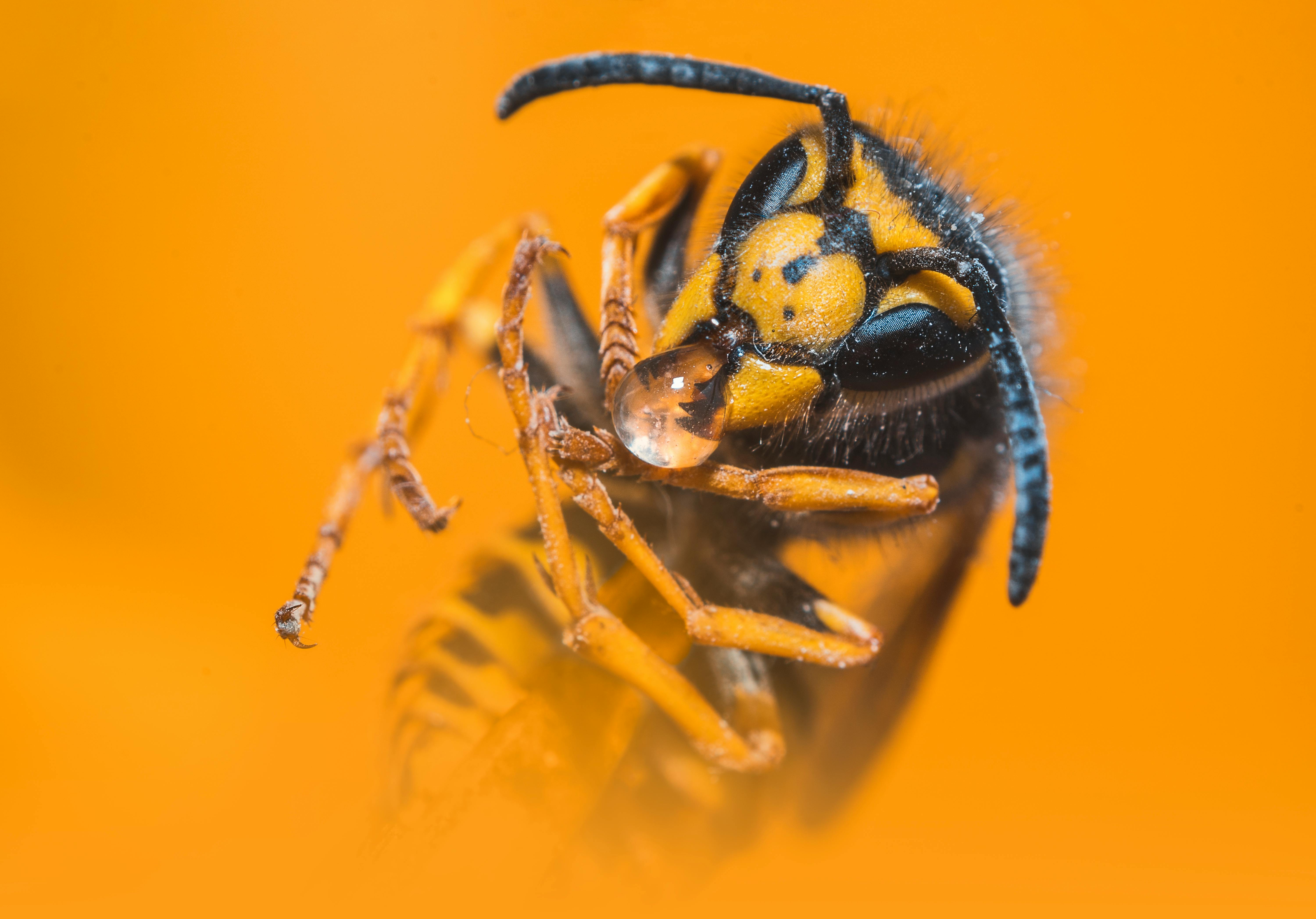

Why They Sting More Readily This Time of Year
The National Pest Management Association notes that wasps in late summer and fall are “busy scavenging for food to prepare for the colder months,” which pulls them straight into picnics, barbecues, and outdoor dining areas where people are eating and drinking. On top of the food hunt, colonies are also in defense mode: in most species, the queen is the only member expected to survive winter, and workers become more willing to sting, sometimes repeatedly, to protect her and the nest. A sting also releases a pheromone that can draw other wasps into the same defensive response, which is how one swat turns into multiple stings fast.
Sting-Proofing a Yard This Fall
- Keep food and sugary drinks covered at outdoor gatherings, and check cans before drinking from them.
- Wear closed-toe shoes outdoors, especially in grass, where ground-nesting yellow jackets are easy to step on without warning.
- Use trash cans and recycling bins with tight-fitting lids, and empty them regularly.
- Check window and door screens for gaps that let wasps into the house.
- Avoid swatting at a wasp that lands nearby: sudden movement is what triggers a defensive sting.
Where to Look for Nests Before They Find You
The pest management association recommends walking the property to check common nesting spots before an infestation grows: under roof eaves, inside attics, garages and sheds, and underneath porches and decks. Finding a nest early, while it’s still small, makes removal far less risky than discovering one in October when the colony has had all season to grow.
When to Call a Professional Instead of Handling It Yourself
A single nest can house upwards of 15,000 wasps, and disturbing one without protective gear or the right equipment is genuinely dangerous: a person who gets too close risks dozens of stings within seconds, not one. Pest control professionals recommend calling a licensed exterminator for any nest that’s already established, especially ones built inside wall voids, attics, or anywhere removal would require getting close to the colony. A small, freshly started nest spotted early in the season, sitting somewhere fully exposed and away from foot traffic, is about the only scenario where a homeowner might reasonably consider DIY treatment, and even then, doing it at dusk when wasps are least active reduces the risk considerably.
Yellow Jackets vs. Paper Wasps: Different Risk Levels
Not every stinging insect behaves the same way in fall. Yellow jackets, which often nest in the ground or inside wall voids, tend to be the most aggressive foragers around food and trash because their colonies are typically larger and more food-dependent than other species. Paper wasps, which build the open, umbrella-shaped nests seen under eaves, are generally less likely to sting unprovoked but will still defend a nest aggressively if it’s disturbed. Knowing which one is hanging around a yard changes the calculus: a paper wasp nest tucked under a porch roof can often be left alone if no one is walking near it, while yellow jackets swarming a picnic table need to be dealt with immediately.
The Season Ends the Threat, But Not Yet
Fall wasp aggression isn’t permanent: colonies die off after the first hard freeze, and only mated queens survive to start new nests in spring. Until that freeze arrives, though, September and October remain the riskiest stretch of the year for stings, which makes this the window where a little extra caution around food, trash, and yard work actually pays off.