


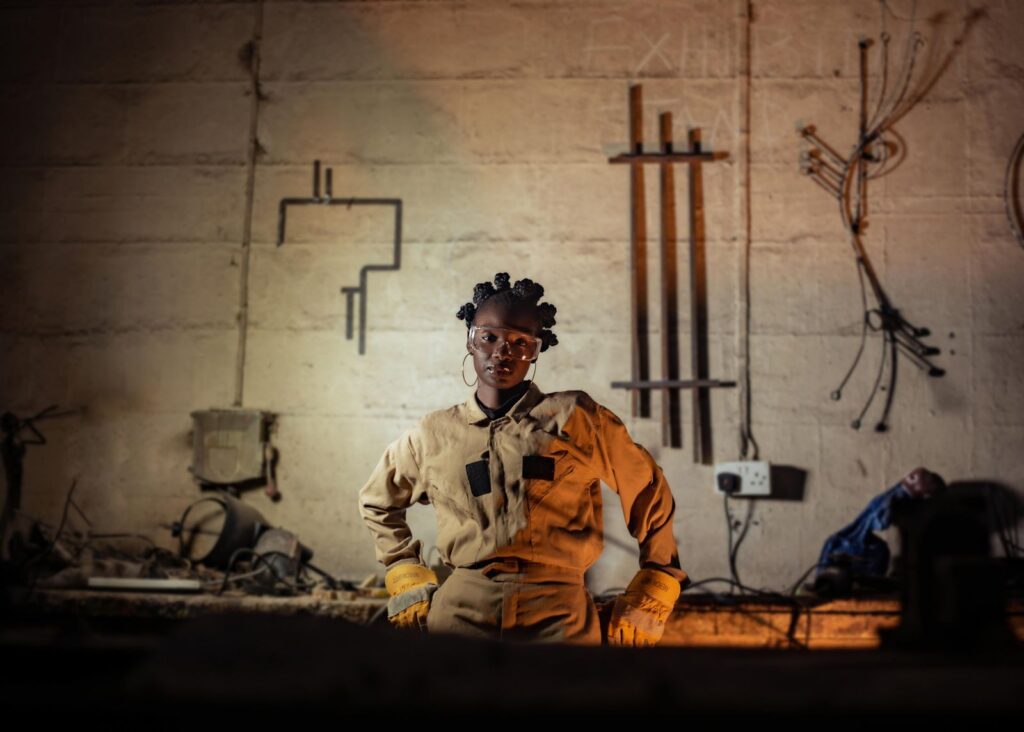
One woman’s productivity dipped sharply as she tried to train a younger coworker who seemed entirely oblivious to the tasks at hand. Instead of focusing on the job, this new shadow was frequently glued to her phone, snapping selfies and chatting with men from another warehouse while her mentor struggled to keep everything organized. It was an unsettling work dynamic that left her feeling frustrated and unsure about how to handle it.
In a Reddit post, the original poster described her role as a pipe welder, working alongside a new hire who was supposed to shadow her. Initially, the younger coworker appeared eager to learn. However, that enthusiasm quickly fizzled. Despite several attempts to engage her in conversation about the welding process, the younger worker remained distracted, even blocking access to important tools. What started as a chance to mentor someone morphed into a chaotic situation that dragged down productivity for both.


The difficulties escalated when the experienced welder noticed her mentee’s constant attention to social media. Rather than focusing on the work at hand, the younger woman was more interested in capturing selfies and gossiping about the drama back at her previous workplace. This distraction was not only irritating but counterproductive, resulting in a significant drop in the productivity of the experienced welder. She felt trapped between her responsibilities and the impact of the new hire’s lack of effort.
The situation took a toll on the more seasoned worker’s reputation. People at the company began to notice her declining output, and she was faced with the looming threat of being blamed for her mentee’s lack of initiative. On top of that, she feared that reporting the issue to her foreman might cost the younger worker her job. This dilemma weighed heavily on her, as she valued her standing among coworkers and didn’t want to jeopardize her relationships in the shop.
People had very different reactions when they read her post. Some commenters empathized with her frustration, saying it’s challenging to maintain productivity when someone isn’t pulling their weight. Others pointed out that it might be better to address the issue directly with their supervisor. They suggested that communication could prevent further complications, even if it meant facing some uncomfortable conversations.
On the flip side, a few users felt a sense of sympathy for the younger woman, arguing that she might just be overwhelmed in her new environment. Some thought it’d be better to give her a chance to acclimate before making any drastic decisions about her future. The dilemma sparked a debate about mentorship, workplace camaraderie, and the responsibilities of one employee to another.
The original poster expressed genuine concern. While she didn’t want to hurt her coworker’s chances, she also recognized the importance of maintaining her own productivity and reputation at work. It became a balancing act—one where her feelings of obligation to her coworker clashed with her need to uphold her standards and the expectations of the company.
This complex situation raises questions about mentorship in the workplace. How does one handle a situation where the mentee isn’t interested in learning? What responsibility does a mentor have to ensure their own job performance isn’t compromised? Ultimately, the original poster was left with a decision to make, weighing her options carefully. Should she take the risk and speak up, or should she continue to deal with the fallout silently?
More from Decluttering Mom: